Quick answer
A new septic system is usually a major site project, not simply the purchase of a buried tank. Angi’s 2026 verified-project data puts the typical installed range at about $3,590 to $12,463, with an average near $8,016. HomeGuide lists conventional systems around $3,500 to $8,500, alternative systems around $4,000 to $15,000, and engineered systems that can reach $15,000 to $50,000 or more when site conditions require complex treatment or dispersal.
Those numbers make sense only when the scope is clear. A septic quote may include soil testing, design, permits, excavation, tank, distribution components, drainfield work, electrical connections for pumps or alarms, backfill, grading, and sometimes restoration. A low number that covers only the tank is not comparable with a complete system installation.
The U.S. Environmental Protection Agency notes that more than one in five U.S. households rely on individual septic systems or small decentralized systems. These systems treat household wastewater on the property, so design and maintenance affect both the home and the surrounding soil and groundwater.
Septic system cost at a glance
| System scope | Typical planning range | Main cost drivers |
|---|---|---|
| Conventional gravity system | About $3,500–$8,500 | Tank size, excavation, drainfield, soil, access |
| Alternative system | About $4,000–$15,000 | Pumps, treatment components, site constraints |
| Engineered / mound / advanced treatment | About $15,000–$50,000+ | Poor soils, high groundwater, limited area, engineering |
| Soil or perc testing | Often hundreds to low thousands | Local requirements, number of borings, consultant |
| Permit and review fees | Varies widely by jurisdiction | Health department, design review, inspections |
Treat these as planning ranges. Local health department rules and site conditions can move a project far outside national averages.
Why a septic project is more than a tank
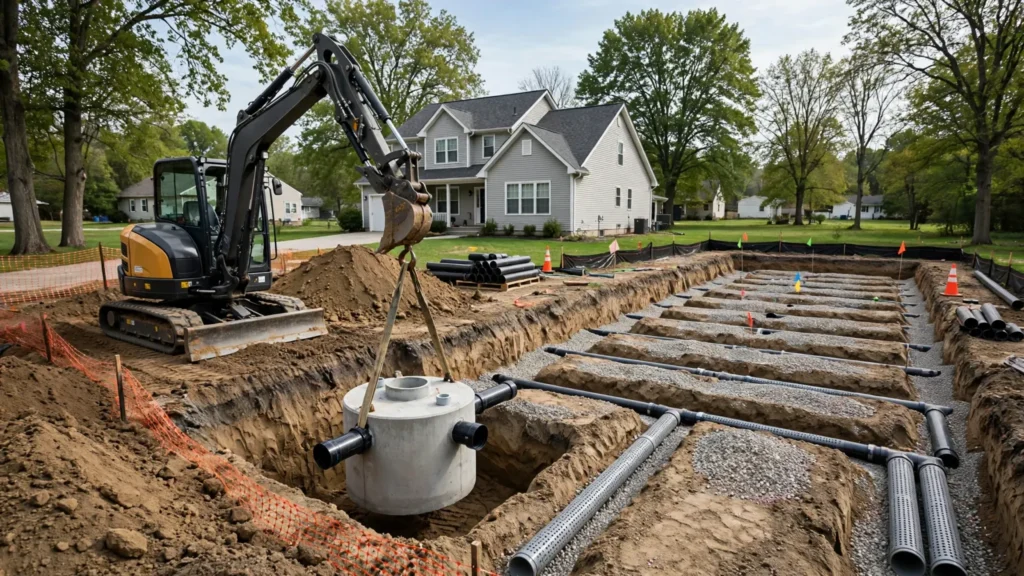
A typical septic system includes a pipe from the house, a septic tank, a distribution method, a drainfield or other dispersal area, and soil that completes treatment. The tank separates solids and allows wastewater to flow onward; it is not the entire treatment system.
This distinction explains why “How much is a septic tank?” is a different question from “How much is a new septic system?” A tank itself may be only a fraction of the installed cost. Excavation, drainfield construction, pumps, controls, site access, and restoration can dominate the budget.
If a property owner is comparing septic work with a failing private sewer connection, our sewer line replacement cost guide covers the very different cost structure of a house-to-sewer repair or replacement.
Soil and site evaluation can decide the system type
The soil is part of the treatment process. Local regulators may require a percolation test, soil profile, engineered design, or other site evaluation before approving a new system. The purpose is to determine whether the site can absorb and treat wastewater safely and where the dispersal area can be located.
A flat, accessible lot with suitable soil is generally easier to build on than a steep site with shallow bedrock, high groundwater, poor soils, or a small usable area. If a conventional system cannot meet local requirements, an alternative or engineered system can raise the budget substantially.
Do not treat a national average as a promise until the site has been evaluated. The correct system is often determined by local conditions rather than homeowner preference.
Conventional systems: the baseline case
A conventional gravity system is what many homeowners picture: wastewater flows from the house to a tank, then to a distribution box and drainfield. When topography and soil allow gravity flow, the system has fewer mechanical components than pumped or advanced-treatment designs.
HomeGuide’s national data puts a conventional installed system around $3,500 to $8,500. Angi’s broader verified-project range extends higher, reflecting variation in tank size, excavation, drainfield scope, and local conditions.
A quote should identify tank capacity, material, drainfield size, pipe, distribution components, risers, inspection ports, and restoration. If any of those are allowances rather than fixed scope, ask what could cause the allowance to change.
Alternative and engineered systems
When the lot cannot support a conventional gravity system, the design may use pumps, aerobic treatment, pressure distribution, a mound, drip dispersal, or other engineered methods. These systems can cost significantly more because they add equipment, controls, design work, and specialized installation.
HomeGuide reports alternative systems around $4,000 to $15,000 and engineered systems around $15,000 to $50,000. Certain mound or aerobic projects can sit toward the upper end or beyond it.
The homeowner should also consider long-term operating costs. Pumps use electricity, alarms and control panels can require service, and advanced systems may have mandatory maintenance contracts or inspection schedules depending on local rules.
Replacement versus repair
Not every septic problem requires a new system. A failed pump, damaged baffle, broken line, clogged distribution component, or isolated tank issue may be repairable. On the other hand, a failing drainfield, structurally damaged tank, undersized system, or repeated sewage backup can point toward major replacement work.
The first step is diagnosis. A septic professional may inspect the tank, measure sludge and scum, check components, evaluate flow, and examine the drainfield. If a plumbing problem inside the house is suspected instead, compare symptoms with our plumber cost guide before assuming the septic system is at fault.
Signs that deserve prompt attention
Warning signs can include slow drains throughout the house, sewage odors, gurgling fixtures, sewage backing up into lower plumbing fixtures, unusually wet soil over the drainfield, or bright green grass concentrated over one part of the field.
One slow sink is more likely to be a fixture or branch-drain issue than a septic failure. Multiple fixtures and outdoor symptoms together are more concerning.
Keep people and pets away from surfacing sewage. If wastewater backs up into the home, avoid contact, reduce water use and contact a qualified septic professional and the local health department for guidance. Septic wastewater can contain pathogens; open tanks and excavations are serious hazards. Never enter a septic tank or attempt to inspect it from inside. See the EPA guidance on septic system malfunctions.
Permits, health departments, and inspections
Septic work is locally regulated. Depending on the jurisdiction, the project may require a site evaluation, engineered drawing, permit, health department review, installation inspection, and final approval before the system is covered.
Ask bidders who is responsible for each permit and whether permit, design, and inspection fees are included. The cheapest contractor price may exclude several thousand dollars of design or regulatory cost on a difficult site.
If you are buying a home with septic, obtain available records from the local health department and ask about the age, approved capacity, repair history, and location of the tank and drainfield. EPA publishes a homebuyer guide specifically because septic condition can materially affect a purchase.
Tank size and household demand
Tank sizing is usually tied to local code and often to bedroom count rather than the number of people currently living in the house. Angi reports that a common 1,000-gallon tank for many three- or four-bedroom homes costs roughly $900 to $1,500 for the tank itself, but that is only one component of the full system.
Do not reduce tank size simply to cut the project price. The approved design should match local requirements and expected wastewater load.
Drainfield cost can dominate the project
A tank can be replaced in one excavation area. A drainfield may cover a much larger portion of the yard, and replacement can require new trenches, distribution lines, imported fill, pumps, or an entirely new location.
This is where access matters. Fences, mature landscaping, retaining walls, patios, driveways, slopes, and limited equipment access can add labor or restoration. Ask contractors to mark the likely disturbed area before work begins so you understand what landscaping may need to be repaired afterward.
What should be included in a complete quote?
A strong septic proposal should state:
- system type and approved design;
- tank size and material;
- drainfield or dispersal design;
- pumps, alarms, floats, controls, and electrical work if applicable;
- excavation and equipment access;
- disposal of old components or pumped contents;
- permits, engineering, and inspections;
- backfill and rough grading;
- topsoil, seed, sod, driveway repair, or landscaping restoration if included;
- warranty and maintenance requirements.
Before accepting a septic installation bid, compare it against the approved site design. Confirm whether soil evaluation, engineering, permits, excavation, electrical connections, inspections, old-system handling and final yard restoration are included. Ask the contractor to identify allowances and explain what would trigger a change order. Two prices are not comparable if one excludes the drainfield or restoration.
Electrical work and alarms
Alternative systems and pump tanks often need electrical service, control panels, alarms, or disconnects. That work may be included by the septic contractor or subcontracted to an electrician. Confirm which contractor owns that scope and whether trenching for electrical conduit is included.
If electrical additions are significant, our electrician cost guide provides a useful benchmark for service calls and common residential work.
Restoration: the forgotten line item
A new system can leave a large disturbed area. Rough grading may be included, while final landscaping may not be. Driveway sections, irrigation, fencing, trees, or patios can complicate access and raise restoration cost.
Before signing, ask the contractor to define “finished.” Does it mean backfilled soil only? Final grade? Seed and straw? Sod? Reinstalled fence? This single question prevents many budget surprises.
Maintenance affects replacement timing
EPA emphasizes that septic systems need ongoing care. Water efficiency, proper waste disposal, regular inspection, and pumping help protect the system. Heavy vehicles should not be driven over the drainfield, and roof drains or sump discharges should not be directed onto it.
Do not assume septic additives are a substitute for maintenance. EPA’s recent fact sheet says additives are not recommended for domestic wastewater systems because normal systems already contain the microorganisms needed for treatment, and some additives may be ineffective or harmful.
Our home maintenance checklist can help integrate septic inspections with the rest of the property’s recurring maintenance schedule.
Buying a home with an older septic system
Age alone does not determine failure, but an older system deserves documentation and inspection. Ask for pumping records, permits, repair history, and the location of the replacement area if one was reserved. A home inspection is not always the same as a specialized septic inspection.
A professional septic inspection before purchase can reveal conditions that materially change the economics of the property. If the system is near failure and the lot requires an engineered replacement, the cost can be tens of thousands of dollars rather than a routine repair.
Budget examples
Straightforward conventional installation
For a gravity installation on suitable soil, ask whether the quoted total includes the approved design, drainfield, house connection, inspections and final grading. A tank-only price is not comparable with a complete installed-system quote. Confirm access and restoration before using the conventional national range as a budget benchmark.
Constrained replacement
An existing system has failed, the old tank must be abandoned or removed, the new drainfield must be relocated, and a fence must be removed for equipment access. Even with a conventional design, the project can move toward the upper end of typical pricing.
Engineered site
High groundwater or poor soil requires an advanced treatment unit or mound system with pumps and controls. Engineering, equipment, and inspection requirements can push the project into a five-figure range well above a basic conventional system.
How to compare septic bids
Do not select a contractor before the design basis is clear. If two bidders are pricing different system types, the totals cannot be compared fairly.
- Obtain the soil evaluation and proposed approved system design.
- Ask each bidder to price the same tank, drainfield and site plan.
- Identify excluded permits, electrical work, old-system handling and yard restoration.
- Request written allowances and the circumstances that trigger change orders.
- Confirm final inspection responsibilities, warranty and ongoing service requirements.
Use the same approved plan for each bid where possible. Then compare equipment, tank material, excavation, electrical work, restoration, permit handling, schedule, warranty, and maintenance. Ask who will be on site for inspections and who resolves failed inspection items.
For general contractor due diligence, licensing questions, insurance, and quote comparison, see our how to hire a home contractor guide.
FAQ
How much does a new septic system cost in 2026?
Angi reports a typical installed range of about $3,590 to $12,463, while HomeGuide lists conventional systems around $3,500 to $8,500. Alternative and engineered systems can cost substantially more.
Is the septic tank the most expensive part?
Not always. Drainfield construction, excavation, pumps, site engineering, difficult access, and restoration can cost as much as or more than the tank itself.
Can a failed septic system be repaired instead of replaced?
Sometimes. Pumps, baffles, lines, and certain tank components can be repaired. A failed drainfield, structurally compromised tank, or system that cannot meet current requirements may need major replacement.
How long does a septic system last?
There is no single lifespan that applies to every system. Soil, design, wastewater load, maintenance, pumping, groundwater, and installation quality all matter. Condition and performance are more useful than age alone.
Do septic additives reduce pumping needs?
EPA does not recommend septic tank additives for normal domestic systems and advises regular inspection and pumping instead.
Does the quoted septic installation price include the drainfield?
Not necessarily. Ask for the approved drainfield design and a written list of included components. A tank-only quote excludes substantial site work, while a complete installed-system quote may already include excavation and distribution piping. Do not add national component averages to a complete bid without checking for overlap.
What should I receive when the installation is finished?
Request final inspection or approval records, an as-built location plan, operating instructions, equipment and alarm information where applicable, warranty terms and the required maintenance schedule. Confirm who will address any inspection corrections before the final payment.
Bottom line
Budget a septic system as a site, wastewater, and regulatory project, not a tank purchase. National averages are useful for early planning, but the soil evaluation and approved design determine the real scope. Get the design basis first, insist on a detailed written bid, and include permits, electrical work, access, and yard restoration in the budget before comparing contractors.