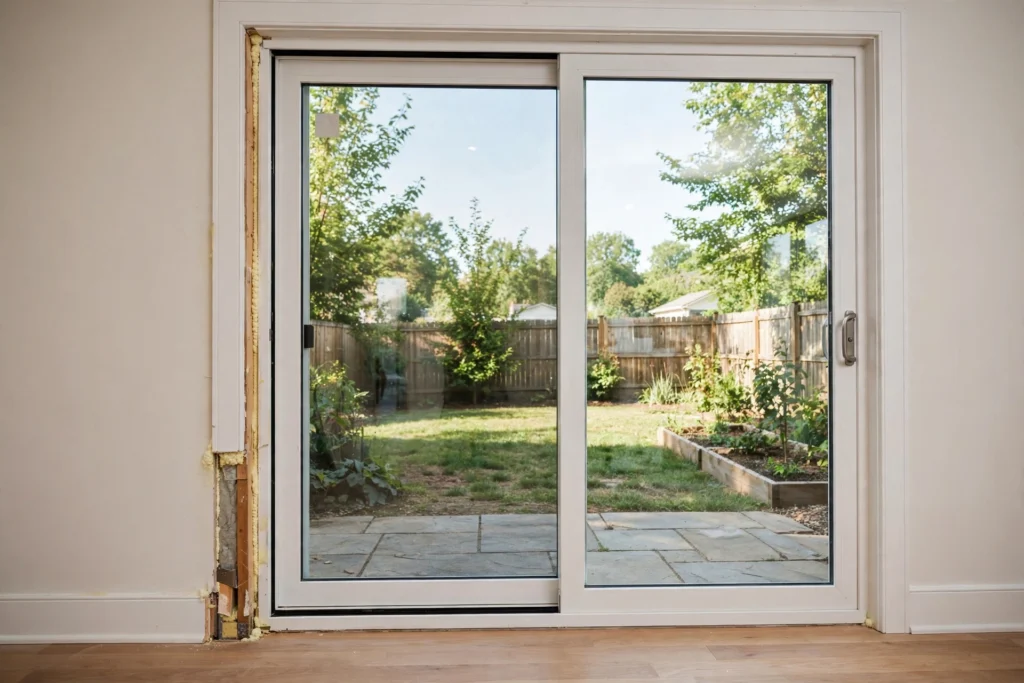
Quick Answer
Angi reports patio door replacement at about $1,550 to $6,250 in 2026, with an average around $2,500. Standard same-size two-panel replacements are the most predictable; oversized multi-panel doors, custom openings, premium glass and hidden sill or framing damage can raise the project sharply.
Home Cost Desk uses national cost data as planning guidance rather than a substitute for a local written bid. Actual prices vary with city, labor market, product availability, building age, access, code requirements and concealed damage.
2026 Cost Snapshot
| Scope | 2026 planning benchmark | Basis |
|---|---|---|
| Typical patio door replacement | $1,550–$6,250; about $2,500 average | Angi |
| Removal/disposal | About $150–$400 | Angi |
| New opening or major structural alteration | Higher than replacement-only work | Angi guidance |
| Screens, insulation or security add-ons | Usually extra | Angi |
How to Read the Price Range
Angi’s $1,550–$6,250 range spans a standard two-panel vinyl door in a same-size opening and larger multi-panel, fiberglass, wood or impact-rated units. The total also rises when the sill or subfloor is water damaged, the opening must be resized, or exterior siding, stucco or masonry has to be cut and repaired around the new frame.
What Drives the Cost
The largest cost drivers for this project include two-, three- or four-panel configuration, vinyl, fiberglass, aluminum, wood or clad frame, double- or triple-pane glass, low-e and impact-rated options, same-size replacement versus resized opening, sill and subfloor condition, interior/exterior trim, and upper-floor or difficult access.
Hidden Costs to Budget For
Build a contingency for conditions that cannot be fully confirmed until work begins. Common examples include water damage below the sill, rotted framing, stucco, siding or masonry repair, flooring patch at a different threshold depth, screen door, new lock or security foot bolt, and paint and trim finish.
Safety, Permits and Quality Control
Large insulated glass panels are heavy and fragile. The opening must be level, square, flashed and sealed without blocking drainage paths. A low quote that excludes sill or framing repair may not be comparable to a complete weather-managed installation.
For energy performance, compare NFRC labels: lower U-factor means a door keeps heat in better, lower SHGC admits less solar heat, and a higher condensation resistance rating means better resistance to condensation (NFRC consumer ratings). DOE recommends choosing U-factor and SHGC by climate zone (DOE guidance).
Permit rules vary by jurisdiction. The contractor should state whether a permit is required and who will obtain it. For work involving structure, plumbing, electrical systems, combustion equipment, waterproofing or the weather envelope, quality control belongs in the scope from the beginning.
Three Real-World Planning Scenarios
Scenario 1: Same-size vinyl slider
A standard two-panel replacement in a sound opening is the mainstream scope.
Scenario 2: Old door with soft subfloor at threshold
Water-damage repair should be separated and priced before the new unit is set.
Scenario 3: Multi-panel premium door
Structural header, large panels and specialized delivery can move the project far beyond the average.
How to Compare Contractor Quotes
Compare patio door bids on frame material, glass package and NFRC ratings, whether the quote is a full-frame replacement or an insert, sill pan and flashing details, interior and exterior trim, and hardware and lock quality. Ask how the threshold will be sealed against water.
DIY vs. Professional Sliding Patio Door Replacement
Replacing only rollers, handles or weatherstripping can be reasonable DIY maintenance. Full-frame patio-door replacement is different: the unit is heavy, the opening must remain square, and the sill, flashing and exterior water-management details determine whether the installation stays dry.
Professional installation is especially valuable when the old frame shows rot, the opening is out of square, the door is oversized, masonry or stucco must be disturbed, or the replacement changes the frame system. If hidden sill damage is found, repair it before the new door is sealed in place. A door that slides smoothly can still be a poor installation if the weather barrier is wrong.
How to Save Money Without Creating a False Economy
A same-size replacement in a sound opening is the most predictable price. Compare standard two-panel configurations before upgrading to multi-panel or premium frames, and check whether a repair of rollers, tracks or seals would solve the problem on a door that is otherwise sound.
Pre-Quote Homeowner Inspection
- Measure the rough opening and note the existing door brand and age.
- Check for soft subfloor or stains at the threshold.
- Note whether the problem is the rollers, track, seals or glass.
- Decide whether you want a screen, blinds between the glass or upgraded locks.
Red Flags in a Quote
- No sill pan or flashing detail.
- Insert installation over a rotted frame.
- No NFRC ratings for the new door.
- No plan for likely concealed conditions such as water damage below the sill, rotted framing, stucco, siding or masonry repair, flooring patch at a different threshold depth.
Planning the Work From Start to Finish
Most patio door replacements are completed in a day if the opening is sound. After installation, check that the door glides, locks and seals, and run a hose test or watch the threshold in the first heavy rain.
Quote Checklist
- Door model, frame material, glass and NFRC ratings.
- Full-frame or insert installation.
- Sill pan, flashing and threshold sealing.
- Trim, paint and hardware.
- Disposal and warranty.
- Demolition, removal and disposal.
Related Home Cost Desk Guides
Frequently Asked Questions
Can I fix a sticking patio door instead of replacing it?
Often. Worn rollers, dirty tracks or failed seals can be repaired; replacement makes sense with frame rot, failed glass or poor performance.
What should I look for on the label?
Use the NFRC label: compare U-factor, SHGC and condensation resistance for your climate.
Does a patio door need a permit?
Permit rules vary by jurisdiction; the contractor should state whether one is required.
Sliding Patio Door Replacement Checklist
- Measure the rough opening and note whether the existing frame is square, level and free of visible water damage.
- Ask whether the quote includes full-frame replacement or only the operating panels, because the labor and water-management scope are very different.
- Compare frame material, glass package, locking hardware, screen, threshold design and warranty on equivalent specifications.
- Require a clear allowance for sill, sheathing or trim repair if hidden rot is discovered after the old door is removed.
- Before final payment, test locking, sliding effort, weatherstripping, screen operation and drainage at the threshold.
What to Do Next
- Measure the opening and document the existing frame, sill, glass condition and any visible water damage before requesting quotes.
- Get two or three bids that use the same door size, frame material, glass package, flashing, trim, disposal and interior-finish scope.
- Compare installed price, energy performance and warranty terms, and resolve sill or framing damage before the new door is sealed in place.
Photograph the interior and exterior opening, check for staining near the sill and compare quotes built around the same replacement method. A low panel-only quote is not equivalent to a full-frame installation that addresses flashing, insulation and damaged surrounding materials.
Bottom Line
Angi reports patio door replacement at about $1,550 to $6,250 in 2026, with an average around $2,500. Standard same-size two-panel replacements are the most predictable; oversized multi-panel doors, custom openings, premium glass and hidden sill or framing damage can raise the project sharply. The strongest decision is based on the real project scope, a normalized written quote and clear responsibility for preparation, hidden conditions and finish work.
Sources & Methodology
Home Cost Desk reviewed the following sources for national planning ranges and technical guidance. Cost data is not a substitute for local bids. Where safety, energy, moisture or building-envelope issues are involved, authoritative agency guidance should take priority over marketing claims.