2026 cost snapshot
| Item | Planning range / amount | Basis |
|---|---|---|
| Local planning range | $4.50-$10 per sq. ft. | 2026 local market guides |
| Typical mid-range project | $6,800-$9,900 | RenovCost 2026 |
| High-detail multi-story work | $17,000-$25,000+ possible | 2026 local guides |
| National typical range | $1,819-$4,551 | Angi 2026 |
| National reported average | About $3,178 | Angi 2026 |
Quick answer
San Francisco exterior house painting is substantially more expensive than the national average when a project includes multi-story access, ornate woodwork, heavy preparation or lead-safe containment. Current 2026 local guides place many jobs around $4.50 to $10 per square foot, with a typical mid-range repaint around $6,800 to $9,900. Detailed Victorian or Edwardian work can reach $17,000 to $25,000 or more without the house being unusually large.
National Angi data is much lower because it combines simpler houses and lower-cost labor markets. San Francisco homeowners should use national figures only as a reference point. The local job must be priced around building height, substrate, access, number of colors, paint condition and the lead-safe work required on older housing.
Why San Francisco costs more
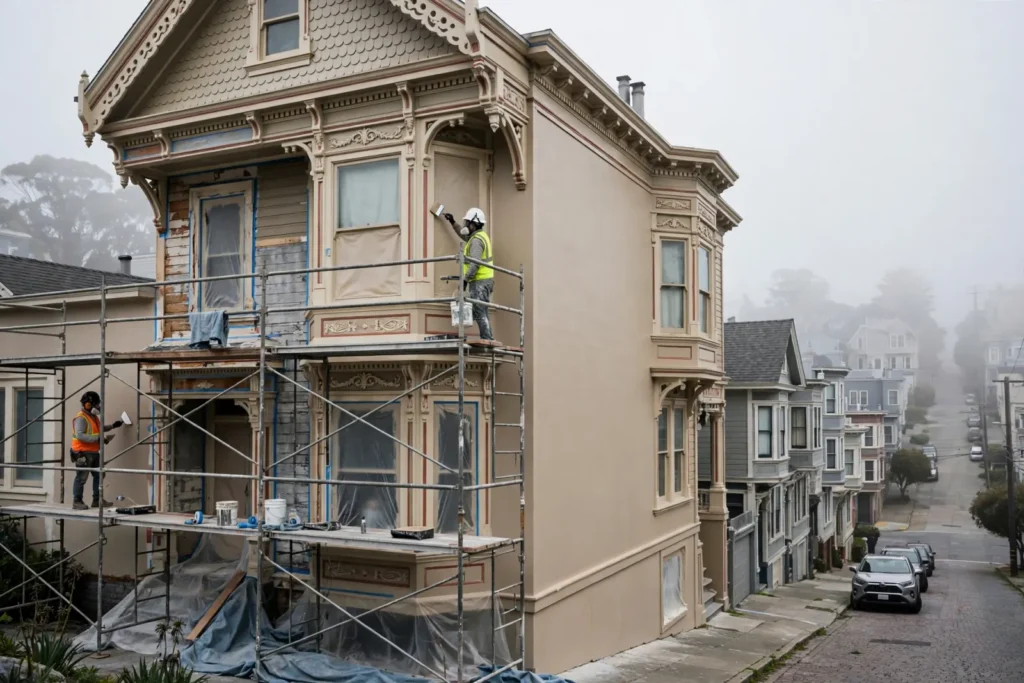
The city combines high skilled-labor costs with closely spaced buildings, steep streets, narrow side yards, tall façades and a large inventory of older wood-sided and stucco homes. A contractor may spend significant time erecting scaffolding, protecting neighboring property and moving equipment before surface preparation even begins.
A simple one-story stucco house on a flat lot is therefore not comparable to a three-story Victorian with bay windows, brackets, cornices and several colors. Local price ranges are wide because the buildings themselves are unusually diverse.
Victorian and Edwardian detailing
Decorative trim consumes labor out of proportion to its square footage. Brackets, shingles, bay windows, spindle work, cornices, window trim and accent bands require hand scraping, careful priming and repeated cutting between colors.
Ask the painter how many body and accent colors are included. A base quote may assume one body color and one trim color; a historically inspired four- or five-color scheme can add days of masking and brushwork.
Preparation is often the real project
A durable San Francisco repaint depends on washing, scraping, feather sanding, caulking, spot priming and repairing failed wood or stucco before finish paint is applied. Older layered coatings can be brittle and uneven, so preparation can consume as much labor as the visible painting.
Request a written prep standard rather than the phrase “scrape as needed.” The contractor should explain how loose paint is removed, how bare wood is primed, how cracks are treated and what percentage of deteriorated wood repair is included.
Lead paint changes the job
San Francisco’s building rules treat paint on pre-1979 buildings as presumed lead-based unless testing demonstrates otherwise. Exterior preparation that disturbs those coatings is subject to containment and prohibited-practice rules. Federal EPA lead-safe renovation requirements can also apply.
That means uncontrolled dry sanding, abrasive blasting, high-pressure washing without containment or other dust-producing shortcuts can be inappropriate. A qualified contractor should be able to describe containment, debris collection, worker practices and final cleanup before work begins.
Historic districts and landmark properties
City guidance notes that painting or repainting a landmark building or a property within a historic district may not require a building permit by itself, but the Planning Department should be consulted. Color and treatment can therefore become a planning issue even when no structural change is proposed.
Verify designation status before ordering custom colors or committing to a complex scheme. Correcting an unapproved visible change can cost far more than checking the property first.
Fog, dew and coastal exposure
San Francisco’s marine climate makes surface dryness and cure windows important. Paint applied to damp siding or immediately before heavy evening fog can develop adhesion or finish problems even when the product itself is high quality.
Exposed neighborhoods may also experience salt, wind and strong UV on certain elevations. Premium acrylic coatings and careful joint sealing can help, but correct preparation and weather timing matter more than marketing claims about a single “coastal” product.
Wood siding, shingles and stucco
Wood lap siding needs sound caulk joints, repaired rot and compatible primer on bare areas. Shingle siding is slower to coat because of texture and edges. Stucco needs crack evaluation and compatible patch materials before painting.
If the house uses several substrates, ask the contractor to identify the prep and coating system by elevation. One generic “prep exterior” allowance may not cover the same work on stucco, wood windows and decorative shingles.
Scaffolding and steep-site access
A multi-story façade, rear slope, light well or narrow side yard can require scaffolding or specialized access. That equipment can add thousands of dollars before materials are purchased.
Ask whether scaffold erection, rental duration, permits or sidewalk coordination are included. A very low bid may assume ladder access that is unrealistic for a detailed three-story elevation.
Neighbor protection on tight lot lines
Closely spaced San Francisco buildings make overspray, chips and scaffold access especially sensitive. Contractors should protect neighboring windows, roofs, vehicles and landscaping and obtain permission where physical access crosses a property line.
Lead-safe containment is also more demanding on tight sites because debris cannot be allowed to migrate onto adjacent property or public sidewalks. Ask how ground containment is secured on windy days.
Rot and carpentry allowances
Scraping can reveal rotten siding, window trim or decorative wood that looked acceptable beneath paint. New paint cannot stabilize decayed material, and coating over soft wood only delays the repair.
Ask for hourly carpentry rates or unit prices for common trim and siding repairs. Separating carpentry from painting makes change orders easier to audit.
Window and glazing details
Older wood windows may need glazing compound repair, sash preparation and careful masking. Those tasks are slower than painting modern vinyl or aluminum windows and may not be included in a simple exterior price.
If windows are historically significant, repair methods can also be constrained. Clarify whether the quote covers sash, frames, glazing, storm windows or only surrounding trim.
Three realistic San Francisco scenarios
Scenario 1 – small stucco house: one or two stories, moderate patching, two colors and straightforward access. This can stay near the lower-to-middle local range.
Scenario 2 – three-story wood façade: peeling paint, decorative trim, lead-safe containment and full scaffold access can push the job toward the high end even with a modest footprint.
Scenario 3 – landmark Victorian: extensive repair, historic consultation, several colors and detailed millwork can produce a $20,000-plus project without being excessive for the scope.
How to compare exterior bids
Require surface-preparation steps, lead-safe practices, access equipment, primer, paint manufacturer and line, finish coats, color count, carpentry exclusions, window treatment, cleanup and warranty in writing. If one bid is much lower, identify which element has been excluded.
Compare the Exterior House Painting Cost 2026 guide for national context, but do not force a San Francisco project into a national average when the local access and lead-control scope is fundamentally different.
Insurance and contractor qualifications
Exterior crews work on ladders, scaffolds and roofs next to neighboring buildings. Verify liability and workers’ compensation coverage. For work that disturbs lead paint, confirm the company has the credentials and procedures required for the project.
Ask who supervises the site and who is responsible for containment, debris, adjacent-property protection and final cleanup. A warranty has little value if the contractor cannot be found after the season ends.
Weather scheduling
San Francisco can be painted through much of the year, but fog, wind and damp mornings matter more than the month on the calendar. A professional contractor should schedule each elevation around actual conditions and the coating manufacturer’s temperature and moisture requirements.
Ask how weather delays affect scaffold rental and the completion schedule. A crew should not paint damp siding simply to meet a promised date.
Public sidewalk and staging concerns
On dense San Francisco lots, exterior work can affect sidewalks, alleys and public-facing façades. Scaffolding, debris protection or equipment placement may need coordination beyond the paint contract. Ask the contractor who is responsible for any temporary occupancy or access requirements and whether those costs are included.
A project that looks inexpensive until scaffold, parking restrictions and containment are added can end up costing more than a higher but complete proposal. The bid should show the access plan, not merely the coating price.
Color testing on a real elevation
Exterior colors behave differently under San Francisco fog, bright afternoon sun and shadowed north elevations. Test large samples on the actual house before ordering the full quantity. A small chip can look dramatically lighter or darker at architectural scale.
For multi-color Victorians, test adjacent trim and accent colors together. This can prevent an expensive late change after several detailed elements have already been painted.
Warranty expectations
Exterior paint warranties should distinguish coating failure from substrate failure. Peeling caused by hidden moisture, rotten wood or movement may be excluded even when workmanship is covered. Read the terms before assuming a five- or ten-year label guarantees every visible defect.
Ask what inspection or touch-up process applies if blistering or peeling appears during the warranty period and whether access costs such as scaffold are included in warranty service.
San Francisco homeowner pre-project checklist
Confirm historic status, lead assumptions, access plan, neighbor protection, scaffold, prep standard, wood-repair allowance, color count, product line, weather plan and cleanup method before signing. Photograph façades, windows, landscaping and adjacent property at the start.
At completion, keep the color formulas, product data, lead-safe documentation when applicable, contractor invoice and closeout photographs. Those records make future touch-ups and resale maintenance much easier.
Homeowner records and final QA
Keep the signed proposal, approved change orders, product specifications, permit or inspection records where applicable, warranty and completion photographs.
Before final payment, compare the completed work with the written scope and document any remaining punch-list items.
Hidden costs that are easy to miss
Common omissions include scaffold extensions, sidewalk protection, parking arrangements, extensive window preparation, dry-rot carpentry, specialty primers, extra color changes and additional containment after loose paint is discovered. A bid can be accurate and still be incomplete if these items are listed as exclusions.
Ask the contractor to identify likely unit prices before work starts: hourly carpentry, linear-foot trim repair, scaffold day rate, extra color charge and additional lead-containment work. Predetermined rates make discoveries easier to manage.
Pre-paint moisture diagnosis
Peeling on a San Francisco exterior can come from poor preparation, but it can also signal roof leaks, failed flashing, plumbing, interior moisture migration or water entering behind siding. Repainting without identifying the source can reproduce the failure.
Before expensive preparation begins, ask the contractor to distinguish weathered coating from active moisture damage. Persistent wet wood may need roofing, window or carpentry work before primer is applied.
Final walkthrough and maintenance plan
At completion, inspect all elevations in daylight, including window tops, trim joints, lower siding and areas partly hidden by scaffolding. Confirm that debris and containment materials have been removed and neighboring property is clean.
Keep paint colors and product labels. Annual washing, caulk inspection and prompt repair of damaged wood can extend the useful life of a high-cost exterior paint job and prevent small failures from spreading.
Bottom line
San Francisco exterior painting in 2026 often runs around $4.50 to $10 per square foot, with ordinary mid-range projects around $6,800 to $9,900 and detailed multi-story or historic work much higher. The real local premium comes from labor, access, preparation and lead-safe containment.
Choose the contractor who understands the building, substrate, lead rules and site conditions rather than the company with the lowest headline price per square foot.
Frequently asked questions
How much does exterior house painting cost in San Francisco in 2026?
A useful local planning range is about $4.50 to $10 per square foot, with detailed multi-story and historic homes costing more.
Does exterior painting require a permit in San Francisco?
Ordinary painting may not require a building permit, but landmark buildings and historic districts can require Planning consultation.
Are pre-1979 homes treated as lead risks?
San Francisco rules presume paint on pre-1979 buildings contains lead unless testing shows otherwise.
Why is San Francisco exterior painting expensive?
Labor, scaffolding, steep sites, ornate architecture, old coatings and lead containment all add cost.
Does fog affect painting?
Yes. Damp surfaces and early fog can interfere with application and curing.
Should wood repair be included?
Either include an allowance or state unit prices so rotten siding or trim does not become an undefined change order.