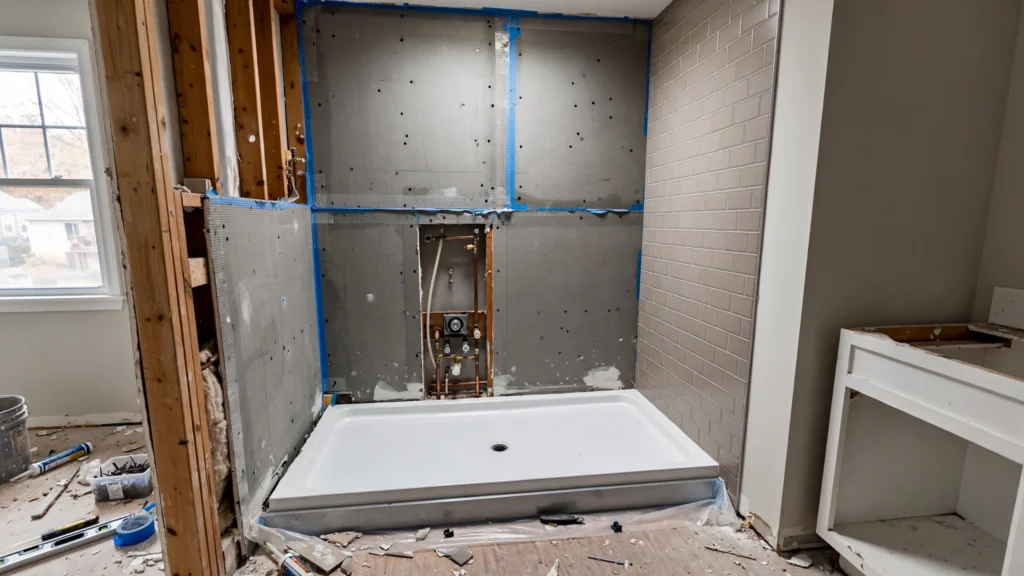
Quick Answer
A bathtub-to-shower conversion can range from about $2,000 to $12,000 in 2026 according to This Old House. Prefabricated systems usually sit toward the lower end; custom tile, a low-threshold or curbless design, plumbing relocation, premium glass and subfloor or wall repairs push the project higher.
Home Cost Desk uses national cost data as planning guidance rather than a substitute for a local written bid. Actual prices vary with city, labor market, product availability, building age, access, code requirements and concealed damage.
2026 Cost Snapshot
| Scope | 2026 planning benchmark | Basis |
|---|---|---|
| Tub-to-shower conversion | $2,000–$12,000 | This Old House |
| Basic shower/stall work | About $500 to $5,000+ depending on scope | Angi guidance |
| Full shower installation benchmark | $4,448–$12,373; about $8,204 average | Angi |
How to Read the Price Range
A conversion near the low end of the $2,000–$12,000 range typically keeps the drain where it is, uses a prefabricated base and wall system, and adds a standard glass door. Costs climb when the drain or valve must move, when the walls are tiled over a waterproofing membrane, when you choose a curbless entry that requires lowering the floor, or when removing the tub reveals rotted subfloor or wall framing.
What Drives the Cost
The largest cost drivers for this project include prefabricated surround versus custom tile, shower footprint and drain position, curb, low-threshold or curbless design, valve, supply and drain relocation, waterproofing system, glass door or enclosure type, wall and subfloor condition, and accessibility features such as grab-bar blocking and bench framing.
Hidden Costs to Budget For
Build a contingency for conditions that cannot be fully confirmed until work begins. Common examples include demolition and debris hauling, subfloor rot or wall damage after tub removal, new shower valve or plumbing relocation, waterproofing membrane and flood testing, tempered-glass enclosure, permit and inspection fees, and finish carpentry and paint outside the wet area.
Safety, Permits and Quality Control
Waterproofing and drainage are the high-consequence parts of this project. A beautiful shower can fail behind the tile if the pan, membrane, penetrations or drain connection are wrong. Electrical work near wet areas and structural changes should be handled under applicable local code.
If you are replacing the shower fixtures at the same time, WaterSense-labeled showerheads must use no more than 2.0 gallons per minute while meeting EPA’s performance criteria (EPA WaterSense showerheads). In a home built before 1978, EPA recommends hiring a lead-safe certified contractor for renovation work that disturbs painted surfaces, which can include the walls around an old tub (EPA RRP program).
Permit rules vary by jurisdiction. The contractor should state whether a permit is required and who will obtain it. For work involving structure, plumbing, electrical systems, combustion equipment, waterproofing or the weather envelope, quality control belongs in the scope from the beginning.
Three Real-World Planning Scenarios
Scenario 1: Same-footprint prefab conversion
Keeping the drain and supply locations while using a quality prefabricated base and wall kit can control cost and shorten downtime.
Scenario 2: Custom tile walk-in shower
Custom tile, a niche, bench, premium fixtures and frameless glass add labor and waterproofing detail; this belongs in the upper half of the range.
Scenario 3: Accessibility-focused conversion
A low threshold, correctly placed grab-bar blocking, handheld shower and wider access can be worth prioritizing even if finish upgrades are simplified.
How to Compare Contractor Quotes
Compare conversion bids on the shower base (prefabricated pan, solid-surface base or tiled mortar bed), the waterproofing system behind the walls, the valve and trim, the glass enclosure, and whether the drain is moved. Moving the drain or changing from a curbed to a curbless entry usually changes the plumbing and floor work, so make sure every bid assumes the same layout.
DIY vs. Professional Tub-to-Shower Conversion
Demolition, painting and some finish work can be DIY-friendly, but the shower pan, waterproofing, drain connection and plumbing valve are high-consequence parts of the project. A failure behind tile may stay hidden until it damages the subfloor, framing or room below.
Professional help is especially valuable for curbless designs, drain relocation, custom tile, large glass panels, structural changes and any project that requires moving supply or waste piping. If accessibility is a goal, decide grab-bar blocking, bench height, threshold height and handheld-shower placement before walls are closed.
- Reasonable homeowner tasks: clearing the room, selected demolition and painting outside the wet area.
- Professional core: waterproofing, drain/pan work, plumbing changes and custom glass.
- Do not compromise: flood testing or manufacturer-required waterproofing details just to save labor.
How to Save Money Without Creating a False Economy
The safest way to control a tub-to-shower conversion budget is to lock the layout and waterproofing scope before selecting decorative upgrades. Keeping the existing drain and supply locations, choosing a prefabricated system instead of custom tile, and avoiding unnecessary structural changes can reduce labor. Get separate prices for plumbing relocation, curbless work, glass, niches, benches and hidden-damage repairs so the base quote remains comparable.
Pre-Quote Homeowner Inspection
- Measure the tub alcove and note whether the walls are tile, a surround or drywall.
- Check for soft floor around the tub, loose tile or staining on the ceiling below.
- Decide whether you want a curb, a low threshold or a curbless entry before asking for prices.
- Note who uses the shower and whether grab-bar blocking or a seat is needed.
- Photograph the existing tub, valve wall, drain end, floor transitions and surrounding finishes so every contractor is pricing the same starting condition.
- Ask what can be confirmed before demolition and what allowances are included for concealed subfloor, wall or plumbing damage after the tub is removed.
Red Flags in a Quote
- No named waterproofing method behind tile.
- Keeping an old valve without checking whether new trim will fit it.
- A glass price with no measurement after the walls are built.
- No plan for likely concealed conditions such as demolition and debris hauling, subfloor rot or wall damage after tub removal, new shower valve or plumbing relocation, waterproofing membrane and flood testing.
Planning the Work From Start to Finish
Expect a gap between demolition and glass installation: most glass doors are measured only after tile is finished. Plan for the bathroom to be out of service longer than the tiling days alone.
Ask the installer to flood-test or otherwise check the shower pan before tile, and to photograph the waterproofing before it is covered.
Quote Checklist
- Base type, drain location and any drain relocation.
- Waterproofing system and who warranties it.
- Valve, trim and showerhead model.
- Glass enclosure type and measuring timeline.
- Grab-bar blocking, niche or bench details, and floor repair allowance.
- Demolition, removal and disposal.
Related Home Cost Desk Guides
Frequently Asked Questions
Is a prefab tub-to-shower conversion cheaper than custom tile?
Usually. Prefabricated bases and wall systems reduce layout, waterproofing and tile labor. Custom tile can deliver a more tailored result but adds substrate preparation, waterproofing detail, tile-setting labor and often custom glass.
Does the drain have to move?
Not always. Keeping the drain near its existing location can control cost, but the exact answer depends on the shower base, joist layout, trap location and the design of the new shower.
Is a curbless shower much more expensive?
It can be because the floor assembly may need recessing, reframing or careful slope transitions. Curbless work should be designed before demolition rather than treated as a small cosmetic upgrade.
Can I keep the existing shower valve?
Sometimes, but many homeowners replace the valve during the conversion because the wall is already open. Compatibility, condition, trim availability and desired features should be checked before deciding.
How long is the bathroom usually out of service?
A simple prefab conversion can be relatively quick, while custom tile, plumbing changes, repairs and glass fabrication can extend the schedule. Ask for a realistic sequence that separates demolition, rough work, waterproofing, finish work and glass installation.
What is the most important quality check?
Water management. The pan, membrane, seams, penetrations and drain connection should form a complete waterproofing system before tile or finish panels hide the assembly.
Before You Approve a Tub-to-Shower Conversion
- Confirm whether the new shower can keep the existing drain location or whether the drain must move.
- Choose prefab, tiled, low-threshold or curbless construction before comparing bids.
- Require the quote to name the waterproofing system and who is responsible for flood testing where applicable.
- Decide glass type, niche, bench, grab-bar blocking and handheld-shower location before wall work closes.
- Keep a repair allowance for subfloor or wall damage that may only become visible after the tub is removed.
What to Do Next
Bottom Line
A bathtub-to-shower conversion can range from about $2,000 to $12,000 in 2026 according to This Old House. Prefabricated systems usually sit toward the lower end; custom tile, a low-threshold or curbless design, plumbing relocation, premium glass and subfloor or wall repairs push the project higher. The strongest decision is based on the real project scope, a normalized written quote and clear responsibility for preparation, hidden conditions and finish work.
Sources & Methodology
Home Cost Desk reviewed the following sources for national planning ranges and technical guidance. Cost data is not a substitute for local bids. Where safety, energy, moisture or building-envelope issues are involved, authoritative agency guidance should take priority over marketing claims.