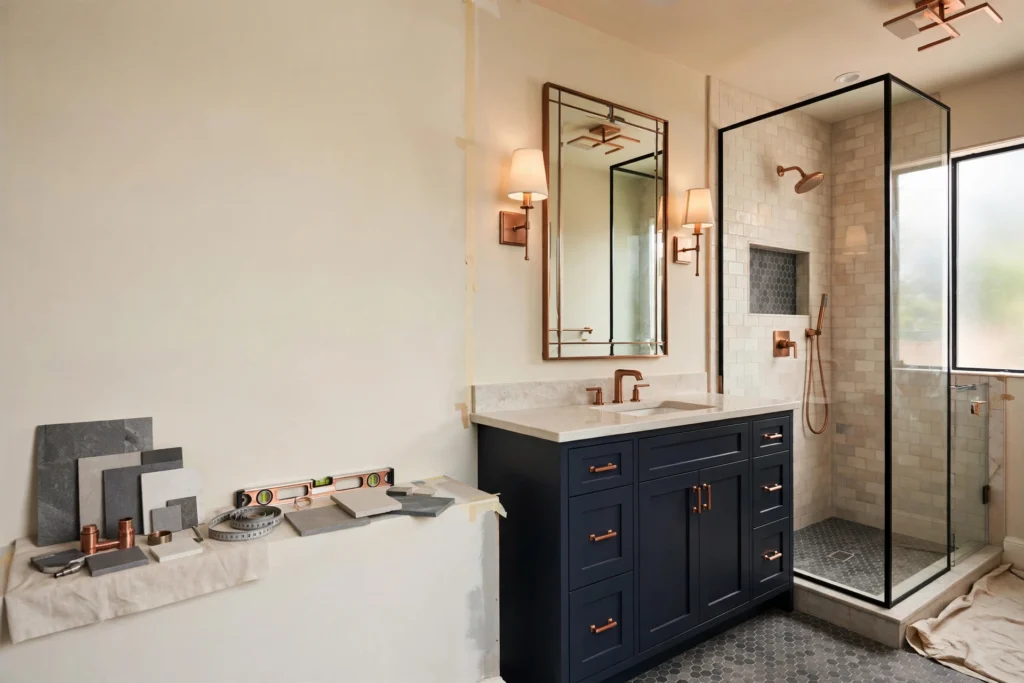
Updated October 2026. Bathroom remodel costs vary widely because a cosmetic refresh and a full gut renovation are fundamentally different projects. Plumbing moves, waterproofing, tile, fixtures, labor, ventilation, and hidden moisture damage can quickly change the budget.
Open the Bathroom Remodel Cost Calculator →
Quick answer: Bathroom remodel cost in 2026
Angi reports an average bathroom remodel cost of about $12,151 in 2026. Many professionally completed projects fall around $6,651 to $17,657, while broad project ranges can extend from about $2,500 to $30,000 or more. Luxury full remodels can exceed $80,000.
| Scope | 2026 planning range |
|---|---|
| Minor remodel | $3,000–$10,000 |
| Partial remodel | $10,000–$25,000 |
| Full remodel | $25,000–$80,000 |
Typical cost per square foot
A broad planning range is about $70 to $250 per square foot, but this figure is only useful when the scope is comparable. A cosmetic refresh with paint, lighting, hardware, and a stock vanity is very different from a full remodel with a new shower, tile, plumbing, electrical work, waterproofing, and layout changes.
Small bathrooms can cost more per square foot because fixed costs—plumbing, fixtures, ventilation, waterproofing, permits, demolition, setup, and contractor overhead—are concentrated into less floor area. For that reason, use square-foot pricing as an early budget check rather than the final estimating method.
2026 bathroom remodel cost by project level
| Project level | Typical scope | 2026 planning range |
|---|---|---|
| Cosmetic refresh | Paint, hardware, lighting, mirror, limited fixture changes | About $3,000–$10,000 |
| Midrange remodel | Vanity, flooring, fixtures, lighting, shower/tub updates, limited plumbing changes | About $10,000–$25,000 |
| Full gut remodel | Demolition, waterproofing, plumbing/electrical work, tile, new fixtures, possible layout changes | About $25,000–$80,000+ |
Current 2026 national data varies by source and methodology. Angi reports many professional remodels between $6,651 and $17,657, while This Old House reports an average of roughly $15,586 with a broad range of about $6,456 to $24,715. These differences are a useful reminder that “average bathroom remodel” can describe very different project scopes.
Bathroom remodel cost by size
Size matters, but scope matters more. A compact 40-square-foot bathroom with a custom tiled shower, plumbing relocation, premium fixtures, and detailed waterproofing can cost more than a larger bathroom that keeps the existing layout and uses standard-size fixtures.
| Bathroom size | Typical use | Budget approach |
|---|---|---|
| 20–40 sq. ft. | Half bath or compact full bath | Watch fixed costs; per-square-foot pricing may be high |
| 40–70 sq. ft. | Common hall or guest bath | Often fits midrange remodel budgets |
| 70–120 sq. ft. | Larger full bath | Fixture count and tile area begin to drive cost sharply |
| 120+ sq. ft. | Primary bath or luxury suite | Custom cabinetry, large showers, freestanding tubs, glass and premium finishes can dominate the budget |
How to build a realistic bathroom remodel budget
- Choose the scope first. Decide whether this is cosmetic, partial, or full gut work.
- Keep or change the layout. Moving toilets, showers, tubs, drains, and walls can materially increase plumbing and construction costs.
- Separate mandatory work from upgrades. Waterproofing, plumbing, electrical safety, ventilation, and code work come before decorative finishes.
- Price the expensive components individually. Shower, tile, vanity, countertop, fixtures, glass, plumbing, lighting, and labor should not be hidden inside one vague allowance.
- Reserve contingency. Older bathrooms frequently reveal water damage, subfloor problems, corrosion, outdated wiring, or failed plumbing once demolition begins.
Example: practical midrange remodel
A homeowner keeping the existing toilet, tub/shower, and vanity locations may spend on demolition, waterproofing, tile, a stock or semi-custom vanity, plumbing fixtures, lighting, exhaust ventilation, paint, and labor without paying for major layout changes. This type of scope is easier to control than a design that moves drains, removes walls, enlarges the shower, and adds specialty electrical features. If only the vanity is changing, see bathroom vanity replacement cost.
What changes bathroom remodel cost?
Keeping or changing the layout
Keeping the toilet, shower, tub, and vanity in their existing locations can control cost. Moving drains, water lines, vents, or walls increases plumbing and construction work.
Shower and waterproofing scope
Custom tile showers require waterproofing, slope, drain work, tile setting, grout, glass, and detailed labor. A prefabricated shower system may be more predictable and less labor intensive.
Vanity, countertop, and storage
Stock vanities usually cost less than semi-custom or custom cabinetry. Countertop material, number of sinks, plumbing fixtures, mirrors, and storage details all add to the budget.
Tile and flooring
Large-format tile, mosaics, natural stone, patterns, niches, benches, and complicated layouts can increase both material waste and installation labor.
Hidden damage
Bathrooms are high-moisture spaces. Demolition can reveal rotten subfloor, leaking valves, damaged framing, mold, or outdated plumbing and wiring. Keep a contingency rather than spending the entire budget on finishes.
Other costs homeowners forget
Angi notes that demolition can add roughly $1,000 to $2,300, while permits may range from about $100 to $1,000 depending on jurisdiction and scope. Design work, debris removal, temporary bathroom arrangements, delivery fees, specialty glass, waterproofing accessories, change orders, and finish carpentry can also affect the total.
Plumbing and electrical corrections
Opening walls can reveal corroded valves, undersized or outdated piping, poor previous repairs, damaged wiring, missing grounding, or electrical work that needs correction before the new finishes go in. These items may be invisible at the quoting stage, so the contract should explain how concealed-condition work is priced and approved.
Subfloor and framing repair
Soft flooring around toilets, tubs, or showers may indicate long-term leakage. Replacing tile without correcting the damaged subfloor or framing can hide the problem rather than solve it. Keep a contingency for structural repair if the bathroom has a history of leaks or movement.
Shower glass, niches, benches, and specialty details
Frameless glass, recessed niches, benches, curbless entries, linear drains, large-format tile, mosaics, and multiple shower heads can all increase labor and coordination. These details should be priced before construction instead of treated as small finishing choices.
Waterproofing is not the place to economize
Tile and grout are finish materials; they are not a complete waterproofing strategy by themselves. The wet-area assembly needs a compatible waterproofing system, properly treated corners and penetrations, a correctly sloped shower base, and careful transitions around drains, valves, niches, benches, and curbs.
If a contractor cannot explain the waterproofing system, where it will be installed, how seams and penetrations are handled, and what manufacturer instructions apply, the proposal is not detailed enough. Water damage behind finished tile can be far more expensive than the waterproofing work itself.
Ventilation should be part of the remodel budget
The U.S. Environmental Protection Agency specifically recommends that bathroom exhaust air be vented directly outdoors, not into an attic or another enclosed space. Effective ventilation helps control moisture and reduce the conditions that support mold growth.
If the existing fan is noisy, weak, missing, or vented incorrectly, include correction in the remodel scope. ENERGY STAR-certified bathroom fans are independently tested for airflow and sound performance, which can help homeowners compare products more meaningfully than choosing by price alone.
Where to spend and where to save
| Worth protecting | Common place to save |
|---|---|
| Waterproofing system | Keep the existing fixture layout |
| Plumbing quality and shutoffs | Use standard-size fixtures |
| Ventilation | Limit decorative tile to focal areas |
| Electrical safety and code work | Choose durable midrange finishes |
| Subfloor and framing repairs | Use stock or semi-custom vanity sizes |
| Quality installation in wet areas | Reuse sound tubs or fixtures where practical |
The goal is not to buy the cheapest materials. It is to avoid spending heavily on finishes while underfunding the systems that protect the bathroom from leaks, moisture, electrical problems, and premature failure.
DIY vs. professional work
Homeowners can often handle cosmetic tasks such as painting, hardware swaps, accessories, and some demolition after confirming that hazardous materials and utilities are not involved. Plumbing moves, electrical work, shower waterproofing, structural changes, and permit-controlled work generally deserve qualified professionals.
DIY savings disappear quickly if a shower leaks, a drain is improperly sloped, tile fails because of substrate movement, or electrical work has to be reopened and corrected. Use DIY selectively where the consequences of an error are limited.
Questions to ask a bathroom remodeler
- Is demolition and disposal included?
- Who handles permits and inspections?
- What waterproofing system is specified?
- Which plumbing and electrical items are firm prices and which are allowances?
- What happens if hidden water damage is discovered?
- Are tile, grout, glass, fixtures, hardware, mirrors, and accessories included or allowances?
- Who supplies the fixtures and who is responsible if an owner-supplied item arrives damaged or late?
- How are change orders documented and approved?
- What is the expected project sequence and duration?
- What workmanship warranty is included?
How to compare bathroom remodel quotes
Do not compare only the final totals. Put each proposal side by side and compare the same categories: demolition, disposal, plumbing, electrical, waterproofing, tile, vanity, countertop, fixtures, shower glass, ventilation, painting, trim, permits, cleanup, and warranty.
A quote with a large number of allowances may look cheaper at first but can move substantially after selections are finalized. Ask the contractor to identify every allowance, the dollar amount assigned to it, and what happens if your actual selection costs more.
Three signs a quote may be incomplete
- The proposal says “bathroom remodel” without listing the wet-area waterproofing system or included surfaces.
- Plumbing and electrical work are described vaguely even though fixtures are moving or new equipment is being added.
- There is no written process for concealed damage or change orders.
Common bathroom remodeling mistakes
- Spending the full budget on visible finishes and leaving no contingency.
- Moving plumbing fixtures without understanding the cost impact.
- Choosing tile and fixtures before confirming dimensions and rough-in requirements.
- Underestimating shower glass, trim, hardware, and accessory costs.
- Installing a new shower without a clearly specified waterproofing system.
- Keeping a weak or improperly vented bathroom fan.
- Ignoring active leaks, soft subfloor, or mold before covering surfaces.
- Comparing bids that include different scopes.
- Ordering materials too late and delaying the schedule.
- Making design changes after demolition has already started.
A practical five-step bathroom remodel plan
- Define the problem. Decide whether you need better function, accessibility, storage, moisture control, aesthetics, resale appeal, or a combination.
- Set the scope. Cosmetic refresh, partial remodel, or full gut renovation.
- Inspect before final budgeting. Look for leaks, soft floors, ventilation problems, electrical limitations, and signs of previous water damage.
- Get comparable written quotes. Require the same major scope categories from each contractor.
- Hold contingency. Do not commit the entire budget to fixtures and finishes before demolition reveals the actual condition of the room.
Frequently asked questions
How much does a bathroom remodel cost in 2026?
Angi reports many professional bathroom remodels between $6,651 and $17,657. This Old House reports an average near $15,586 and a broad range of roughly $6,456 to $24,715. High-end or structurally complex projects can cost much more.
How much does a small bathroom remodel cost?
Small bathroom remodels can start around a few thousand dollars for a cosmetic refresh and rise well into five figures when the project includes a full shower rebuild, tile, plumbing changes, premium fixtures, or hidden damage. The smaller floor area does not eliminate fixed costs such as permits, plumbing, ventilation, waterproofing, and setup.
What is the most expensive part of a bathroom remodel?
There is no universal answer, but plumbing, shower construction, tile labor, cabinetry, and premium fixtures are common major cost drivers. A custom shower can become one of the largest single line items because it combines waterproofing, drain work, tile, glass, fixtures, and detailed labor.
Is it cheaper to keep the same bathroom layout?
Usually yes. Keeping the toilet, shower, tub, and vanity near their existing plumbing locations can reduce drain, water-line, vent, framing, and flooring work.
How much contingency should I keep?
There is no fixed percentage that fits every home, but older bathrooms, known leaks, previous patchwork repairs, and full demolition justify a larger contingency than a simple cosmetic refresh. The important rule is not to spend every available dollar on finishes before hidden conditions are known.
Should a bathroom fan vent into the attic?
No. EPA guidance recommends exhausting bathroom moisture directly outdoors rather than into an attic or other enclosed space. If the remodel opens the ceiling, it is a good time to confirm the duct route and fan performance.
Bottom line
For 2026 planning, national sources put many professional bathroom remodels roughly in the $6,500 to $25,000 range, with averages around the mid-teens. A smaller cosmetic project can cost less, while a full gut renovation with custom tile, layout changes, premium fixtures, major plumbing/electrical work, or hidden damage can climb far above that range.
The most important budgeting decision is not the vanity color or tile pattern—it is defining the scope before work begins. Protect the budget for waterproofing, plumbing, electrical safety, ventilation, and concealed repairs first, then allocate the remaining money to finishes.
Related Home Cost Desk guides
- Shower Remodel Cost in 2026
- Toilet Replacement Cost in 2026
- Bathroom Ventilation Guide in 2026
- Water Heater Replacement Cost in 2026
- Flooring Installation Cost in 2026
- Interior Painting Cost in 2026
- How to Hire a Home Contractor in 2026
Home Cost Desk compares current U.S. cost or technical references and checks safety, code, efficiency, incentive, or regulatory claims against authoritative sources when available. National figures are planning ranges, not local quotes.
Editorial review: Home Cost Desk Editorial Team · Read our research methodology · Detailed sources appear below.
Sources and methodology
- Angi — Bathroom Remodel Cost, updated July 2026
- Angi — Small Bathroom Remodel Cost, updated July 2026
- This Old House — Bathroom Remodel Cost, updated July 2026
- U.S. EPA — Remodeling Your Home and Indoor Air Quality
- ENERGY STAR — Ventilation Fans
Updated October 2026. Cost figures are national planning estimates, not local contractor quotes. Final cost depends on location, scope, existing conditions, material choices, permits, and labor.