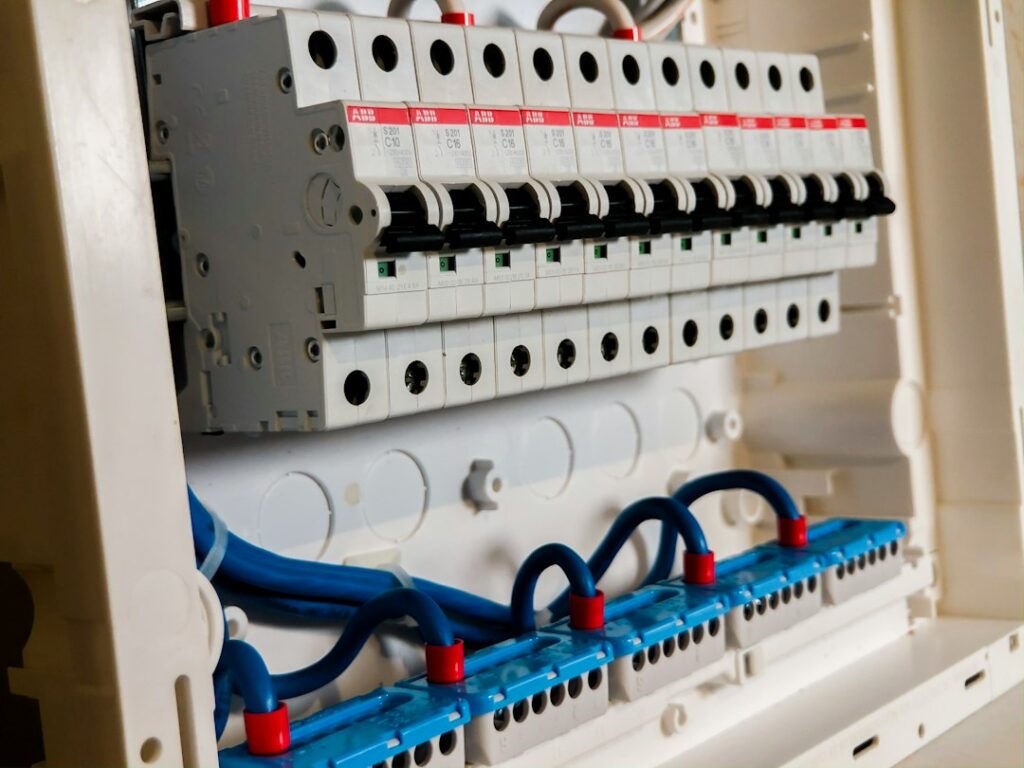
Electrical problems are easy to ignore because most of the system is hidden behind walls, above ceilings, and inside the service panel. Yet small warning signs—an outlet that feels warm, lights that dim when an appliance starts, a breaker that trips repeatedly, or a faint burning smell—can point to a condition that deserves attention before it becomes a shock or fire hazard.
This 2026 homeowner checklist is designed to help you spot trouble early, understand the roles of GFCI and AFCI protection, know what to test yourself, and recognize the point where a licensed electrician should take over. It is not a substitute for an electrical inspection or for the locally adopted electrical code.
Quick electrical safety checklist
- Test GFCI and AFCI devices regularly using their built-in TEST buttons.
- Do not ignore warm, discolored, loose, buzzing, sparking, or burning-smelling outlets and switches.
- Pay attention to repeated breaker trips, flickering lights, or appliances that seem underpowered.
- Do not use extension cords as permanent wiring or run them under rugs, through walls, or where furniture can damage them.
- Plug major heat-producing appliances directly into appropriate wall outlets rather than power strips or lightweight extension cords.
- Keep the electrical panel accessible, dry, labeled, and free of storage that blocks safe access.
- Have older homes, heavily renovated homes, or homes with unexplained electrical symptoms inspected by a qualified electrician.
- Check local requirements before changing wiring, circuits, breakers, or receptacles. Electrical rules vary by state and municipality.
Why electrical safety deserves a separate annual review
Electrical systems age differently from visible finishes. Paint may look old but still be harmless; wiring, connections, receptacles, and breakers can deteriorate while looking normal from the room. Electrical Safety Foundation International lists recurring breaker trips, dimming lights, buzzing, discolored outlets, warm switches, and even a mild shock or tingle as warning signs that should not be dismissed.
The National Fire Protection Association’s current electrical code development page lists the 2026 edition of NFPA 70, the National Electrical Code, as the current edition. However, local jurisdictions do not all adopt the newest edition at the same time. A homeowner should therefore treat national code guidance as a safety reference and confirm actual permit and installation requirements with the local authority or licensed electrician.
1. Test GFCI protection
A ground-fault circuit interrupter is designed primarily to reduce the risk of electric shock. GFCI protection is especially important where electricity and water can meet. Common locations include bathrooms, kitchens, garages, basements, crawl spaces, outdoor receptacles, and other damp or wet areas, depending on the locally adopted code. For typical installed prices, see GFCI outlet installation costs.
A homeowner can usually perform the device’s normal functional test without opening any electrical box. Follow the manufacturer’s directions and use the built-in TEST and RESET controls. Electrical Safety Foundation International recommends monthly testing. If the device does not trip when tested, will not reset, feels unusually warm, is damaged, or repeatedly trips without an obvious temporary cause, stop relying on it and have the circuit evaluated.
Do not assume every protected outlet has visible buttons. A standard-looking receptacle may be protected by a GFCI device upstream or by a GFCI breaker in the panel. If you are unsure which outlets are protected, an electrician can map and test the circuit.
2. Understand AFCI protection
An arc-fault circuit interrupter serves a different purpose. Rather than primarily protecting against shock, an AFCI is intended to detect dangerous arcing conditions that can start electrical fires. Arc faults can result from damaged insulation, loose connections, pinched cords, nails or screws contacting wiring, aging conductors, or other faults that may not look like a conventional overload.
Modern electrical codes require AFCI protection in many dwelling areas. Requirements depend on the code edition adopted where you live, so avoid assuming that a checklist from another state applies exactly to your home. ESFI notes that AFCI devices should be tested regularly and that the built-in TEST function is the preferred check.
If an AFCI trips repeatedly, do not simply replace it with a standard breaker to stop the nuisance. Repeated operation may point to a real wiring, appliance, or connection problem. A qualified electrician should diagnose the cause.
3. Look for outlet and switch warning signs
Walk through the home and pay attention to the condition of receptacles and switches. Several symptoms deserve professional follow-up:
- Brown or black discoloration around a receptacle or switch plate.
- A cover plate or device that feels noticeably warm during normal use.
- Crackling, buzzing, sizzling, or popping sounds.
- Plugs that fit loosely and fall out easily.
- Sparks beyond the tiny brief spark that can occasionally occur when connecting certain loads.
- A burning or hot-plastic odor.
- A shock or tingling sensation from a switch, appliance, or metal faceplate.
- Intermittent power that returns when a plug or switch is moved.
These are not cosmetic issues. Loose or damaged connections can generate heat and arcing. Turn off and stop using a clearly damaged device and arrange an inspection rather than repeatedly testing it with another appliance.
4. Treat repeated breaker trips as information
A circuit breaker is a protective device, not an inconvenience to defeat. One isolated trip may result from a temporary overload. A breaker that trips repeatedly, trips with a particular appliance, feels unusual, or will not remain reset needs investigation.
Common causes can include overloaded circuits, damaged appliances, ground faults, arc faults, deteriorated wiring, loose connections, or a failing breaker. Do not install a higher-amperage breaker simply because the existing one trips; conductor size and circuit design determine the proper protection. Increasing breaker size without a proper electrical evaluation can create a serious fire hazard.
If your home is frequently running out of circuit capacity, review our 2026 electrical panel upgrade cost guide. If the underlying issue is widespread old wiring, see our house rewiring cost guide.
5. Watch for flickering or dimming lights
A single loose bulb is very different from lights throughout a room or house that dim when a major load starts. Repeated dimming, flickering across multiple circuits, or brightness changes associated with appliances can signal loose connections, voltage issues, overloaded circuits, service problems, or other faults.
If the effect is widespread, sudden, accompanied by heat or odor, or involves the service equipment, contact a qualified electrician promptly. Some service-side problems may also require coordination with the electric utility.
6. Inspect cords, power strips, and extension-cord habits
Extension cords are useful temporary tools, but they should not become permanent substitutes for adequate receptacles. Replace cords with cracked insulation, exposed conductors, damaged plugs, crushed sections, or signs of overheating. Do not hide active extension cords under rugs or carpets, route them through walls, or pinch them beneath furniture and doors.
High-load and heat-producing appliances deserve extra caution. Space heaters, portable air conditioners, cooking appliances, and similar loads can draw substantial current. Follow the manufacturer’s instructions and avoid using adapters or power strips that are not rated for the load.
If one room depends on multiple power strips simply because there are too few receptacles, the better long-term solution may be adding properly wired outlets or circuits rather than expanding the number of plug-in adapters.
7. Check the electrical panel without opening energized equipment
Homeowners can safely make several visual observations without removing the panel cover or touching internal components. The panel should be accessible, dry, securely closed, and clearly labeled enough that circuits can be identified in an emergency.
Look for rust, water staining, a damaged door, missing blanks, obvious scorching, persistent humming or buzzing, or a burning smell. If you see or smell anything abnormal, arrange professional evaluation. Do not remove the dead front or reach inside energized service equipment unless you are qualified to perform that work.
A panel can also be too small for modern demand even when it is not visibly damaged. Electric vehicles, heat pumps, electric water heaters, induction cooking, additions, workshops, and other new loads can change a home’s electrical needs. Load calculations should be performed before major equipment is added.
8. Pay special attention to older homes
Age alone does not prove that wiring is unsafe, but older houses deserve more scrutiny because electrical systems may have been altered repeatedly over decades. ESFI recommends electrical inspection particularly for homes 40 years or older, homes that have undergone major renovations or added large appliances, and previously owned homes when conditions are uncertain.
Older systems may contain ungrounded receptacles, aging cable, obsolete equipment, amateur alterations, insufficient circuits, or mixed generations of wiring. A professional inspection can distinguish an acceptable older installation from a condition that actually needs repair.
9. Know when a GFCI is not the same as grounding
A GFCI can provide important shock protection on certain ungrounded circuits when installed and labeled correctly, but it does not create an equipment grounding conductor. That distinction matters for surge protection, certain equipment, troubleshooting, and future upgrades. Do not treat a three-slot receptacle as proof that a grounding path exists.
If you are buying an older home or finding ungrounded outlets, ask an electrician to test the system and explain the available options rather than relying only on the appearance of the receptacle.
10. Do not overlook outdoor electricity
Outdoor receptacles, holiday lighting, pumps, landscape equipment, garages, and tools face moisture and physical damage that indoor devices may not. Check that outdoor covers are intact and suitable for the location, cords are not damaged, and GFCI protection is functioning.
Never use indoor-only extension cords or power equipment in wet conditions contrary to the manufacturer’s instructions. If an outdoor receptacle shows corrosion, water intrusion, cracking, or repeated tripping, stop using it until the source is corrected.
11. After a renovation, ask what changed electrically
Kitchen remodels, finished basements, bathrooms, room additions, new HVAC equipment, EV chargers, generators, and appliance upgrades often change electrical loads or code requirements. A good contractor should be able to explain what circuits were added or modified, what permits were required, and what inspections were completed.
If you are planning a project and comparing bids, our 2026 contractor hiring guide explains how to compare scope, insurance, payment terms, permits, and written contracts.
What can a homeowner safely check?
A practical homeowner review should stay on the observation-and-testing side of the line: use built-in TEST buttons, look for damage, label what you can identify, note which loads cause trouble, replace obviously damaged plug-in cords or appliances, and keep electrical equipment dry and accessible.
Opening boxes, changing breaker sizes, moving conductors, modifying service equipment, or troubleshooting energized wiring is different. Those tasks introduce shock, arc-flash, fire, and code-compliance risks. If you need to remove covers to discover what is wrong, that is usually the point to call a qualified electrician.
When to call an electrician immediately
Prompt professional help is appropriate if you smell burning insulation, see scorching, hear persistent arcing or sizzling, feel heat from the panel, experience repeated shocks, see smoke, have a breaker that will not reset, or notice widespread flickering or power instability. If there is active fire, smoke, or an immediate hazard, leave the area and use emergency services rather than trying to diagnose the electrical system yourself.
What an electrical safety inspection may cost in 2026
For budgeting, HomeGuide reports about $100 to $200 for a standard electrical safety inspection, while Angi’s July 2026 data places professional inspections broadly around $75 to $500 depending on scope, home size, age, and specialized testing. Outlet work varies considerably by type and market. Angi’s October 2026 outlet data lists professional outlet replacement at roughly $150 to $350 per outlet, while HomeGuide places many basic replacements around $80 to $200 and GFCI replacement around $90 to $200.
Those are national planning ranges, not quotes. Minimum service charges, permits, local labor rates, wall access, circuit condition, and the need for additional wiring can change the actual total. For a broader view of labor pricing, see our 2026 electrician cost guide.
When to stop checking and call an electrician
| What you notice | Homeowner response |
|---|---|
| One failed GFCI test with no heat, smoke, or damage | Stop using the affected outlet and arrange service |
| Repeated breaker or AFCI trips | Record which loads are involved and call an electrician; do not upsize the breaker |
| Warm, buzzing, discolored, or loose receptacle | Stop using it and have the device and circuit evaluated |
| Burning odor, smoke, visible arcing, or hot panel | Treat as an urgent electrical hazard and use emergency help when appropriate |
| New EV charger, heat pump, range, hot tub, or major addition | Have load and panel capacity checked before installation |
Five-step annual electrical safety review
- Test protective devices: use the built-in TEST buttons on accessible GFCI and AFCI devices according to manufacturer guidance.
- Walk every room: note warm outlets, loose plugs, buzzing, scorching, flicker, repeated breaker trips, and permanent extension-cord use.
- Review the panel from the outside: confirm access, labeling, dryness, intact covers, and absence of unusual heat, sound, rust, or odor.
- List new electrical loads: document added appliances, HVAC equipment, EV charging, workshops, or renovations that may have changed demand.
- Escalate instead of experimenting: if diagnosis requires removing covers, changing conductors, testing energized parts, or modifying breakers, move the work to a qualified electrician.
For cost planning, use the electrician cost guide for labor and service calls, the panel upgrade guide for capacity work, and the house rewiring guide when problems extend beyond the panel.
A simple yearly routine
Once a year, walk through the house and record anything that changed: new appliances, recurring breaker trips, rooms with heavy extension-cord use, outlets that no longer grip plugs, unexplained flicker, damaged outdoor covers, or safety devices that do not pass their built-in tests. Add a professional inspection when age, renovations, symptoms, or a home purchase justify one.
The goal is not to turn a homeowner into an electrician. It is to notice patterns early enough that a qualified professional can correct a small problem before it becomes an emergency.
Bottom line
The most useful electrical safety habits are simple: respect repeated warning signs, test protective devices, do not defeat breakers, avoid permanent extension-cord wiring, and know when to stop troubleshooting. GFCIs help protect people from ground-fault shock, AFCIs help address dangerous arcing, and the service panel protects circuits only when the rest of the system is correctly designed and maintained.
For 2026, the national electrical code has advanced again, but local adoption still varies. Use this checklist as a homeowner screening tool, then rely on your local authority and a licensed electrician for code-specific decisions and electrical repairs.
Home Cost Desk compares current U.S. cost or technical references and checks safety, code, efficiency, incentive, or regulatory claims against authoritative sources when available. National figures are planning ranges, not local quotes.
Editorial review: Home Cost Desk Editorial Team · Read our research methodology · Detailed sources appear below.
Sources and methodology
- NFPA — NFPA 70 National Electrical Code development page, current 2026 edition
- U.S. Consumer Product Safety Commission — Preventing Home Fires: Arc Fault Circuit Interrupters
- Electrical Safety Foundation International — Home Electrical Safety FAQ
- Electrical Safety Foundation International — Ground Fault Circuit Interrupters
- Electrical Safety Foundation International — Home Wiring Safety Tips
- Angi — Electrical Inspection Cost, updated July 15, 2026
- Angi — Outlet Replacement Cost, updated October 1, 2026
- HomeGuide — Electrical Inspection Cost
Cost ranges are national planning estimates assembled from current consumer-cost sources and can vary substantially by location, permit requirements, electrical condition, and project scope. Safety and code guidance should be confirmed locally before work begins.