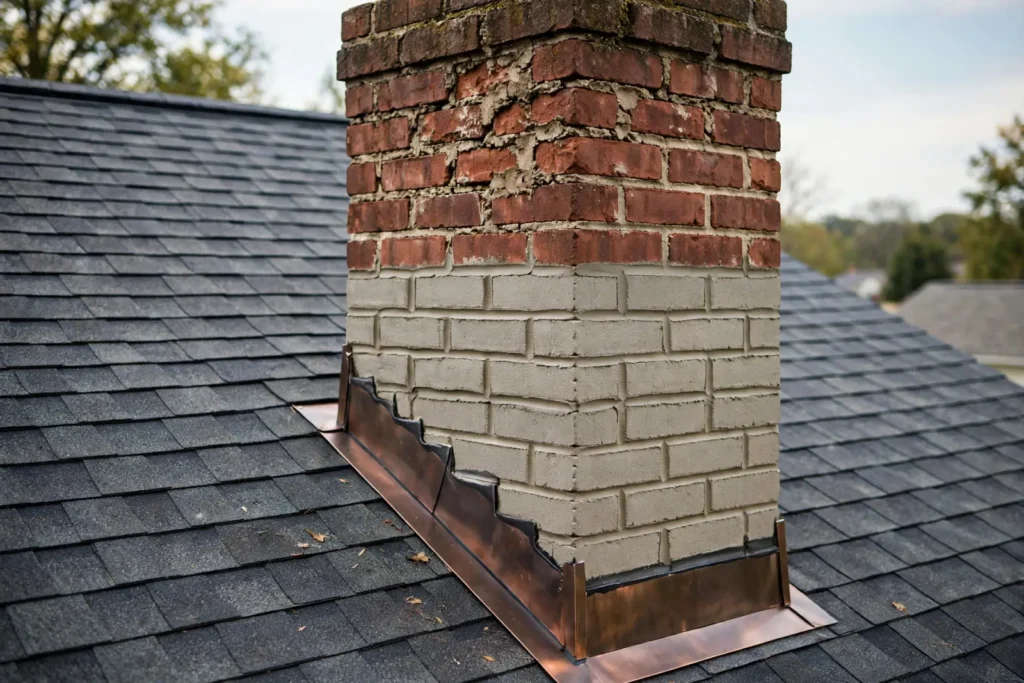
Quick answer: Common chimney repairs often cost about $200 to $850 in 2026, according to HomeGuide, while moderate repairs can run $500 to $2,500 and major structural or liner work can reach $1,000 to $7,000. Rebuilding or replacing a severely damaged chimney can cost roughly $4,000 to $15,000. Angi’s October 2026 data is similar for ordinary repair calls, with a national average around $455 and a common range of $160 to $750, while complex rebuilds can reach $15,000.
2026 cost snapshot
| Repair level / item | 2026 planning range | Source context |
|---|---|---|
| Minor repairs | $200-$850 | HomeGuide common fixes |
| Moderate repairs | $500-$2,500 | Repointing, waterproofing, flashing-type work |
| Major repairs | $1,000-$7,000 | Liner or structural work |
| Extensive rebuild / replacement | $4,000-$15,000 | HomeGuide broad rebuild range |
| Chimney flashing repair | $400-$1,600 | Angi; average about $1,000 |
| Repointing | $4-$25 per sq. ft. | Angi 2026 cost table |
Why “chimney repair” can mean a $300 job or a $15,000 project
A chimney is a system, not a single brick column. The visible stack above the roof is only part of it. Depending on the house, the project may involve masonry, mortar joints, a crown or chase cover, flashing, a cap, flue tiles or liner, a smoke chamber, fireplace components and the connection to a fuel-burning appliance. That is why national “chimney repair cost” numbers spread so widely.
HomeGuide’s January 2026 guide separates the work into useful planning levels: about $200 to $850 for minor repairs, $500 to $2,500 for moderate work, $1,000 to $7,000 for major repairs, and $4,000 to $15,000 for extensive rebuilds or replacement. Angi’s October 2026 national article reports a $455 average and a common $160 to $750 range for basic repair, but also notes that substantial rebuilds can reach $15,000. The key is to identify the failed component before using any average.
A homeowner with one cracked crown should not budget from a full-rebuild number. A leaning chimney with spalled brick and a damaged liner should not be priced from a cap-replacement average. A good inspection narrows the scope before the quote is treated as meaningful.
The following ranges are national planning figures. Access, roof height, masonry condition, local labor and whether the chimney serves wood, gas or another appliance can move the final bid.
Masonry and mortar repairs
Mortar joints take weather exposure year after year. Repointing or tuckpointing removes deteriorated mortar and replaces it without rebuilding sound brick. Angi’s 2026 cost breakdown lists repointing around $4 to $25 per square foot and tuckpointing around $500 to $2,500 for common projects. The useful question is not which label the contractor uses; it is how much masonry is actually unsound.
Spalling brick, deep cracking, bulging or movement can indicate a larger moisture or structural problem. Replacing a few damaged bricks is different from rebuilding the stack from the roofline upward. Ask the mason to mark or photograph the areas included in the quote so you can distinguish localized repair from broad demolition.
If water has also damaged the roof around the chimney, compare that work with Roof Repair Cost 2026. The roofer may handle flashing and roofing materials while a mason handles brick and mortar. Some companies coordinate both; others do not.
Chimney crown and cap repairs
The crown is the sloped masonry or concrete surface at the top of many masonry chimneys. It is designed to shed water away from the flue and brickwork. Small crown repairs can be relatively modest, while extensive cracking or replacement is more expensive. Angi’s 2026 crown guide gives a broad $100 to $3,000 range, with the actual price driven by material and damage.
A chimney cap is different. It covers the flue opening and can help keep out rain, debris and animals. A missing cap does not automatically mean the crown is damaged, and a new cap does not repair failing masonry. Ask the contractor to identify each component separately in the proposal.
Flashing leaks around the chimney
Water stains near a chimney are often blamed on the masonry when the roof flashing is the real entry point—or the house may have both problems. Angi’s September 2026 data puts chimney flashing repair or replacement around $400 to $1,600, with a national average near $1,000. Minor resealing can be less, but repeated caulk-only fixes can mask a flashing system that needs proper replacement.
If the roof itself is near the end of its service life, coordinate chimney work with the larger roofing plan. The Roof Replacement Cost Calculator 2026 can help frame the overall roof budget, but chimney masonry and flashing should still be itemized so you know who warranties each interface.
Skylights and chimneys share one important lesson: penetrations through the roof depend on good flashing details. The Skylight Installation Cost 2026 guide explains why roof pitch, flashing and roofing material can change labor even when the opening itself is small.
Flue and liner repairs
The flue liner protects the chimney structure and helps contain combustion products. Cracked clay tiles, deteriorated metal liners or an improperly sized flue are not cosmetic defects. Angi’s 2026 repair table lists flue repair around $65 to $100 per square foot, but a liner project should be quoted as a complete system rather than estimated from a single square-foot rate alone.
If a heating appliance is changed, the existing chimney may no longer be suitable for the new operating conditions. NFPA 211 inspection guidance calls for a higher-level inspection in situations such as adding or replacing appliances with dissimilar types or after an event likely to have caused chimney damage. Homeowners do not need to memorize inspection levels, but they should tell the chimney professional when the appliance, fuel or venting arrangement has changed.
When a chimney needs a partial or full rebuild
A partial rebuild often means removing and reconstructing the stack above the roofline while leaving sound lower masonry. Angi’s 2026 replacement data places partial rebuilds around $1,500 to $4,000. A full replacement is much larger, with national planning figures commonly in the $10,000 to $15,000 range and some projects higher.
Leaning, severe cracking, widespread spalling, failed mortar through much of the stack or long-term water damage can all move the project from repair toward rebuild. The contractor should explain why the existing masonry cannot be stabilized or repaired economically. If the answer is vague, a second masonry or chimney opinion is reasonable before approving a five-figure project.
Inspection, sweeping and safety
Chimney Safety Institute of America homeowner guidance follows NFPA 211 and recommends that chimneys, fireplaces and vents be inspected at least annually for soundness, deposits and correct clearances, with cleaning, maintenance and repair performed as needed. The inspection is not only about soot. It can reveal cracks, blockages, deteriorated liners, water damage and other problems that change the repair scope.
Chimney work also creates serious fall and combustion hazards. This article is not a roof-access or masonry-repair tutorial. Do not climb onto a steep roof to inspect the crown or flashing. A qualified chimney professional can inspect accessible components and use cameras or other tools for the interior. Keep smoke and carbon-monoxide alarms maintained as part of your broader Home Maintenance Checklist 2026.
What changes the final chimney repair price
Height and roof pitch affect access. A one-story chimney reached from a stable work platform is different from a tall stack on a steep multi-story roof. Scaffolding, lifts and additional fall-protection planning can increase labor even when the masonry defect itself is small.
Material matters. Brick, stone, stucco and prefabricated metal systems require different skills and replacement components. Historic masonry can add matching and preservation constraints. The amount of demolition and debris disposal also changes the bid.
Water damage can spread the scope. A failing crown may damage brick; failed flashing may damage roof sheathing; a leak around the chimney may stain ceilings and insulation. Ask the contractor to separate the chimney repair from interior finish repair so you can see which trade owns each line item.
Permits vary. Angi notes that partial or full chimney replacements commonly trigger building permits and gives a broad $150 to $2,000 range depending on location and project scope. Do not add that amount automatically to a small repair. Ask your local jurisdiction or contractor what is actually required.
How to compare chimney repair quotes
- Ask the inspector to identify the failed component with dated photos and explain whether the issue is masonry, flashing, crown, liner or a combination.
- Compare two or three written bids on the same repair boundary, access equipment, disposal, roof protection, permits and warranty terms.
- Resolve water-entry, structural and combustion-safety work first, then schedule cosmetic repairs only after the underlying defect is corrected.
Request photos or marked-up findings. The quote should identify the crown, cap, flashing, mortar, brick, liner or other components being repaired. “Repair chimney as needed” is too vague for a major project. Ask how much material will be removed, what replacement material will be used, how flashing interfaces are handled, and what warranty applies to water intrusion versus masonry.
Before you approve a chimney repair estimate, compare these six scope details side by side:
- Diagnosis: Request dated photos of the specific defect and ask whether the interior flue was inspected when venting or liner damage is suspected.
- Repair boundary: Identify the number or area of bricks and mortar joints, crown work, flashing sections, and any liner components included. A price per square foot is only useful when the measured area is stated.
- Roof interface: Ask whether step and counterflashing, adjacent shingles, and any water-damaged sheathing are included or explicitly excluded.
- Access and protection: Confirm scaffolding or lift charges, roof protection, debris removal, and cleanup; these can explain differences between otherwise similar bids.
- Approvals and coordination: Identify who obtains any required permit and whether the roofer, mason, and chimney specialist have clearly assigned responsibilities.
- Closeout: Request completion photos, written warranty exclusions, and confirmation of any necessary post-repair chimney or appliance-venting inspection before use.
Do not combine unrelated national price ranges into one quote. A flashing repair price may already include roof-access labor, and a rebuild bid may already include masonry demolition. Ask the contractor to mark which costs are included rather than adding every published range together.
For a rebuild, ask whether demolition, disposal, scaffolding, roof protection, permits and final cleanup are included. If the chimney serves a fireplace or appliance, confirm whether the contractor is also verifying the flue and appliance connection after the masonry work.
Use written scopes and credential checks from How to Hire a Home Contractor 2026. A lower bid can be a smaller repair, not a better price for the same work.
Frequently asked questions
How much does a basic chimney repair cost in 2026?
HomeGuide places many minor repairs around $200 to $850, while Angi’s common range is roughly $160 to $750. The component being repaired matters more than the average.
How much does repointing cost?
Angi lists roughly $4 to $25 per square foot for repointing, with project totals varying by chimney size, access and mortar condition.
How much does chimney flashing repair cost?
Angi’s September 2026 data gives a typical $400 to $1,600 range, averaging around $1,000.
When is a rebuild more sensible than repair?
When damage is widespread, the chimney is leaning or unstable, or repeated repairs would leave large areas of compromised masonry. A professional inspection should document why.
Does a chimney need inspection if it vents gas equipment?
CSIA says yes. Chimneys serving gas appliances can still develop blockages, corrosion or venting problems and should be inspected.
Budget scenarios: from maintenance repair to rebuild
A lower-cost scenario might start with an inspection that finds a small crown crack, a deteriorated cap and minor mortar loss near the top of the stack. The project could remain in the minor-repair range if the liner, flashing and lower masonry are sound. A written quote should still separate cap, crown and mortar work so the homeowner knows what is being repaired and what is merely being observed.
A middle scenario could involve leaking flashing, broader repointing and several spalled bricks. Now the job may involve both a roofer and a mason, or a chimney company capable of handling both scopes. The homeowner should ask which trade is responsible for the water-tight roof-to-chimney interface and whether the masonry warranty covers water intrusion. This is where apparently similar $2,000 and $4,000 bids can differ because one includes scaffolding, flashing replacement and brick replacement while the other does not.
A major scenario is a chimney that leans, has widespread freeze-thaw damage or has failed masonry above and below the roofline. A partial or full rebuild may be safer and more durable than repeated patches. Before approving a five-figure rebuild, ask for photographs, an explanation of which sections are unsound, the proposed rebuild height, liner implications, flashing scope and whether structural consultation is needed. A second professional opinion is reasonable when the repair recommendation changes the building structure.
Keep the inspection report and repair photographs with the home records. They are especially useful after a chimney fire, severe storm or future roof replacement because a later contractor can see what was repaired and when. Documentation also helps distinguish a new leak from a previously repaired condition instead of restarting the diagnosis from scratch.
Common budgeting mistakes to avoid
Do not approve a large chimney repair from a one-line estimate. Ask for photographs and component-level scope. Do not treat exterior waterproofing or sealant as a substitute for repairing failed mortar, flashing or a damaged liner. And do not postpone a safety-related repair simply because the fireplace is used infrequently; chimneys can also vent heating appliances, and deterioration or blockage can affect safe venting even when the fireplace itself is rarely used.
Bottom line
For 2026 budgeting, think of chimney work in levels: roughly $200 to $850 for many minor repairs, $500 to $2,500 for moderate masonry or waterproofing work, $1,000 to $7,000 for major repairs, and $4,000 to $15,000 for extensive rebuilds or replacement. The most valuable step is not finding the lowest average—it is getting a documented inspection that identifies exactly which chimney components are failing.
Sources used for this article
- HomeGuide — How Much Does Chimney Repair Cost? (2026), January 22, 2026: https://homeguide.com/costs/chimney-repair-cost
- Angi — How Much Does Chimney Repair Cost? [2026 Data], updated October 6, 2026: https://www.angi.com/articles/what-should-it-cost-replace-and-rebuild-masonry-chimney.htm
- Angi — Chimney Flashing Repair or Replacement Cost [2026 Data], updated September 23, 2026: https://www.angi.com/articles/how-much-should-it-cost-replace-flashing-around-chimney.htm
- Chimney Safety Institute of America — Homeowner Resources: https://www.csia.org/homeowner-resources
- NFPA 211 2026 inspection agenda/materials: https://docinfofiles.nfpa.org/files/AboutTheCodes/211/211_A2026_CHI-AAA_SDAgenda_08_25.pdf