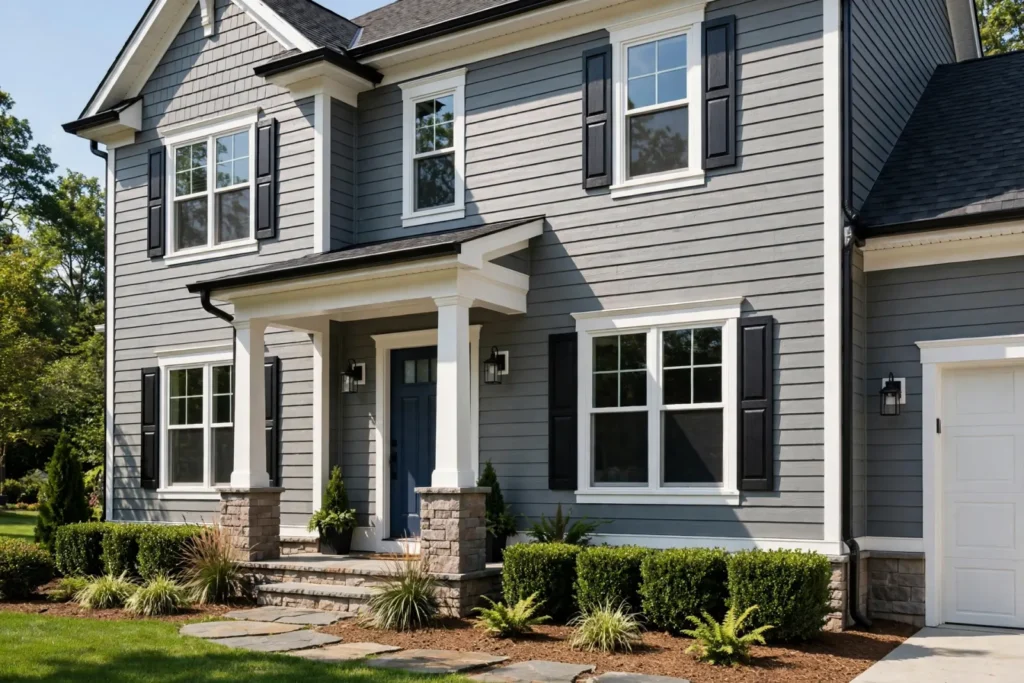
Replacing siding is one of the larger exterior projects a homeowner can take on because the job affects weather protection, curb appeal, maintenance, and sometimes the wall assembly beneath the visible finish. For U.S. homeowners planning a 2026 project, a practical national budget is roughly $4 to $13 per square foot installed, with many whole-house projects falling between about $5,500 and $18,000. Large homes, premium materials, complex architecture, structural repairs, and difficult access can push the total much higher.
Current 2026 data from Angi puts the average cost to replace house siding at about $11,589, with most projects between $5,554 and $17,720. HomeGuide gives a broader material-based range of roughly $4 to $13 per square foot installed, or about $10,000 to $32,500 for a 2,500-square-foot home. The difference is a reminder that “average siding cost” depends heavily on material, house size, and exactly what the estimate includes.
For a typical 2026 U.S. whole-house siding replacement, use about $11,600 as an average benchmark and roughly $5,500–$18,000 as a practical common-project range. For early estimating by exterior wall area, about $4–$13 per square foot installed is a useful national planning range before demolition, hidden repairs and premium material upgrades.
Siding replacement cost at a glance
| Project or material | 2026 planning range |
|---|---|
| Typical siding replacement project | $5,500–$18,000 |
| General installed range | $4–$13 per sq. ft. |
| Vinyl siding | About $4–$12 per sq. ft. installed |
| Aluminum siding | About $6–$10 per sq. ft. installed |
| Engineered wood | About $7–$12 per sq. ft. installed |
| Fiber cement | About $6–$15 per sq. ft. installed |
| Wood siding | About $5–$15 per sq. ft. installed |
| Steel siding | About $7–$16 per sq. ft. installed |
| Old siding removal | About $0.70–$2.00 per sq. ft. extra |
These are national planning ranges. Local labor, disposal fees, permit rules, material availability, wall condition, and seasonal demand can all change a real contractor quote.
How much does siding cost by material?
Vinyl siding
Vinyl remains one of the most common lower-cost choices. HomeGuide lists roughly $4 to $12 per square foot installed, while Angi’s September 2026 vinyl data shows whole-home projects commonly around $6,368 to $18,377. Basic profiles are cheaper, while insulated, thicker, textured, and specialty styles cost more.
Vinyl can be attractive for homeowners who want lower maintenance and a broad range of colors, but installation quality matters. Poorly fastened panels, weak flashing details, or incorrect clearances can lead to buckling or water problems.
Fiber cement
Fiber cement costs more than entry-level vinyl but is popular for its appearance, durability, and resistance to pests and weather. HomeGuide lists roughly $6 to $15 per square foot installed. Angi’s September 2026 fiber-cement data puts the national average near $14,897, with many projects between $6,584 and $23,217.
Fiber cement is heavier than vinyl and requires more cutting, fastening, and finishing work. Multi-story homes, gables, dormers, and detailed trim can raise labor significantly.
Engineered wood
Engineered wood generally sits in the middle of the market. HomeGuide estimates around $7 to $12 per square foot installed. It can provide a wood-like appearance with different maintenance and moisture characteristics from traditional lumber.
Natural wood
Wood siding commonly costs around $5 to $15 per square foot installed, depending on species, profile, grade, finish, and labor. Cedar and specialty products can move higher. Wood usually requires more ongoing maintenance than vinyl or fiber cement, including periodic coating or staining.
Metal siding
Aluminum and steel are durable alternatives with different price points. HomeGuide places aluminum around $6 to $10 per square foot installed and steel around $7 to $16. Metal can be attractive for low-maintenance applications, but dents, corrosion exposure, finish quality, and detailing should be considered.
House size is not the same as siding square footage
Do not multiply your home’s interior floor area by a siding price and assume the result is accurate. Contractors estimate exterior wall area, then adjust for windows and doors, waste, gables, corners, dormers, stories, trim, and installation complexity.
A two-story 2,000-square-foot home can have a very different exterior area from a one-story 2,000-square-foot home. Complex rooflines and many architectural details also increase cutting and labor even when wall area is similar.
What drives the final price?
Number of stories
Second- and third-story work usually costs more because crews need ladders, staging, lifts, and additional safety setup. Labor productivity is also lower on difficult elevations.
Gables, dormers, and detailed trim
A simple rectangular wall is faster to cover than a facade with many corners, windows, transitions, decorative bands, and roof intersections. More cuts mean more labor and more waste.
Removal of old siding
HomeGuide estimates old siding removal at roughly $0.70 to $2.00 per square foot extra. Removal can cost more when layers are difficult to detach, disposal is expensive, or the crew discovers hidden damage beneath the old material.
Sheathing and structural repairs
Rotten sheathing, damaged framing, insect damage, failed flashing, or long-term water intrusion can add substantial cost. These problems often cannot be fully priced until the old siding is removed.
House wrap, flashing, and weather barriers
A complete replacement may involve new water-resistive barrier, flashing around windows and doors, kick-out flashing at roof-wall intersections, and sealing penetrations. These details are easy to overlook in a low bid but are central to long-term moisture control.
Repair or replace siding?
Full replacement is not always necessary. Localized damage may be repairable when the rest of the siding is in good condition and matching material is available.
Repair can make sense when:
- damage is limited to a small number of panels or boards;
- the underlying wall is dry and structurally sound;
- the same profile and color are still available;
- the rest of the exterior has meaningful service life remaining.
Replacement becomes more reasonable when:
- damage is widespread;
- the siding is brittle, warped, cracked, or heavily deteriorated;
- water intrusion is occurring in multiple areas;
- matching repair material is unavailable;
- repeated repairs are becoming expensive;
- you want to change the home’s maintenance level or exterior appearance.
If only one elevation is damaged, ask whether partial replacement is technically and visually acceptable before committing to the entire house.
Pre-1978 homes and lead-safe renovation
Older siding projects need additional planning. The U.S. Environmental Protection Agency’s Renovation, Repair and Painting rules can apply when paid renovation work disturbs lead-based paint in pre-1978 housing. EPA guidance specifically addresses siding work and notes that exterior projects disturbing more than 20 square feet of painted surface can trigger lead-safe work-practice requirements when lead-based paint is present.
Even newer siding installed over older painted material can create a lead issue if removal disturbs the underlying coated surface. If your house was built before 1978, discuss lead-safe procedures with the contractor before demolition starts. EPA recommends using properly certified lead-safe contractors for covered work.
DIY vs. professional siding replacement
A homeowner with strong carpentry experience may be able to replace a small section of simple siding, but whole-house siding is usually better suited to an experienced crew. The job involves weather barriers, flashing, window and door transitions, fastening patterns, clearances, trim, ladders or scaffolding, and sometimes hidden structural repairs.
Installation errors can be expensive because they may allow moisture behind the exterior finish. A lower labor bill is not a bargain if the wall later needs sheathing or framing repairs.
DIY is most realistic for small, accessible repairs where the wall assembly is already understood. Multi-story replacement, fiber cement, complex trim, extensive demolition, or work on a pre-1978 painted exterior usually favors professional installation.
Permits and local requirements
Permit requirements differ by jurisdiction. Some locations treat a like-for-like siding replacement as routine maintenance, while others require permits for substantial exterior work, structural repair, changes to wall assemblies, or work in designated districts.
Confirm requirements before work begins, especially if the project includes structural repairs, new exterior insulation, changes around windows, or modifications to fire-rated assemblies.
Hidden costs to budget for
The visible siding is only one part of the project. Common add-ons include:
- old siding removal and disposal;
- rot or sheathing replacement;
- new weather-resistive barrier;
- window and door flashing corrections;
- fascia, soffit, and trim replacement;
- painting or factory-finish upgrades;
- scaffolding or lift rental;
- lead-safe containment on applicable older homes;
- permit and inspection fees;
- temporary removal and reinstallation of lights, cameras, outlets, downspouts, and exterior fixtures.
When collecting bids, ask for allowances for hidden damage so you know how change orders will be priced if problems are uncovered.
How to compare siding contractor quotes
Get at least two or three written quotes based on the same product and scope. Each estimate should identify:
- manufacturer, product line, profile, and color;
- estimated siding square footage;
- old siding removal and disposal;
- house wrap or weather barrier;
- flashing scope;
- trim, soffit, and fascia work;
- sheathing-repair pricing or allowances;
- painting or finish work;
- permit responsibility;
- lead-safe procedures where applicable;
- labor and product warranties;
- total installed price and payment schedule.
A low quote may exclude removal, trim, flashing, or repairs that another contractor has already included. Compare complete scopes rather than headline totals.
Related exterior projects
Siding replacement often overlaps with other exterior work. If you are also changing finishes, see our exterior house painting cost guide. If windows are near the end of their service life, our window replacement cost guide can help you decide whether coordinating the two projects makes sense.
Gutters may also need temporary removal during siding work. Our gutter installation cost guide covers replacement pricing and material choices.
A five-step siding replacement plan
- Confirm the problem before choosing material. Walk the exterior with the contractor and identify whether the issue is cosmetic aging, widespread material failure, moisture intrusion, or damage beneath the siding.
- Measure the real exterior scope. Ask for estimated siding square footage, stories, gables, trim, and waste assumptions rather than budgeting from interior floor area.
- Choose the complete wall system. Compare siding, weather-resistive barrier, flashing, trim, fasteners, and finishing as one package. A cheaper visible panel is not a bargain if water-management details are excluded.
- Get comparable written quotes. Require the same material line, removal scope, flashing work, repair allowances, and warranty from each bidder.
- Set change-order rules before demolition. Agree on unit pricing or approval procedures for rotten sheathing, framing damage, and other hidden conditions.
Three realistic siding budget scenarios
Simple vinyl replacement: A one-story home with straightforward walls, accessible work areas, and sound sheathing is most likely to stay near the lower-to-middle part of the installed range.
Two-story fiber-cement project: Heavier material, more cutting, staging, trim, and detailed flashing increase labor. Budget toward the higher end even when wall area is similar to a simpler home.
Older home with hidden water damage: The siding price may be reasonable, but sheathing, trim, or framing repairs discovered after tear-off can become the dominant extra cost. This is why repair allowances matter.
Final siding walkthrough checklist
- Check that panels or boards are straight, secure, and installed with the required clearances.
- Inspect flashing and transitions around windows, doors, roof intersections, decks, and penetrations.
- Confirm trim, caulk, paint, and factory-finish touch-ups are complete.
- Verify gutters, lights, cameras, outlets, and exterior fixtures were reinstalled correctly.
- Ask for product warranty documents, contractor warranty terms, and care instructions.
- Make sure all debris, fasteners, and removed materials are cleared from the property.
Frequently asked questions
What is the average cost to replace house siding in 2026?
Angi’s 2026 data puts the national average near $11,589, with many projects between about $5,554 and $17,720. Use that as a planning benchmark rather than a local quote because material, wall area, stories, removal and hidden repairs can move the final price substantially.
How much does siding replacement cost per square foot?
A practical national planning range is about $4 to $13 per square foot installed. Vinyl is often toward the lower end, while fiber cement, wood, steel and complex multi-story work can move higher.
Does removing old siding cost extra?
Often, yes. Current national planning data puts old-siding removal at roughly $0.70 to $2.00 per square foot extra. Disposal, multiple layers and hidden wall damage can increase the cost further.
Bottom line
For 2026, a reasonable planning range for siding replacement is roughly $4 to $13 per square foot installed, with many national projects landing around $5,500 to $18,000. Material choice matters, but the final bill is also heavily influenced by house shape, stories, demolition, trim, flashing, and hidden wall damage.
The strongest estimate is one that clearly separates siding, removal, weather protection, trim, repairs, permits, and finishing. That makes contractor bids easier to compare and reduces the chance that an apparently inexpensive quote becomes expensive after demolition starts.
Home Cost Desk compares current U.S. cost or technical references and checks safety, code, efficiency, incentive, or regulatory claims against authoritative sources when available. National figures are planning ranges, not local quotes.
Editorial review: Home Cost Desk Editorial Team · Read our research methodology · Detailed sources appear below.
Sources and methodology
Home Cost Desk uses current national cost datasets as planning references and official U.S. guidance for safety-related renovation issues. Actual prices vary by location, contractor availability, material, house design, and wall condition.