Quick Answer
Angi reports an average bathroom fan installation cost around $396 in 2026, with most projects about $241 to $563 and a broader range of roughly $120 to $900. A same-size replacement on existing wiring and ductwork is cheaper than adding a fan where no proper exterior duct exists.
Home Cost Desk uses national cost data as planning guidance rather than a substitute for a local written bid. Actual prices vary with city, labor market, product availability, building age, access, code requirements and concealed damage.
2026 Cost Snapshot
| Scope | 2026 planning benchmark | Basis |
|---|---|---|
| Typical bathroom fan installation | $241–$563; about $396 average | Angi |
| Broader project range | About $120–$900 | Angi |
| New duct/vent work | About $250–$950 | Angi |
| Electrical labor | About $50–$100 per hour | Angi |
How to Read the Price Range
Most like-for-like fan swaps fall within Angi’s $241–$563 range when the new fan fits the existing opening and the duct and wiring are reusable. The job moves toward the upper end of the broader $120–$900 range when the ceiling opening must be enlarged, the duct needs replacing or rerouting to the outside (about $250–$950 in Angi’s figures), or a new switch, timer or humidity sensor requires electrical work.
What Drives the Cost
The largest cost drivers for this project include fan airflow rating (CFM), noise rating in sones, fan-only versus light/heater/smart features, existing ceiling opening, existing wiring, duct diameter and length, wall versus roof termination, and attic and roof access.
Hidden Costs to Budget For
Build a contingency for conditions that cannot be fully confirmed until work begins. Common examples include new dedicated switch or timer, larger ceiling cutout and drywall patching, insulated duct in cold attic, roof or wall vent cap, permit fees where required, and mold or paint repair from chronic humidity.
Safety, Permits and Quality Control
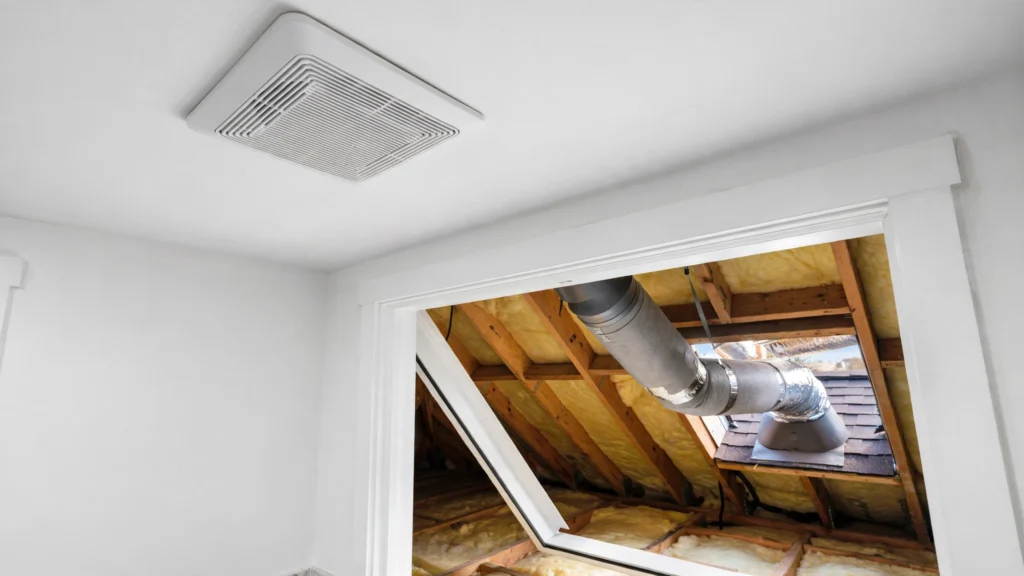
A bathroom fan must exhaust outdoors, not into an attic or wall cavity. Electrical connections belong in approved enclosures and wet-area requirements matter. If the old fan has been dumping moisture into the attic, inspect for damp insulation or mold before simply installing a stronger fan.
ENERGY STAR says certified ventilation fans use about 48 percent less energy than standard models and provide better efficiency and comfort with less noise (ENERGY STAR ventilation fans). EPA recommends exhaust fans in bathrooms as part of controlling the moisture that leads to mold (EPA mold and moisture guide).
Permit rules vary by jurisdiction. The contractor should state whether a permit is required and who will obtain it. For work involving structure, plumbing, electrical systems, combustion equipment, waterproofing or the weather envelope, quality control belongs in the scope from the beginning.
Three Real-World Planning Scenarios
Scenario 1: Like-for-like fan swap
Existing duct, wiring and opening are correct; this is the easiest scope.
Scenario 2: No existing exterior duct
Routing a new duct and exterior termination can cost more than the fan itself.
Scenario 3: Steam-heavy bathroom with weak old fan
Correct CFM, a reasonably quiet model and run-time control can improve actual use more than buying the cheapest replacement.
How to Compare Contractor Quotes
Compare fan replacement bids on the fan’s airflow (CFM) and noise (sones), whether the new housing fits the existing opening, duct size and condition, where the duct terminates outside, and any wiring changes for a timer, humidity sensor or light. A fan that vents into the attic instead of outside will not solve moisture problems.
DIY vs. Professional Bathroom Fan Replacement
Replacing a same-size fan can be manageable for an experienced DIYer when the existing duct and electrical connection are sound, accessible and compatible with the new unit. Cutting a larger ceiling opening, adding a new circuit, rerouting ductwork or creating a new roof or wall termination is a more complex project.
Professional help is appropriate when wiring is uncertain, the fan currently vents into an attic, the duct is inaccessible or the exterior termination must be added. The goal is not merely to make the fan run; the complete system must move moist air outdoors without creating condensation, air leakage or electrical risk.
How to Save Money Without Creating a False Economy
Choose a replacement fan that fits the existing ceiling opening and duct size when it still meets your airflow needs; this avoids drywall and duct work. Confirm the existing duct is sound and vents outdoors before deciding to reuse it. Combining the fan swap with other electrical work in the same visit can reduce trip charges.
Pre-Quote Homeowner Inspection
- Hold a tissue near the running fan to see whether it pulls air.
- Find where the duct ends: roof cap, wall cap, soffit or the attic.
- Note mold, peeling paint or lingering fog after showers.
- Check the size of the existing ceiling opening.
Red Flags in a Quote
- Venting into the attic.
- No CFM or sone rating for the new fan.
- Reusing a crushed or undersized duct.
- No plan for likely concealed conditions such as new dedicated switch or timer, larger ceiling cutout and drywall patching, insulated duct in cold attic, roof or wall vent cap.
Planning the Work From Start to Finish
Attic access may be needed for duct and wiring work. After installation, run the fan during a shower and confirm the mirror clears faster and the outside damper opens.
Quote Checklist
- Fan model, CFM and sones.
- Housing fit and ceiling repair.
- Duct size, route and exterior termination.
- Wiring, switch, timer or humidity control.
- Disposal and warranty.
- Demolition, removal and disposal.
Related Home Cost Desk Guides
Frequently Asked Questions
How do I size a bathroom fan?
Many guides start with about 1 CFM per square foot for typical bathrooms; see our bathroom ventilation guide for details.
Can a fan vent into the attic?
It should vent outdoors; venting moist air into the attic can cause moisture problems.
Is an ENERGY STAR fan worth it?
ENERGY STAR says certified fans use about 48 percent less energy than standard models and run quieter.
Bathroom Exhaust Fan Replacement Checklist
- Confirm the existing duct route and where it terminates; a fan should vent outdoors rather than into an attic or other enclosed space.
- Choose capacity and noise level for the room and duct conditions instead of buying only by grille size.
- Ask whether the quote includes electrical connection, new ducting, roof or wall termination, insulation around the duct and ceiling repair.
- If the old fan is noisy but still moves air, check for a restricted duct, damaged damper or poor termination before assuming the motor is the only problem.
- After installation, verify the exterior damper opens, airflow is noticeable at the grille and no condensation or air leakage appears around the housing.
What to Do Next
- Confirm the existing fan size, duct route and vent termination before choosing a replacement.
- Get a written quote that separates the fan, duct corrections, exterior venting and any electrical work.
- Choose equipment that meets the room’s airflow needs and have moisture or unsafe wiring issues corrected before final installation.
Photograph the existing fan and, where safely accessible, note the duct size and exterior termination. Compare bids on the complete ventilation path rather than the fan unit alone, because a powerful new fan connected to a poor duct can still perform badly.
Bottom Line
Angi reports an average bathroom fan installation cost around $396 in 2026, with most projects about $241 to $563 and a broader range of roughly $120 to $900. A same-size replacement on existing wiring and ductwork is cheaper than adding a fan where no proper exterior duct exists. The strongest decision is based on the real project scope, a normalized written quote and clear responsibility for preparation, hidden conditions and finish work.
Sources & Methodology
Home Cost Desk reviewed the following sources for national planning ranges and technical guidance. Cost data is not a substitute for local bids. Where safety, energy, moisture or building-envelope issues are involved, authoritative agency guidance should take priority over marketing claims.