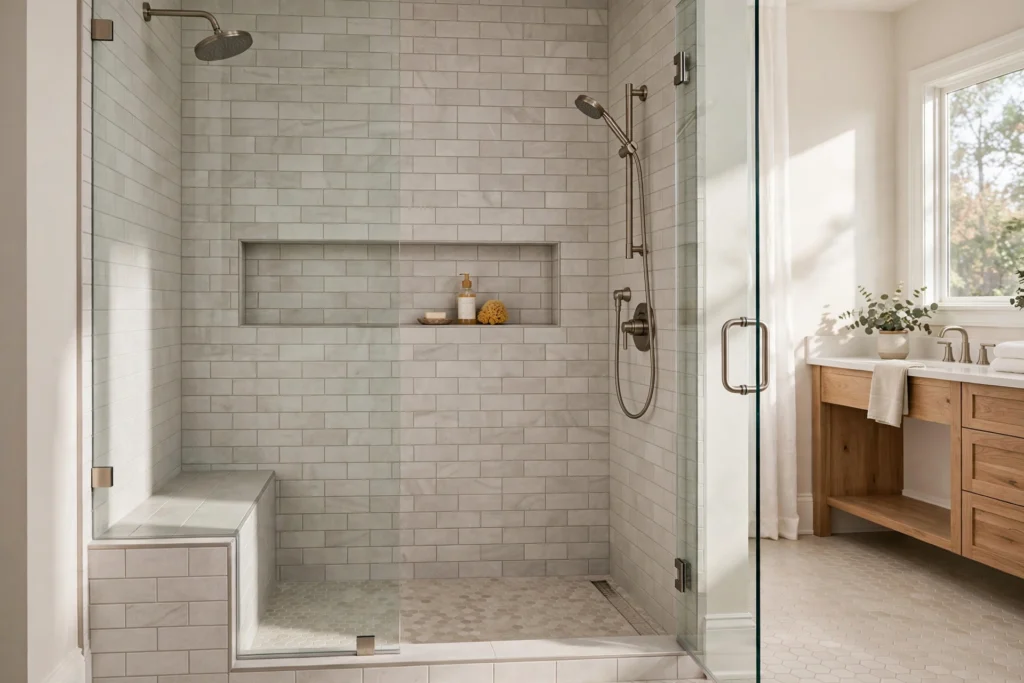
A shower remodel can be anything from replacing fixtures and regrouting tile to rebuilding the entire wet area with a new pan, waterproofing system, custom tile, glass enclosure, plumbing, and accessibility features. For U.S. homeowners planning a 2026 project, a realistic budget is about $2,000 to $9,000 for many remodels, with a national average near $7,000. Simple refreshes can cost less, while custom walk-in showers, premium tile, steam systems, structural repairs, and major plumbing changes can push the total above $15,000.
Angi’s August 2026 data shows a typical shower remodel range of $2,000 to $9,000, with projects spanning roughly $300 to $15,000 depending on scope. HomeGuide reports about $1,500 to $3,000 for a basic refresh, $3,000 to $8,000 for a mid-range renovation, and $8,000 to $20,000+ for high-end or spa-style work. These are national planning ranges, not contractor quotes. If the shower is part of a larger bathroom project, the Bathroom Remodel Cost Calculator estimates a full-room planning range by size and scope.
Shower remodel cost at a glance
| Project or component | 2026 planning range |
|---|---|
| Typical shower remodel | $2,000–$9,000 |
| Basic refresh | $1,500–$3,000 |
| Mid-range renovation | $3,000–$8,000 |
| High-end custom shower | $8,000–$15,000+ |
| Luxury spa-style shower | $15,000–$20,000+ |
| Walk-in shower | About $1,150–$8,000+ |
| Tub-to-shower conversion | About $1,200–$12,000 |
| Shower door | About $600–$1,350 |
| New plumbing | About $600–$3,500+ |
| Regrouting | About $10–$25 per sq. ft. |
The wide range exists because “shower remodel” is not one standardized job. Replacing a showerhead and door is fundamentally different from removing the tub, relocating the drain, rebuilding walls, installing a waterproof membrane, tiling floor to ceiling, and adding frameless glass.
What does a $2,000, $7,000, or $15,000 shower remodel look like?
About $2,000 to $3,000: basic refresh
This budget is most realistic when the shower footprint and plumbing stay in place. Typical work might include a new showerhead and valve trim, minor tile repair, regrouting, a basic prefabricated enclosure, or a modest door replacement. For framed, frameless and custom glass prices, see shower door installation cost.
The existing pan, drain location, wall framing, and waterproofing need to be in usable condition. Hidden water damage can quickly move a “cosmetic” project out of this price band.
About $5,000 to $9,000: mid-range remodel
This is where many full shower renovations land. The budget may cover demolition, a new pan or base, waterproofing, mid-range tile or a higher-quality prefab system, plumbing fixtures, a glass door, and standard labor.
Angi’s 2026 installation data puts the average new shower installation around $8,204, with many projects between $4,448 and $12,373. Keeping the drain, valve, and shower footprint close to their current locations helps control cost.
$10,000 to $20,000+: custom or luxury shower
Custom tile, large-format stone, frameless glass, benches, niches, multiple showerheads, body sprays, steam, curbless construction, relocated plumbing, specialty lighting, and structural changes can push the budget into five figures.
A luxury shower is not just more expensive because of finish materials. It often requires more planning, waterproofing detail, plumbing capacity, electrical work, glass fabrication, and labor.
Prefab shower vs. custom tile
Prefabricated shower systems
Prefab fiberglass or acrylic units are generally less expensive and faster to install. HomeGuide reports about $1,000 to $8,000 installed for prefab shower-stall replacement, depending on what the kit includes and how much plumbing or demolition is required.
Prefab systems can be a strong choice when the priority is budget, speed, easy cleaning, and fewer grout joints. They are less flexible when the opening is unusual or the homeowner wants a highly customized layout.
Custom tile showers
Tile provides more flexibility in size, pattern, niche placement, curb design, and overall appearance. The tradeoff is more labor and more opportunities for waterproofing or drainage mistakes if the system is poorly designed.
Angi’s 2026 shower-remodel data shows tile materials ranging from very inexpensive ceramic to premium products around $50 per square foot before installation. Labor, substrate preparation, waterproofing, edge profiles, niches, benches, and complex patterns can make installed tile cost far more than the tile price itself.
Walk-in showers and tub-to-shower conversions
Angi’s August 2026 installation data estimates a walk-in shower at about $1,150 to $8,000 and a tub-to-shower conversion around $1,200 to $8,000. HomeGuide uses a broader $2,000 to $12,000 range for tub-to-shower conversions, especially when custom tile or plumbing changes are involved.
A conversion is usually cheapest when the new shower uses the existing tub footprint and nearby plumbing. Moving the drain or valve, changing wall framing, enlarging the enclosure, or creating a curbless entry adds labor and may require structural changes.
Before removing the only bathtub in a house, think about how the home is used. Families with young children, some future buyers, and households that prefer soaking may still value having at least one tub elsewhere.
Why waterproofing matters more than the tile
Tile and grout are finish surfaces; they are not the entire water-management system. A durable shower relies on the assembly behind the visible finish: pan or receptor, waterproof membrane, corners, drain connection, penetrations, backer materials, and proper slope.
Many expensive shower failures begin where homeowners cannot see them. Slow leaks can damage framing, subflooring, ceilings below, insulation, and adjacent rooms before a visible stain appears.
When comparing bids, ask the contractor to identify the waterproofing system by name and explain how the pan, walls, niches, benches, and plumbing penetrations will be integrated. “Waterproofed” is too vague for a high-value wet-area project.
Hidden water damage can change the budget
Demolition may reveal rotted studs, damaged subfloor, mold growth, leaking supply connections, corroded drain components, or an improperly built previous shower. HomeGuide specifically flags mold remediation and water-damage repair as common hidden costs in older shower renovations.
A good contract should explain how hidden conditions are priced. Ask whether the contractor uses fixed unit prices, hourly rates, or written change orders for framing, subfloor, or plumbing repairs.
Plumbing changes: one of the biggest cost multipliers
Keeping the valve, showerhead, and drain near their existing positions usually saves money. Angi’s 2026 shower-remodel data estimates new plumbing at roughly $600 to $3,500, while more complex rerouting can exceed that.
Relocating a drain can be especially expensive on concrete slabs or when joists limit where waste piping can run. Multiple showerheads, body sprays, and high-flow systems may also require larger supply lines, different valves, or an evaluation of available water pressure and hot-water capacity.
For broader service-call and labor benchmarks, see our 2026 plumber cost guide.
Electrical work homeowners often forget
A shower remodel may trigger electrical work even if the shower itself is primarily a plumbing project. Common additions include new exhaust fans, lighting, heated floors, steam generators, receptacle changes, or relocated switches.
Wet-area electrical work should be planned around applicable local requirements for GFCI protection, equipment ratings, clearances, and ventilation. If electrical work is part of the project, compare labor using our 2026 electrician cost guide.
Showerheads and water efficiency
The U.S. Environmental Protection Agency says standard showerheads use 2.5 gallons per minute, while showerheads that earn the WaterSense label must use no more than 2.0 gallons per minute and also meet performance criteria for spray force and coverage.
EPA estimates showering accounts for nearly 17% of residential indoor water use. Choosing a WaterSense-labeled showerhead can therefore reduce water use without requiring a major remodel.
For homeowners installing multiple showerheads or body sprays, consider the combined flow—not just the efficiency of each device individually. More outlets running at the same time can substantially increase water and hot-water demand.
Accessibility upgrades worth planning early
Accessibility is much cheaper to design into a shower during construction than to retrofit later. Useful features can include:
- low-threshold or curbless entry;
- properly located blocking for future grab bars;
- handheld showerhead on an adjustable slide bar;
- built-in or fold-down seating;
- non-slip flooring;
- wider entry and adequate maneuvering space;
- controls that are reachable without standing directly under the spray.
A true curbless shower requires careful floor slope, drainage, waterproofing, and sometimes framing changes. It should be planned as a system rather than created by simply removing the curb.
Permits and inspections
Permit requirements depend on jurisdiction and scope. A cosmetic fixture swap may not require the same process as moving plumbing, altering framing, adding electrical work, or changing the bathroom layout.
Angi’s 2026 bathroom-remodel data shows permit allowances commonly around $100 to $1,000 for broader bathroom projects, but local shower-specific fees may be much lower or higher. Ask the contractor who is responsible for permits and inspections before signing the contract.
DIY vs. professional shower remodeling
Some parts of a shower refresh are reasonable DIY tasks for experienced homeowners: replacing a showerhead, renewing caulk, changing surface-mounted accessories, or doing limited cosmetic work.
A full shower rebuild is different. Errors in drain slope, valve installation, waterproofing, framing, electrical work, or glass measurement can be expensive and may remain hidden until damage develops.
Professional installation is especially appropriate when the project involves:
- a new shower pan;
- custom waterproofing;
- relocated plumbing;
- curbless construction;
- steam equipment;
- frameless glass;
- structural repairs;
- electrical additions;
- significant hidden water damage.
This is why shower remodeling belongs in both the remodeling and DIY-vs.-professional decision space: there are safe tasks a homeowner can handle, but the water-management system itself has a high cost of failure.
How long does a shower remodel take?
A simple prefab replacement may take only a few working days. A full custom shower often takes one to three weeks of active work once demolition begins, and larger bathroom projects can take longer because of inspections, curing times, glass measurement, custom fabrication, trade scheduling, and hidden repairs.
Frameless glass is a common timeline bottleneck because final measurements may need to wait until tile is complete. Ask whether the glass is templated after tile installation and how long fabrication usually takes.
Hidden costs to include before signing
- Demolition and disposal: old tile, cement board, glass, and tubs are heavy and costly to remove.
- Water-damage repair: subfloor and framing repairs may not be visible before demolition.
- Plumbing relocation: moving drains and valves can add thousands.
- Electrical work: lighting, fans, heated floors, and steam systems can require a separate trade.
- Glass: frameless and custom enclosures cost significantly more than basic framed doors.
- Waterproofing: premium systems add cost but should never be treated as optional.
- Tile waste: complex patterns, niches, and large-format layouts require more cutting and extra material.
- Wall and floor leveling: uneven surfaces may need correction before finish work.
- Permit and inspection fees: local requirements vary.
- Temporary bathroom disruption: a household with one bathroom may need a practical backup plan.
How to compare shower-remodel quotes
Get at least two or three written proposals and make sure each contractor is pricing the same scope. A strong quote should identify:
- demolition and disposal;
- shower size and finished dimensions;
- pan or receptor system;
- waterproofing manufacturer and method;
- tile material and allowance;
- grout and edge profiles;
- niches, benches, shelves, and curbs;
- plumbing fixtures and valve type;
- drain type and location;
- glass enclosure specification;
- electrical work;
- framing and subfloor repair allowances;
- permit responsibility;
- cleanup;
- labor and product warranties;
- change-order process for hidden damage.
A lower quote may simply omit waterproofing details, demolition, glass, plumbing, or repair allowances that another contractor has already included.
How a shower remodel fits into a full bathroom budget
A shower can be one of the largest line items in a bathroom renovation. Angi’s July 2026 bathroom-remodel data puts many complete bathroom projects between about $6,651 and $17,657. If you are also changing the vanity, toilet, flooring, lighting, ventilation, or layout, compare the shower-only budget with our 2026 bathroom remodel cost guide.
If the toilet is also being replaced, our toilet replacement cost guide covers installation and hidden repair considerations separately.
Five-step shower remodel plan
- Inspect before designing: identify leaks, soft flooring, loose tile, ventilation problems, and any signs of hidden water damage.
- Keep plumbing locations when practical: moving drains and valves is one of the fastest ways to increase cost.
- Specify the waterproofing system: require the pan, membrane, niches, benches, corners, and penetrations to be described in writing.
- Compare complete quotes: make sure demolition, plumbing, glass, electrical work, waterproofing, tile allowance, permits, cleanup, and hidden-repair pricing are all shown.
- Verify before final payment: confirm drainage, door operation, fixtures, caulk and grout details, ventilation, and any required inspection sign-off.
Post-remodel verification checklist
- Water drains without pooling outside the intended shower floor design.
- No visible leaks appear around the valve, showerhead, glass, curb, or adjacent walls.
- Exhaust ventilation works and is vented as intended.
- Glass doors move freely and seals contact correctly.
- Grab bars, benches, and accessories are secure where installed.
- Warranty documents and product information are provided.
Bottom line
For 2026, many shower remodels fall around $2,000 to $9,000, with an average near $7,000. A basic refresh can stay closer to $1,500 to $3,000, while a fully custom walk-in or spa-style shower can exceed $15,000 to $20,000.
The visible tile and fixtures are only part of the investment. Waterproofing, drainage, plumbing, framing, glass, electrical work, hidden water damage, and finish quality are what separate a durable shower from one that becomes an expensive repair later. Compare complete systems, not just attractive tile allowances.
Home Cost Desk compares current U.S. cost or technical references and checks safety, code, efficiency, incentive, or regulatory claims against authoritative sources when available. National figures are planning ranges, not local quotes.
Editorial review: Home Cost Desk Editorial Team · Read our research methodology · Detailed sources appear below.
Sources and methodology
Home Cost Desk uses current national consumer cost datasets for planning ranges and official U.S. water-efficiency guidance for performance claims. Actual prices vary by region, contractor availability, shower size, materials, plumbing changes, and hidden conditions.