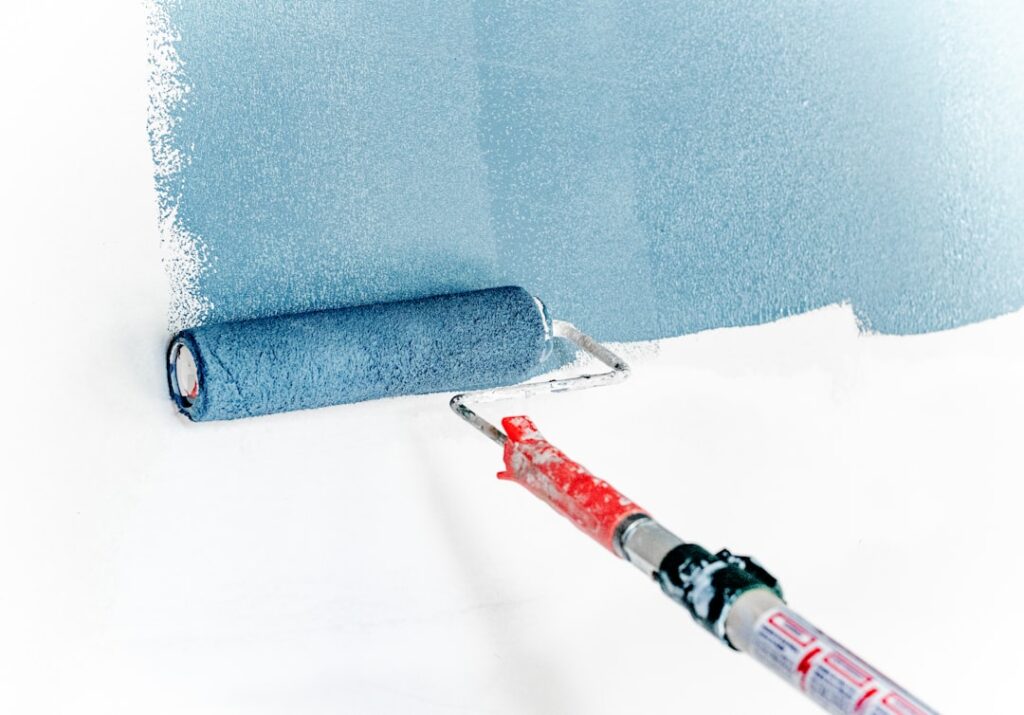
Choosing interior paint is not only about color. The finish—or sheen—changes how a wall reflects light, how well it hides surface defects, how easily it cleans, and how noticeable every patch or roller mark becomes. In 2026, homeowners have more washable low-sheen products than they did a decade ago, but the basic tradeoff still matters: the flatter the finish, the better it usually hides imperfections; the glossier the finish, the more light it reflects and the more surface detail it reveals.
This guide explains where flat, matte, eggshell, satin, semi-gloss, and gloss finishes make sense in a U.S. home, when primer matters, how bathrooms and kitchens change the decision, what to know about VOCs, and when old paint requires lead-safe work practices.
Quick answer: which paint finish goes where?
| Surface or room | Usually a good starting point | Why |
|---|---|---|
| Ceilings | Flat | Minimizes reflection and helps hide minor surface irregularities |
| Adult bedrooms | Flat, matte, or eggshell | Low traffic; softer appearance |
| Living and dining rooms | Eggshell or low-sheen satin | Balances appearance with cleanability |
| Hallways and family rooms | Satin | Better suited to frequent contact and cleaning |
| Kids’ rooms | Satin or washable eggshell | More practical for fingerprints and scuffs |
| Kitchens | Satin or semi-gloss | Easier cleaning around cooking and food-prep areas |
| Bathrooms | Satin or semi-gloss | Better choice for frequent moisture and cleaning |
| Trim, doors, and cabinets | Semi-gloss or gloss | Durable, washable, and visually defines millwork |
These are starting points, not rigid rules. Modern product lines differ. A premium washable matte can outperform an inexpensive older-style satin in some applications, so always check the specific manufacturer’s technical data rather than assuming sheen alone determines durability.
What paint sheen actually means
Sheen describes how much light a dried coating reflects. Manufacturers may use slightly different names, but most interior paints fall into the same broad sequence:
- Flat: very low reflectance.
- Matte: low reflectance, often slightly richer-looking than traditional flat.
- Eggshell: subtle sheen with modest washability.
- Satin: visibly smoother and somewhat more reflective.
- Semi-gloss: noticeably reflective and usually chosen for surfaces that need frequent cleaning.
- Gloss or high-gloss: highly reflective and visually demanding of the substrate.
Sherwin-Williams describes flat and matte as low-reflection finishes, eggshell/satin as low-to-medium reflection, semi-gloss as moderate reflection, and gloss as high reflection. The practical result is that increasing sheen tends to make bumps, poorly feathered drywall patches, sanding scratches, and uneven texture easier to see.
Flat paint: best for ceilings and imperfect surfaces
Flat paint is the least reflective mainstream interior finish. That makes it useful when the goal is to keep attention off the surface. Ceilings are the classic application because a low-reflection finish reduces glare from ceiling fixtures and daylight.
Flat can also be effective on older walls with subtle waves, prior patches, or uneven texture. Because it reflects less directional light, those defects are less obvious than under satin or semi-gloss.
The downside is maintenance. Traditional flat finishes can show scuffs and may burnish when scrubbed. Modern washable flat products have improved substantially, but homeowners should still compare the exact product’s washability claims rather than treating every flat paint as equal.
Matte paint: soft appearance with better practicality
Matte sits close to flat but often provides a slightly richer appearance and, depending on the formulation, better cleanability. It works well in bedrooms, dining rooms, offices, and formal living areas where a quiet finish matters more than maximum scrub resistance.
Matte is especially useful when you want dark or saturated colors without turning every wall irregularity into a highlight. It also tends to photograph well because it produces less glare.
Eggshell: the versatile middle ground
Eggshell is one of the most flexible wall finishes for general living areas. It has enough sheen to improve wipeability compared with traditional flat paint, but not so much that every drywall joint and patch becomes obvious.
Good applications include living rooms, dining rooms, guest rooms, and lower-traffic hallways. For many homeowners, eggshell is the safest whole-house wall finish when they want one consistent look but do not want glossy walls.
However, brand terminology varies. One manufacturer’s eggshell may be visually closer to another brand’s low-sheen satin. If appearance matters, test actual samples from the product line you plan to buy.
Satin: a strong choice for busy rooms
Satin reflects more light than eggshell and is commonly used where walls receive more contact. Sherwin-Williams recommends satin-type finishes for areas such as hallways, children’s bedrooms, family rooms, and woodwork because they balance appearance and cleanability.
Satin is often a good fit for:
- entryways and hallways;
- family rooms;
- kids’ bedrooms;
- laundry rooms;
- kitchens where a softer look than semi-gloss is preferred;
- bathrooms when the specific product is approved for that environment.
The tradeoff is preparation. Satin will reveal more wall texture and patching defects than eggshell or matte, so the substrate needs to be smoother before painting.
Semi-gloss: best where frequent cleaning matters
Semi-gloss is noticeably reflective, durable, and commonly selected for trim, doors, bathrooms, kitchens, utility spaces, and areas that are wiped frequently. Its harder-looking finish is useful on architectural details because it creates visual separation between walls and millwork.
On broad walls, though, semi-gloss can be unforgiving. It highlights dents, roller lap marks, poorly sanded compound, and uneven drywall texture. Unless you specifically want a reflective look, it is often better reserved for high-contact or moisture-prone surfaces.
Gloss and high-gloss: use intentionally
High-gloss paint creates the strongest reflection and a dramatic finished look. It can work beautifully on carefully prepared doors, built-ins, cabinets, or architectural trim. But it demands excellent prep. Even small defects can become obvious once strong light hits the surface.
For a typical homeowner repaint, gloss is usually a specialty finish rather than the default choice for large wall areas.
Best finish by room
Living rooms and dining rooms
Eggshell or matte usually gives the most balanced appearance. These rooms benefit from softer reflection, especially where windows create side-light that can exaggerate wall defects. Satin may be worthwhile in very active family spaces.
Bedrooms
Adult bedrooms can use flat, matte, or eggshell. Children’s rooms generally benefit from a more washable eggshell or satin because walls are more likely to be touched, marked, and cleaned.
Kitchens
Satin or semi-gloss is usually practical because cooking spaces see grease, splashes, and repeated cleaning. The backsplash and surfaces immediately around cooking areas still need materials designed for those conditions; ordinary wall paint should not be treated as a substitute for a proper heat- or water-resistant finish system where one is required.
Bathrooms
Bathrooms need moisture management first and paint choice second. Satin or semi-gloss is commonly chosen because it is easier to wipe and more suitable for repeated humidity. But paint cannot compensate for poor bathroom ventilation, active leaks, or persistent condensation. The U.S. Environmental Protection Agency recommends proper bathroom exhaust ventilation to control moisture and help prevent mold and mildew problems.
Ceilings
Flat is still the standard choice for most ceilings because it minimizes glare and hides small imperfections. Bathrooms and kitchens may use a more moisture-tolerant ceiling product when the manufacturer specifies it for those conditions.
Trim, baseboards, and doors
Semi-gloss remains a practical default. It creates contrast with walls and tolerates wiping better than traditional flat finishes. High-gloss can be used when a sharper decorative effect is desired and the surface is well prepared.
Primer matters more than many homeowners expect
Finish selection cannot fix a poorly prepared substrate. Primer may be appropriate when you are:
- painting new drywall;
- covering repaired or patched areas;
- changing from a very dark color to a much lighter one;
- painting over stains after the underlying cause has been corrected;
- coating glossy surfaces that need improved adhesion;
- painting porous masonry or other specialty substrates;
- switching between incompatible coating systems.
A common mistake is to paint directly over a water stain. If the leak or condensation problem is still active, the stain will return and the underlying material may continue deteriorating. Repair the moisture source first, then prepare and prime the surface with a product appropriate for the stain and substrate.
Surface condition should influence sheen
Before buying paint, inspect the wall in strong side-light. Look for:
- poorly feathered drywall compound;
- nail pops;
- roller texture from old paint;
- patched anchor holes;
- cracks at joints;
- peeling or blistering paint;
- water stains;
- uneven repairs.
If the wall is visibly imperfect and a full skim-coat is not in the budget, a lower-sheen finish can make the result look more forgiving. Moving directly to satin or semi-gloss may make the flaws more noticeable.
Do not paint over an unresolved moisture problem
Peeling paint in a bathroom, around a window, beneath a roof leak, or near plumbing is often a symptom rather than the problem itself. EPA remodeling guidance recommends correcting the underlying cause before repairing the damaged finish. That might mean improving ventilation, stopping a leak, correcting condensation, or repairing exterior water entry.
Paint marketed as moisture resistant can improve durability, but it cannot permanently solve a wet wall.
Low-VOC and no-VOC paint: useful, but read the label carefully
Many homeowners specifically shop for low-VOC or no-VOC interior paint. EPA guidance supports reducing emissions indoors and providing strong ventilation during and after painting. However, EPA also cautions that a low-VOC or no-VOC label does not automatically mean a product contains no potentially harmful volatile chemicals. VOC regulations and indoor-health effects are not the same thing.
For indoor projects:
- use products intended for interior use;
- follow the manufacturer’s safety and ventilation directions;
- provide outdoor-air ventilation during painting and drying;
- keep children and other sensitive occupants away from the active work area;
- avoid storing unnecessary open paint containers inside occupied living space.
EPA notes that most paint emissions are greatest during drying and recommends continued ventilation after application. If someone in the household is particularly sensitive to odors or chemicals, review the product safety data and speak with the manufacturer before purchase.
Special warning for homes built before 1978
If your home was built before 1978, do not casually sand, scrape, or disturb old painted surfaces. The federal government banned consumer use of lead-based paint in 1978, but lead paint remains in many older U.S. homes.
EPA’s Renovation, Repair and Painting program requires paid contractors who disturb painted surfaces in covered pre-1978 housing and child-occupied facilities to be certified and to use lead-safe work practices. EPA also recommends that homeowners working on their own older homes follow lead-safe DIY practices. Its lead-safe renovation guidance was updated in March 2026.
If you are hiring someone for an older home, use our home contractor hiring guide alongside EPA’s lead-safe contractor resources.
How to test a finish before committing
Do not choose sheen from a tiny chip under store lighting. A better method is to paint a sample board or a small prepared section of the actual wall, then view it throughout the day.
Check the sample:
- in direct daylight;
- in side-light from windows;
- under the room’s normal evening lighting;
- from several angles;
- after it has fully dried.
Sheen can look dramatically different when sunlight hits a wall sideways. That is also when drywall defects are easiest to see.
Common paint-finish mistakes
- Using one sheen everywhere: ceilings, walls, trim, bathrooms, and doors do not have the same requirements.
- Choosing high sheen to get durability without fixing the wall: the result may be washable but visually rough.
- Skipping prep: dirty, glossy, flaking, or poorly patched surfaces can undermine even premium paint.
- Ignoring ventilation: especially in bathrooms, coating failure can be a moisture problem.
- Painting directly over stains: the source of the stain needs to be corrected first.
- Assuming all eggshell or satin paints are identical: sheen and performance vary among product lines.
- Disturbing old paint without checking lead risk: pre-1978 homes require special caution.
DIY or hire a professional?
A straightforward repaint of clean, sound walls is one of the more approachable DIY home projects. Professional help becomes more valuable when the job involves high ceilings, extensive drywall repair, water damage, cabinets, sprayed finishes, significant surface failure, or possible lead-based paint.
If you are deciding whether labor savings justify DIY, compare the scope with our interior painting cost guide. For exterior surfaces, weather exposure and access change the equation substantially; see our exterior house painting cost guide.
A practical selection method
For most homeowners, the decision can be simplified to four questions:
- How perfect is the surface? The rougher the wall, the more forgiving a lower-sheen finish tends to be.
- How often will it be touched and cleaned? Higher-use spaces generally need a more washable coating.
- How much moisture is present? Kitchens and bathrooms need the right coating plus proper ventilation.
- What does the specific product data say? Modern coatings vary enough that the technical sheet matters more than the sheen name alone.
For a typical U.S. home, a sensible starting combination is flat ceilings, eggshell or washable matte in quieter rooms, satin in busy rooms, and semi-gloss on trim and doors. Then adjust for wall condition, moisture, cleaning needs, and the exact product being used.
Bottom line
The best interior paint finish is not the shiniest or the most expensive one. It is the finish that matches the surface condition and how the room is actually used. Flat and matte are forgiving, eggshell is versatile, satin handles active rooms well, and semi-gloss or gloss belongs where frequent cleaning or architectural emphasis matters.
Good preparation, moisture control, ventilation, and lead-safe practices matter at least as much as the finish itself. Make those decisions first, then choose sheen.
Room-by-room paint finish decision checklist
- Walls with low traffic: flat or matte can hide surface imperfections well.
- Bedrooms and living areas: eggshell is a common balance of appearance and cleanability.
- Hallways, family rooms, and kids’ spaces: satin can tolerate more frequent wiping.
- Trim, doors, and cabinets: semi-gloss is commonly chosen for durability and easier cleaning.
- Bathrooms and kitchens: prioritize a coating rated for the moisture and cleaning demands of the space rather than choosing sheen alone.
Before buying several gallons, test the exact color and sheen on a sample area in daylight and artificial light. Higher-sheen paint reflects more light and can make wall defects more visible, so surface preparation matters more as sheen increases.
Home Cost Desk compares current U.S. cost or technical references and checks safety, code, efficiency, incentive, or regulatory claims against authoritative sources when available. National figures are planning ranges, not local quotes.
Editorial review: Home Cost Desk Editorial Team · Read our research methodology · Detailed sources appear below.
Sources and methodology
- U.S. EPA — Renovation, Repair and Painting Program: Consumers
- U.S. EPA — Steps to Lead-Safe Renovation, Repair and Painting, updated March 2026
- U.S. EPA — Addressing Indoor Environmental Concerns During Remodeling
- U.S. EPA — Volatile Organic Compounds’ Impact on Indoor Air Quality
- Sherwin-Williams — How to Choose Paint Finishes
Home Cost Desk uses official government guidance and current manufacturer technical guidance to explain homeowner decisions. Product performance varies by formulation, substrate, preparation, and local conditions, so always follow the label and technical data for the exact coating you buy.