Quick Answer
Bathroom tile projects vary widely because a small floor and a waterproof tiled shower are very different jobs. Angi reports professional bathroom retiling from about $450 to $8,000 in 2026; general tile installation averages around $2,000, while a tiled shower commonly falls around $1,800 to $5,000.
Home Cost Desk uses national cost data as planning guidance rather than a substitute for a local written bid. Actual prices vary with city, labor market, product availability, building age, access, code requirements and concealed damage.
2026 Cost Snapshot
| Scope | 2026 planning benchmark | Basis |
|---|---|---|
| Bathroom retiling project | $450–$8,000 | Angi |
| General tile installation | $400–$4,250; about $2,000 average | Angi |
| Bathroom floor | About $300–$1,300 | Angi |
| Tiled shower | About $1,800–$5,000 | Angi |
| Tile materials | Often $5–$45 per sq. ft. | Angi |
How to Read the Price Range
Angi’s $450–$8,000 range for bathroom retiling covers anything from a small floor to a full shower and walls. A bathroom floor alone runs about $300–$1,300 in Angi’s figures, while a tiled shower runs about $1,800–$5,000 because it adds waterproofing and wall work. Tile choice ($5–$45 per square foot for materials), large-format or patterned layouts, and demolition or substrate repair move the total more than room size alone.
What Drives the Cost
The largest cost drivers for this project include floor versus wet-area wall application, ceramic, porcelain, natural stone or glass, tile size and pattern, surface flatness, waterproofing system, old tile removal, subfloor or backer-board repairs, and niches, benches, curbs and trim pieces.
Hidden Costs to Budget For
Build a contingency for conditions that cannot be fully confirmed until work begins. Common examples include demolition and disposal, water damage behind old tile, floor leveling, uncoupling membrane, waterproofing membrane and flood test, extra tile for cuts and breakage, and door undercutting and transitions.
Safety, Permits and Quality Control
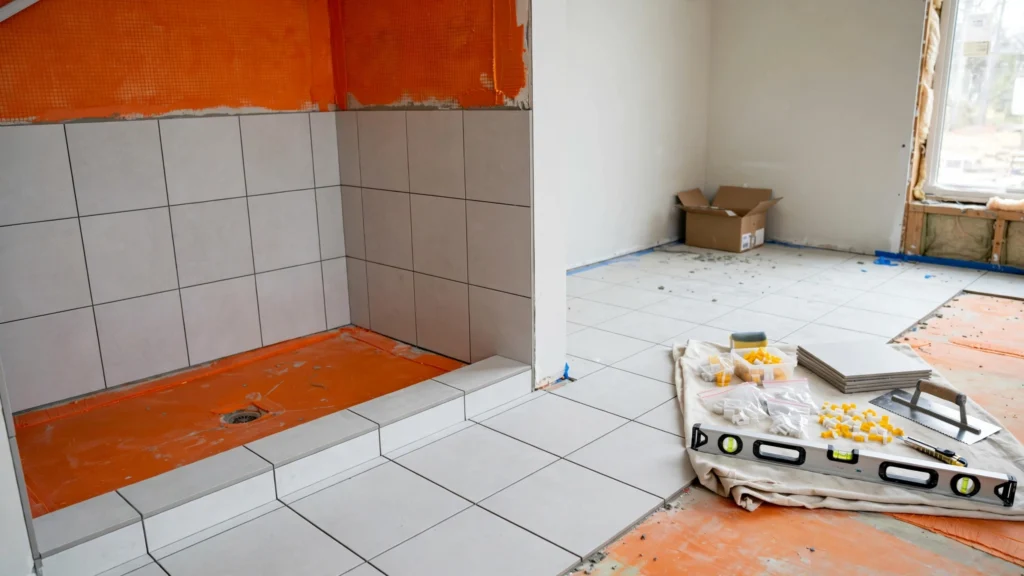
A bathroom floor needs a sound, flat substrate; a shower needs a complete waterproofing system behind or directly under the tile surface. Grout is not the waterproofing. When a quote is unusually low, verify exactly what backer, membrane, corners, penetrations and drain details are included.
Tile is only as good as the moisture protection behind it. The U.S. EPA says the key to mold control is moisture control and recommends fixing water leaks and using exhaust fans in bathrooms (EPA mold and moisture guide). In showers and tub surrounds, ask which waterproofing membrane or backer system will be used behind the tile.
Permit rules vary by jurisdiction. The contractor should state whether a permit is required and who will obtain it. For work involving structure, plumbing, electrical systems, combustion equipment, waterproofing or the weather envelope, quality control belongs in the scope from the beginning.
Three Real-World Planning Scenarios
Scenario 1: Small porcelain bathroom floor
Straight layout over a sound subfloor is relatively predictable.
Scenario 2: Custom tiled shower
Waterproofing, wall prep, niches and glass coordination put this in a different labor class from floor tile.
Scenario 3: Old bathroom with cracked tile
Cracks can signal movement or subfloor problems that should be corrected before new tile is installed.
How to Compare Contractor Quotes
Compare tile bids on demolition and substrate repair, the backer or waterproofing system in wet areas, tile size and layout complexity, grout type, trim and edge pieces, and whether sealing is included. Large-format tile and patterns usually need flatter surfaces and more labor.
DIY vs. Professional Bathroom Tile Work
Small, dry-area floor tile projects can be suitable for an experienced DIYer with a flat substrate, simple layout and the right cutting tools. Shower floors and walls are higher consequence because waterproofing, drain integration, movement joints and substrate preparation matter before the first tile is set.
Professional help is strongly favored when the project includes a shower pan, curbless entry, damaged subfloor, large-format tile, natural stone or complicated niches and benches. If you do any preparation yourself, confirm that the tile installer will accept and warranty work over that substrate. Do not assume grout or tile will correct an incomplete waterproofing system behind the finish.
How to Save Money Without Creating a False Economy
Standard-size ceramic or porcelain tile in a simple layout usually costs less to install than large-format or patterned tile. Keep the existing layout and fixtures in place where possible. Spend on the substrate and waterproofing rather than decorative accents, because failures behind tile are the expensive part to fix.
Pre-Quote Homeowner Inspection
- Note loose, cracked or hollow-sounding tiles and any soft areas in the floor or walls.
- Look for staining on the ceiling below the bathroom.
- Measure the floor and wall areas to be tiled.
- Decide tile size and pattern before asking for prices.
Red Flags in a Quote
- Tiling over damaged or soft substrate.
- No waterproofing system named for shower walls.
- No allowance for tile waste and cuts.
- No plan for likely concealed conditions such as demolition and disposal, water damage behind old tile, floor leveling, uncoupling membrane.
Planning the Work From Start to Finish
Expect the bathroom to be unavailable through demolition, waterproofing, tiling and grout curing. Ask the installer how long to wait before using the shower or sealing grout.
Quote Checklist
- Demolition and substrate repair.
- Backer board and waterproofing system.
- Tile, trim, grout and sealer.
- Layout, pattern and waste allowance.
- Fixture removal and reinstallation.
- Demolition, removal and disposal.
Related Home Cost Desk Guides
Frequently Asked Questions
Can new tile go over old tile?
Sometimes, if the existing tile is sound and flat, but it raises the floor and can hide problems; many installers prefer removal in wet areas.
What waterproofing should a shower have?
Ask the installer to name the membrane or backer system and confirm it is installed per the manufacturer’s instructions.
How long before I can use the shower?
Follow the installer’s cure times for the waterproofing, thinset and grout.
Can I reduce cost by doing part of the work myself?
Sometimes. Safe clearing, simple demolition or finish work can reduce labor on certain projects, but avoid taking over structure, waterproofing, roof work, plumbing, gas or electrical work unless you are qualified and local rules allow it.
Bathroom Tile Planning Checklist
- Separate floor tile, shower walls and shower-pan work because each has different waterproofing and substrate requirements.
- Ask the installer to identify the tile size, pattern, underlayment or backer, waterproofing system, grout and movement-joint details.
- Confirm whether demolition may expose rot, damaged subfloor or failed wall board and how those repairs will be priced.
- For shower work, require the waterproofing scope to be clear before tile is installed; tile and grout are finish surfaces, not the primary waterproofing layer.
- Before final payment, inspect layout, lippage, grout consistency, perimeter sealant and drainage toward the shower drain where applicable.
What to Do Next
- Measure the bathroom surfaces and decide exactly which floors, walls and shower areas will be tiled.
- Get two or three bids that price demolition, substrate preparation, waterproofing, tile layout, setting materials, grout, trim and cleanup on the same scope.
- Approve waterproofing and substrate repairs before tile installation begins, then document concealed work before it is covered.
Decide the exact tiled areas and finish level, then compare quotes that use the same substrate preparation and waterproofing assumptions. A cheaper tile price does not compensate for weak preparation behind the finished surface.
Bottom Line
Bathroom tile projects vary widely because a small floor and a waterproof tiled shower are very different jobs. Angi reports professional bathroom retiling from about $450 to $8,000 in 2026; general tile installation averages around $2,000, while a tiled shower commonly falls around $1,800 to $5,000. The strongest decision is based on the real project scope, a normalized written quote and clear responsibility for preparation, hidden conditions and finish work.
Sources & Methodology
Home Cost Desk reviewed the following sources for national planning ranges and technical guidance. Cost data is not a substitute for local bids. Where safety, energy, moisture or building-envelope issues are involved, authoritative agency guidance should take priority over marketing claims.