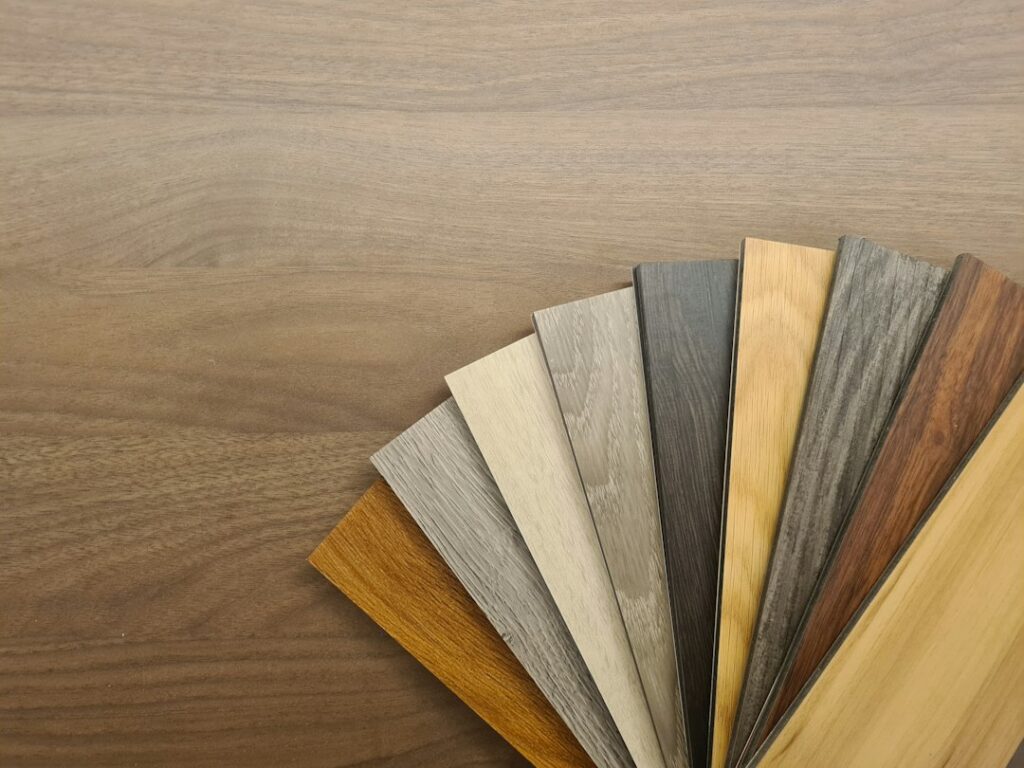
The best flooring is not the material with the highest price tag or the longest warranty. It is the material that fits the room, moisture level, foot traffic, maintenance tolerance, comfort needs, and budget of the household using it.
For U.S. homeowners in 2026, the most common choices are luxury vinyl plank, laminate, solid hardwood, engineered hardwood, tile, and carpet. Each can be a smart purchase in the right place—and a frustrating one in the wrong place. A material that works beautifully in a dry bedroom may be a poor choice next to a bathtub or over a damp concrete slab.
This guide compares the major flooring types by room rather than treating one material as universally superior. It also includes realistic 2026 installed-cost ranges, moisture considerations, subfloor issues, and the details that are easy to overlook when comparing showroom samples.
Quick comparison: major flooring choices in 2026
| Flooring type | Typical installed cost | Best strengths | Main cautions |
|---|---|---|---|
| Luxury vinyl plank / tile | About $4–$16 per sq. ft. | Water resistance, easy care, broad style range | Cannot be refinished; product quality varies |
| Laminate | About $4–$14 per sq. ft. | Value, scratch resistance, wood-look options | Edges and core can be vulnerable to water |
| Engineered hardwood | About $7–$20 per sq. ft. | Real-wood surface, dimensional stability | Limited refinishing depends on wear-layer thickness |
| Solid hardwood | About $11–$25 per sq. ft. | Long service life, repairability, refinishing | Moisture sensitive; higher upfront cost |
| Tile | Often $10–$50 per sq. ft. | Water resistance, durability, heat tolerance | Hard underfoot; installation and prep can be costly |
| Carpet | About $3–$11 per sq. ft. | Comfort, warmth, sound control | Stains, allergens, moisture exposure, replacement cycle |
These ranges are planning numbers, not quotes. HomeGuide’s 2026 flooring data places many complete flooring projects around $4 to $15 per square foot overall, but the specific material and subfloor condition can push a project far outside that band. Angi’s current 2026 data reports laminate around $3 to $13 per square foot installed, carpet around $3 to $11, and vinyl costs that vary widely by type and installation method.
Best flooring for kitchens
Strong choices: LVP, LVT, porcelain or ceramic tile, and selected engineered wood products.
Kitchens combine spills, chair movement, dropped cookware, frequent cleaning, and heavy traffic. For many households, luxury vinyl is the easiest balance of comfort and water resistance. It is softer and quieter underfoot than tile, and current products can convincingly imitate wood or stone.
Tile remains the more durable choice when water resistance and heat tolerance matter more than softness. Porcelain is especially useful in busy kitchens, but the quality of the installation matters. A poorly prepared or moving subfloor can lead to cracked grout or tile.
Hardwood can work in a kitchen, particularly in open-plan homes where visual continuity matters, but it demands faster spill cleanup and more attention around dishwashers, sinks, refrigerators, and exterior doors. Engineered wood generally tolerates dimensional movement better than solid wood, but it is still wood rather than a waterproof surface.
If the kitchen is part of a larger renovation, compare the flooring allowance with the full project in our kitchen remodel cost guide.
Best flooring for bathrooms and laundry rooms
Strong choices: porcelain or ceramic tile, LVT, and properly specified waterproof vinyl.
Bathrooms and laundry rooms should be treated as moisture-prone spaces, not merely rooms where spills happen occasionally. Tile remains one of the safest long-term choices because the surface itself handles water well. The important detail is what happens below the tile: waterproofing, substrate preparation, movement control, grout joints, and transitions all matter.
Luxury vinyl is attractive for homeowners who want a warmer, less hard surface. It can be a practical option in powder rooms and many full baths, but the exact product’s installation instructions matter. A label such as “waterproof” does not mean water can be allowed to migrate indefinitely beneath the floor without consequences.
Traditional laminate and solid hardwood are generally more demanding choices in wet areas because repeated water exposure at joints can cause swelling, staining, or movement. Some newer laminate products advertise better water resistance, but check the written warranty carefully rather than relying on showroom terminology.
For a broader wet-area renovation budget, see our bathroom remodel cost guide.
Best flooring for living rooms and family rooms
Strong choices: hardwood, engineered hardwood, LVP, laminate, or carpet depending on lifestyle.
This is where appearance and household habits carry more weight. Solid hardwood remains compelling because it is a real structural finish that can often be sanded and refinished multiple times. HomeGuide’s 2026 data places solid hardwood around $11 to $25 per square foot installed, with engineered wood roughly $9 to $20 in its hardwood-specific dataset.
LVP and laminate can create a similar visual effect at a lower initial budget. Laminate is particularly useful where scratch resistance is important and water exposure is controlled. LVP is usually the better choice where pets, entrances, or frequent spills make moisture resistance more valuable.
Carpet still has a role in family rooms where warmth, sound absorption, and softness matter more than long-term hard-surface durability. In multistory homes it can also reduce impact noise more effectively than many hard floors.
Best flooring for bedrooms
Strong choices: carpet, hardwood, engineered wood, laminate, or LVP.
Bedrooms are relatively forgiving because they usually have less moisture and lower traffic than kitchens, halls, and entries. That means comfort and budget can drive the choice. For pad, installation and removal costs, see carpet installation cost.
Carpet remains attractive for bare-foot comfort and noise reduction. Hardwood and engineered wood provide a cleaner hard-surface appearance and can connect visually with hallways. Laminate and LVP are practical for rental properties, children’s rooms, and budget-focused projects.
For allergy-sensitive households, the important issue is not simply whether a floor is “hard” or “soft.” Cleaning frequency, rugs, pets, ventilation, humidity, and dust management all influence indoor conditions. Avoid making a health decision based only on broad marketing claims about a flooring category.
Best flooring for basements
Strong choices: LVP/LVT, tile, sealed concrete, and selected carpet systems after moisture is controlled.
Basements deserve a different decision process because the slab and surrounding soil can introduce moisture. Before choosing any finished floor, verify that the basement is dry and that bulk water, seepage, drainage, and humidity problems have been addressed.
The National Wood Flooring Association’s current installation guidance emphasizes that concrete moisture must be tested and must meet the flooring and adhesive manufacturer’s requirements before wood flooring is installed. The age of the slab does not prove that it is dry.
That is why floating LVP, tile, and other moisture-tolerant surfaces are common basement choices. Engineered hardwood may be possible over some concrete slabs when manufacturer requirements and moisture testing are satisfied, but solid hardwood directly over a questionable slab is a much less forgiving choice.
If water has ever entered the space, read our basement waterproofing cost guide before paying for finished flooring.
Best flooring for entryways, mudrooms, and pet-heavy homes
Strong choices: porcelain tile, LVP, and durable laminate where standing water is unlikely.
Entryways experience grit, wet shoes, pet claws, rolling bags, and concentrated traffic. This is where durability should outrank showroom appearance. Tile handles abrasion and water well, while LVP can provide a warmer and quieter surface.
For pet owners, look beyond the material name. Surface texture, wear layer, finish, plank color, seam design, and replacement availability often matter more than whether the label says “pet friendly.” Very glossy dark floors can show scratches, hair, and dust more easily than textured medium-tone finishes.
LVP vs. laminate: which is the better value?
These two materials are frequently compared because both can imitate wood and can be installed as floating floors.
LVP usually wins on moisture tolerance. Angi’s July 2026 guidance notes that LVP uses a synthetic vinyl construction with a protective wear layer and is commonly selected for moisture-prone and high-traffic locations. Its September 2026 cost data places many vinyl projects around $1,007 to $4,051 total, with material prices varying substantially by product class.
Laminate often wins on stiffness, scratch resistance, and value in dry rooms. Angi’s August 2026 dataset places laminate installation around $1,471 to $4,656 for many projects, with a national average near $2,997. The current installed range is roughly $3 to $13 per square foot.
For composite-wood laminate products, the U.S. Environmental Protection Agency advises consumers to look for products labeled TSCA Title VI compliant. The federal formaldehyde standards apply to regulated composite wood components such as particleboard, MDF, and hardwood plywood used in finished goods.
Solid hardwood vs. engineered hardwood
Solid hardwood is milled from one piece of wood. Engineered hardwood uses a real-wood wear layer over a layered core. Both can look authentic because both can have genuine wood at the surface.
Solid hardwood’s major advantage is long-term repairability. A sufficiently thick floor can often be sanded and refinished multiple times. Engineered flooring is more dimensionally stable and can work over a wider range of substrates, but its refinishing potential depends on the thickness of the real-wood wear layer.
If you already own hardwood rather than replacing it, compare replacement with our hardwood floor refinishing cost guide. Refinishing a sound existing floor can be both less disruptive and less material-intensive than replacement.
Tile: durable, but installation quality matters
Tile can last for decades, but the finished surface is only as reliable as the assembly below it. Flatness, substrate condition, mortar coverage, movement joints, waterproofing in wet areas, and layout all affect performance.
Angi’s August 2026 tile-floor data places many tile installations around $15 to $20 per square foot, while its broader September dataset shows totals varying from roughly $400 to $4,250 depending on material and location. HomeGuide’s broader flooring data shows an even wider installed range because natural stone and complex tile work can be far more expensive.
Tile is an excellent choice for kitchens, bathrooms, entries, and warm climates, but it is hard underfoot and unforgiving when dropped objects matter. In bedrooms and upstairs family spaces, comfort and sound may justify another material.
Do not ignore the subfloor
Homeowners often compare flooring prices while assuming installation begins on a perfect surface. In reality, subfloor work can become one of the largest hidden costs.
Common problems include:
- uneven plywood or concrete;
- water-damaged sheathing;
- loose or squeaking panels;
- old adhesive or thinset;
- height differences between rooms;
- slab moisture;
- damaged underlayment;
- doors and appliances that no longer clear the new finished height.
HomeGuide’s current flooring data estimates subfloor replacement around $1,500 to $5,000 in many projects. Angi also repeatedly identifies subfloor repair, old-floor removal, underlayment, leveling, and transitions as common extras across laminate, vinyl, hardwood, tile, and carpet projects.
Whole-house flooring: one material or several?
A single material can make a house feel larger and calmer, but forcing one product into every room can create performance compromises. A practical approach is to use one primary floor for the main dry living areas and a more moisture-tolerant floor in bathrooms, laundry rooms, and sometimes entries.
When changing materials, plan transition locations before installation. Doorways are usually easier to manage than an exposed transition across the middle of an open room. Also compare finished floor heights: a thick tile assembly next to a thin floating floor can create an awkward or unsafe edge if the transition is not planned.
How to compare flooring quotes fairly
Two quotes can look thousands of dollars apart while actually pricing different scopes. Ask each installer to show the same items:
- exact product name, collection, color, and thickness;
- square footage plus waste allowance;
- old-floor removal and disposal;
- subfloor leveling or repair allowance;
- moisture testing where relevant;
- underlayment or vapor-control layer;
- adhesive, fasteners, grout, or setting materials;
- baseboard or shoe molding removal and replacement;
- stairs;
- transitions and reducers;
- appliance and furniture moving;
- door trimming;
- material warranty and labor warranty;
- what happens to unopened leftover material.
For a complete installation budget, use our flooring installation cost guide.
What to bring home before making the final decision
Never choose a floor from a small showroom sample alone. Take samples home and look at them in morning light, afternoon light, and artificial light. Put them beside cabinets, wall paint, trim, rugs, and furniture.
Then test the practical questions. Does the surface show dust? Does a pet’s hair disappear into the color or stand out? Is the texture easy to clean? Does the product feel hollow underfoot? Does the edge profile look realistic? Can you buy matching stair noses, reducers, and transitions?
Also buy and store some extra material after installation. Product lines and dye lots change. A few spare planks or tiles can make a future localized repair much easier.
Bottom line
There is no single best floor for every U.S. home in 2026. LVP is often the easiest all-around choice when water resistance and maintenance matter. Laminate can offer strong value in dry, busy rooms. Solid hardwood remains the premium long-life option where moisture is controlled. Engineered hardwood provides a real-wood surface with greater dimensional flexibility. Tile excels in wet and high-wear spaces, while carpet remains useful where softness, warmth, and sound control matter most.
Choose by room first, then by appearance. Confirm moisture conditions and subfloor requirements before ordering. Finally, compare the entire installed system—not just the price of the visible material.
Five-step flooring selection plan
- Define the room conditions: moisture, direct sun, pets, rolling chairs, heavy traffic, and floor temperature.
- Set the installed budget: include underlayment, removal, subfloor repair, transitions, trim, delivery, and labor.
- Shortlist two materials: compare durability, water tolerance, comfort, maintenance, and repairability rather than appearance alone.
- Check installation requirements: confirm subfloor flatness, moisture limits, acclimation, expansion gaps, and warranty conditions.
- Buy from the final sample: view the actual product in the room’s daylight and artificial light before ordering the full quantity.
For kitchens, bathrooms, basements, and entry areas, moisture risk should move higher in the decision than softness or appearance. For bedrooms and living rooms, comfort, acoustics, and long-term maintenance can carry more weight.
Quick room-by-room examples
Bathroom or laundry: Prioritize water tolerance and slip resistance before warmth or appearance.
Kitchen: Balance moisture resistance, dent and scratch resistance, comfort underfoot, and the ability to replace damaged sections.
Bedroom: Comfort, warmth, acoustics, and budget often matter more than extreme water resistance.
Basement: Confirm moisture conditions first; avoid choosing a floor that traps or hides an unresolved water problem.
Home Cost Desk compares current U.S. cost or technical references and checks safety, code, efficiency, incentive, or regulatory claims against authoritative sources when available. National figures are planning ranges, not local quotes.
Editorial review: Home Cost Desk Editorial Team · Read our research methodology · Detailed sources appear below.
Sources and methodology
Home Cost Desk used current 2026 consumer cost datasets and industry or federal technical guidance to build the comparison. Costs are national planning ranges; actual quotes vary by region, product grade, room geometry, demolition, subfloor condition, and local labor.
- Angi — Laminate Flooring Installation Cost, updated August 31, 2026
- Angi — Vinyl Flooring Installation Cost, updated September 4, 2026
- Angi — Tile Floor Installation Cost, updated August 3, 2026
- Angi — Carpet Replacement Cost, updated September 9, 2026
- HomeGuide — Flooring Installation Cost, 2026
- National Wood Flooring Association — Installation Guidelines
- U.S. EPA — Questions and Answers Regarding Laminate Flooring