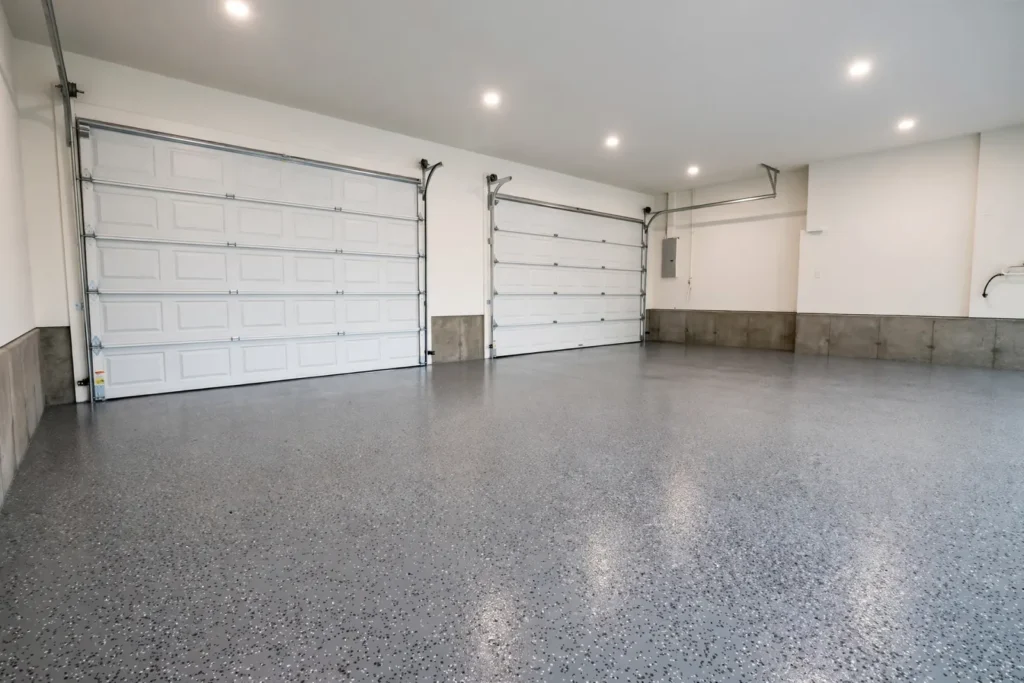
Quick Answer
Professional epoxy flooring commonly costs about $2 to $12 per square foot in Angi’s 2026 guidance. The coating itself is only part of the job: grinding or etching, degreasing, crack repair, moisture testing, multiple coats and cure time are what separate a durable system from one that peels.
Home Cost Desk uses national cost data as planning guidance rather than a substitute for a local written bid. Actual prices vary with city, labor market, product availability, building age, access, code requirements and concealed damage.
2026 Cost Snapshot
| Scope | 2026 planning benchmark | Basis |
|---|---|---|
| Professional epoxy/coating installation | About $2–$12 per sq. ft. | Angi |
| DIY epoxy materials | Often lower, with labor savings of roughly $4–$7 per sq. ft. | Angi |
| Concrete resurfacing when needed | About $1,000–$5,000 | Angi |
| Major foundation/slab repair if structural | Potentially several thousand dollars | Angi |
How to Read the Price Range
The $2–$12 per square foot range spans very different products. The low end is closer to a thin one- or two-coat system on a clean slab; the high end usually means diamond grinding, crack and spall repair, a thicker multi-layer system with flake or quartz broadcast and a durable topcoat. A slab that needs resurfacing first, which Angi puts at about $1,000–$5,000, changes the budget more than the color or finish choice.
What Drives the Cost
The largest cost drivers for this project include garage square footage, mechanical grinding versus basic etching, oil contamination and old coatings, crack and spall repair, epoxy versus polyaspartic or hybrid system, decorative flakes or metallic finish, number of coats and UV-stable topcoat, and moisture-vapor conditions in the slab.
Hidden Costs to Budget For
Build a contingency for conditions that cannot be fully confirmed until work begins. Common examples include removing an old coating, moving stored items and appliances, baseboard or stem-wall coating, moisture mitigation primer, crack chasing and patching, and extended cure time before parking vehicles.
Safety, Permits and Quality Control
Surface preparation creates dust and coatings can release strong vapors. Follow product requirements for ventilation, respirators and ignition control. A moisture problem under the slab can defeat even an expensive coating, so investigate persistent dampness before coating.
Many floor coatings release odors and pollutants while they cure. EPA’s remodeling guidance recommends maximum ventilation during installation of finishes and flooring and, typically, for at least 72 hours afterward (EPA remodeling indoor air guidance). For an attached garage, ask the installer how fumes will be kept out of the house, and follow the product’s own cure and ventilation instructions.
Permit rules vary by jurisdiction. The contractor should state whether a permit is required and who will obtain it. For work involving structure, plumbing, electrical systems, combustion equipment, waterproofing or the weather envelope, quality control belongs in the scope from the beginning.
Three Real-World Planning Scenarios
Scenario 1: Sound two-car garage slab
A mechanically prepared slab with minor cracks is a straightforward professional coating project.
Scenario 2: Oil-soaked older slab
Degreasing and grinding become critical; poor prep is the main peeling risk.
Scenario 3: Cracked or moving slab
Structural movement should be diagnosed before a decorative coating is applied.
How to Compare Contractor Quotes
Compare epoxy bids on surface preparation (diamond grinding or shot blasting versus acid etching), crack and spall repair, the coating system (number of coats, solids content, flake or quartz broadcast, topcoat type), and the cure time before cars can return. Two quotes for “epoxy” can be a thin one-coat paint and a multi-layer system.
DIY vs. Professional Garage Floor Coating
DIY epoxy can work on a small, sound slab when the homeowner can empty the garage, remove oil contamination, mechanically prepare or thoroughly etch the surface as required, repair minor defects and keep the space within the product’s temperature and cure limits. The coating step is usually easier than the preparation.
Professional installation is the better choice when the slab has an old coating, widespread spalling, moisture-vapor problems, heavy oil contamination, moving cracks or when a multi-coat commercial-style system is expected. A contractor should explain the surface-preparation method, moisture testing, crack treatment, coating build and return-to-service time instead of quoting only a product name.
- Good DIY candidate: clean, dry, stable slab with minor defects and no coating to remove.
- Call a pro: damp slab, failed old coating, major cracks, spalling or a premium multi-layer system.
- Do not coat over: active moisture, structural movement or oil contamination that has not been removed.
How to Save Money Without Creating a False Economy
The safest way to control garage floor coating cost is to spend money on preparation before decorative upgrades. A sound, clean, dry slab with documented crack repair and proper surface profiling matters more to durability than extra flakes or a premium color package. Ask the contractor to price old-coating removal, grinding, moisture mitigation, crack repair, base coat and topcoat separately so the quote shows where the money is going.
Pre-Quote Homeowner Inspection
- Sprinkle water on the slab; if it soaks in quickly the surface may accept a coating, while beading can mean sealers or oil that must be removed.
- Note cracks, pitting, spalling and oil stains, and photograph them.
- Check for signs of moisture coming up through the slab, such as damp patches or white residue.
- Plan where cars, tools and storage will go during prep and curing.
- Photograph the full slab, cracks, spalls, oil stains, damp areas and any existing coating before contractors quote the preparation work.
- Ask how the contractor will test the old coating and slab condition and how removal, crack repair or moisture mitigation will be priced if required.
Red Flags in a Quote
- Acid etching only, with no moisture check, on an older or stained slab.
- No stated coating thickness or number of coats.
- No cure time before vehicles drive on the floor.
- No plan for likely concealed conditions such as removing an old coating, moving stored items and appliances, baseboard or stem-wall coating, moisture mitigation primer.
Planning the Work From Start to Finish
Clear the garage completely before prep day. Expect noise and dust during grinding; ask whether the installer uses dust collection. Keep vehicles off the floor for the full cure period the installer gives you in writing.
After curing, clean spills promptly and avoid dragging sharp objects; ask what cleaner the coating manufacturer recommends.
Quote Checklist
- Surface preparation method and crack repair.
- Coating system: layers, flake or quartz, and topcoat.
- Moisture testing or vapor mitigation if needed.
- Cure time before foot traffic and vehicles.
- Warranty on peeling and hot-tire pickup.
- Demolition, removal and disposal.
Related Home Cost Desk Guides
Frequently Asked Questions
How long before I can park a car on a newly coated garage floor?
Follow the exact product and installer cure schedule. Foot traffic may be allowed earlier, but vehicle traffic usually requires a longer cure. Parking too soon can mark or lift a coating before it reaches full strength.
Is grinding better than acid etching?
Mechanical grinding gives the installer direct control over surface profile and can remove weak surface material and some old coatings. Etching may be acceptable for certain DIY products, but it is not a substitute for fixing contamination, moisture or failed concrete.
What causes garage epoxy to peel?
Common causes include poor surface preparation, oil or chemical contamination, trapped moisture, coating over a weak slab surface, incorrect mixing or application, and putting the floor back in service before the system has cured.
Should cracks be filled before coating?
Stable cracks and spalls are normally repaired as part of preparation, but moving structural cracks need diagnosis first. A decorative coating should not be used to hide active slab movement.
Is polyaspartic the same as epoxy?
No. They are different coating chemistries with different cure times, UV behavior and application characteristics. Many professional systems combine more than one coating type, so compare the complete system rather than the headline product name.
Do I need moisture testing?
It is especially valuable when the slab shows dampness, efflorescence, previous coating failure or sits in a moisture-prone location. A moisture problem can cause adhesion failure even when the surface initially looks clean and dry.
Before You Approve a Garage Floor Coating
- Ask how the slab will be prepared and whether the contractor uses mechanical grinding, shot blasting or another documented method.
- Confirm how oil, tire residue, curing compounds and any old coating will be removed before new material is applied.
- Ask whether the slab will be checked for moisture-vapor problems and what happens if the test indicates elevated moisture.
- Require the quote to identify crack repair, base coat, decorative broadcast if any, topcoat and total return-to-service time.
- Before final payment, inspect coverage at edges, stem walls and control joints and confirm the written warranty exclusions.
What to Do Next
Bottom Line
Professional epoxy flooring commonly costs about $2 to $12 per square foot in Angi’s 2026 guidance. The coating itself is only part of the job: grinding or etching, degreasing, crack repair, moisture testing, multiple coats and cure time are what separate a durable system from one that peels. The strongest decision is based on the real project scope, a normalized written quote and clear responsibility for preparation, hidden conditions and finish work.
Sources & Methodology
Home Cost Desk reviewed the following sources for national planning ranges and technical guidance. Cost data is not a substitute for local bids. Where safety, energy, moisture or building-envelope issues are involved, authoritative agency guidance should take priority over marketing claims.