Quick Answer
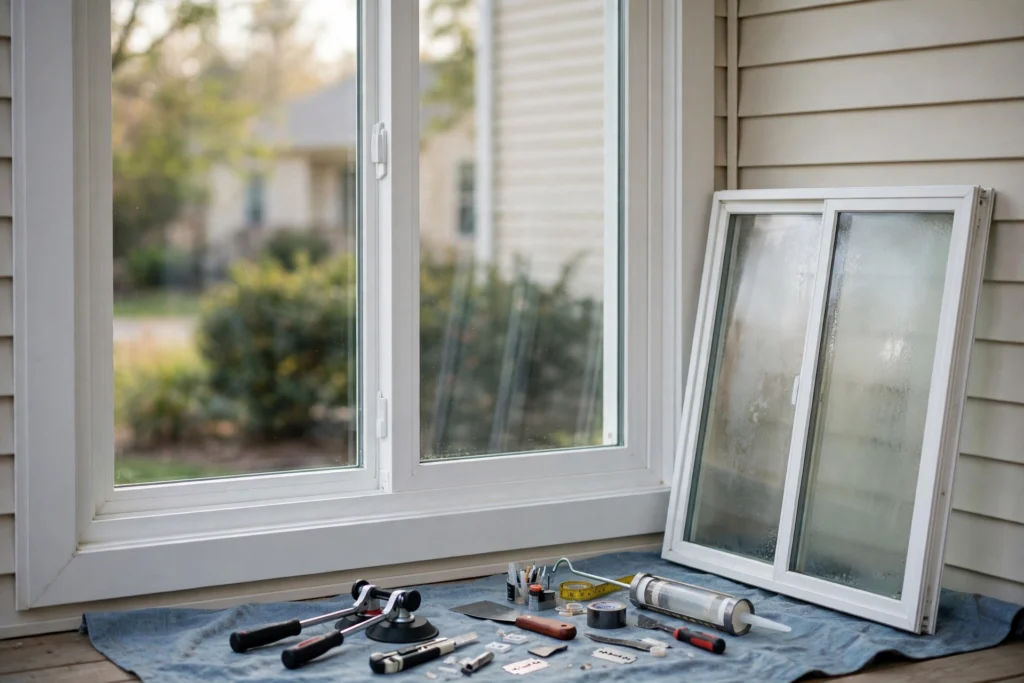
Angi’s 2026 data puts standard double-pane window glass replacement at about $181 to $414 per window, with an average near $285. This Old House reports a broader installed range around $300 to $880 because glass type, size and specialty work can expand the scope. Glass-only replacement is most attractive when the frame and sash are still structurally sound.
Home Cost Desk uses national cost data as planning guidance rather than a substitute for a local written bid. Actual prices vary with city, labor market, product availability, building age, access, code requirements and concealed damage.
2026 Cost Snapshot
| Scope | 2026 planning benchmark | Basis |
|---|---|---|
| Standard double-pane glass replacement | $181–$414; about $285 average | Angi |
| Broader installed glass-replacement range | About $300–$880 | This Old House |
| Frame repair if needed | About $175–$1,000 | Angi |
| Window tinting add-on | About $300–$900 per window | Angi |
How to Read the Price Range
Angi’s $181–$414 range typically reflects replacing a standard double-pane insulated glass unit in a sound frame. Prices move toward This Old House’s broader $300–$880 range for larger or custom-shaped units, tempered, laminated or low-E glass, upper-story access, or windows where the sash has to come out. If the frame or sash is rotted, the job becomes a frame repair, which Angi lists separately at about $175–$1,000.
What Drives the Cost
The largest cost drivers for this project include single, double or triple glazing, insulated glass unit size, tempered, laminated, tinted or low-e glass, window style and sash access, custom shapes, frame and sash condition, upper-story access, and emergency board-up or after-hours work.
Hidden Costs to Budget For
Build a contingency for conditions that cannot be fully confirmed until work begins. Common examples include frame rot discovered after glass removal, new glazing beads or stops, sash balance or hardware work, tempered-glass requirements in hazardous locations, matching grids or decorative glass, and rush fabrication for custom IGUs.
Safety, Permits and Quality Control
Broken glass requires eye, hand and cut protection, and upper-story units add fall risk. Tempered or safety-glazing requirements can apply near doors, tubs, floors and other hazardous locations. Do not replace a failed IGU with the wrong glass specification simply because it fits.
If you are replacing an insulated glass unit, ask whether the new glass matches or improves on the original performance. NFRC ratings describe how well glass keeps heat in (U-factor), how much solar heat it admits (solar heat gain coefficient) and how well it resists condensation (NFRC consumer ratings). The Department of Energy recommends matching U-factor and SHGC to your climate zone (DOE guidance). If the existing glazing is intact and solar glare is the problem, residential window-film installation is a different project from replacing failed or broken insulated glass; confirm film compatibility with the window manufacturer before choosing either approach.
Permit rules vary by jurisdiction. The contractor should state whether a permit is required and who will obtain it. For work involving structure, plumbing, electrical systems, combustion equipment, waterproofing or the weather envelope, quality control belongs in the scope from the beginning.
Three Real-World Planning Scenarios
Scenario 1: Fog between panes, frame sound
A failed insulated glass unit is a strong glass-only candidate.
Scenario 2: Cracked pane plus rotted sash
Glass alone does not solve the structural problem; compare sash or full-window replacement.
Scenario 3: Large tempered patio-side window
Safety glass and handling requirements can materially raise the price.
How to Compare Contractor Quotes
Compare glass bids on the glass make-up (single pane, double pane, low-E coating, gas fill), whether the quote is for the glass unit only or the whole sash, and whether safety glass is required at that location. Ask how long fabrication takes and whether a temporary board-up or film is included while the unit is made.
DIY vs. Professional Work
DIY can make sense when the task is genuinely low-risk, the homeowner understands the assembly, and a mistake will be obvious and easy to correct. Professional help becomes more valuable when the work can cause water damage, fire, structural movement, gas or electrical hazards, roof leaks, failed waterproofing, expensive finish damage or warranty problems.
Glass work carries a real cut hazard, and tempered glass must be ordered to size because it cannot be cut after tempering. A poorly seated insulated unit can also lose its seal early, so an ordering or fitting error can mean paying for the glass twice.
How to Save Money Without Creating a False Economy
The safest way to control window glass replacement cost is to confirm the exact glass specification before ordering. Match the insulated glass unit size, pane count, Low-E coating, tint, grids and any required safety glazing to the existing window and location. Ask the glazier to separate glass fabrication from frame, sash, hardware or glazing-stop repairs so a failed IGU does not turn into an open-ended window repair.
Pre-Quote Homeowner Inspection
- Note whether the problem is a crack, a broken pane or fogging between panes.
- Check whether the frame and sash are sound; rot or warped frames change the repair.
- Record the window brand and any label or etching in the corner of the glass.
- Note locations near doors, tubs or floors, where safety glass may be needed.
- Photograph the failed glass, sash, frame, grids, labels and any visible moisture or rot so the replacement specification can be matched accurately.
- Ask what frame or sash deterioration is visible before removal and how any hidden damage discovered after the glass comes out will be priced.
Red Flags in a Quote
- A same-day price for a custom insulated unit without measuring.
- No mention of safety glass where it may be required.
- Replacing glass in a rotted sash without pointing out the rot.
- No plan for likely concealed conditions such as frame rot discovered after glass removal, new glazing beads or stops, sash balance or hardware work, tempered-glass requirements in hazardous locations.
Planning the Work From Start to Finish
Insulated units are usually made to order, so plan for a measuring visit and a second visit to install. Keep the broken pane taped or covered and away from children and pets in the meantime.
At installation, check that the new unit sits evenly in the frame and that the glazing beads or stops are fully seated before paying.
Quote Checklist
- Glass make-up and coatings, and whether it matches the existing unit.
- Glass-only, sash or full-window replacement.
- Safety glass where required.
- Temporary protection while the unit is fabricated.
- Warranty on the seal and on the workmanship.
- Demolition, removal and disposal.
Related Home Cost Desk Guides
Frequently Asked Questions
Can fogged double-pane glass be repaired without replacing the whole window?
Often, yes. If the insulated glass unit has failed but the sash and frame are sound, replacing the IGU can restore the sealed glass assembly without replacing the complete window.
Can only one pane of a double-pane window be replaced?
Usually the insulated glass unit is replaced as an assembly rather than replacing only one pane in place, because the spacer, seal and gas-filled cavity are part of the factory-built unit.
When is tempered glass required?
Safety-glazing rules can apply in hazardous locations such as certain areas near doors, tubs or floors. The exact requirement depends on location and local code, so the replacement specification should match the application.
Will new glass fix drafts?
Only if the draft is related to the glass or sash seals. Air leaking around the frame, trim or wall opening may remain after glass replacement and should be diagnosed separately.
How long does a custom IGU take to get?
Lead time varies by size, glass type, grids, tint and local fabricator. Custom shapes, tempered glass or decorative units can take longer than a common rectangular double-pane unit.
When should I replace the whole window instead?
Whole-window replacement becomes more attractive when the frame or sash is rotted, distorted or difficult to operate, multiple components are failing, or water is entering around the frame rather than through the insulated glass unit.
Glass-Only Replacement or a Whole New Window?
- Choose glass-only replacement when the sash and frame are square, solid, operable and free of meaningful rot or distortion.
- Compare full-window replacement when the frame is deteriorated, the sash will not operate correctly, multiple components are failing or water is entering around the frame rather than through the glass unit.
- For fogging between panes, confirm that the failure is inside the insulated glass unit rather than surface condensation caused by indoor humidity.
- Match safety-glazing requirements, low-e coating, tint, grids and glass thickness to the existing location and performance needs.
- Ask whether the quote includes glazing beads or stops, sash hardware, disposal and any frame repair discovered after the old glass is removed.
Bottom Line
Angi’s 2026 data puts standard double-pane window glass replacement at about $181 to $414 per window, with an average near $285. This Old House reports a broader installed range around $300 to $880 because glass type, size and specialty work can expand the scope. Glass-only replacement is most attractive when the frame and sash are still structurally sound. Ask each glazier whether the quote covers only the sealed glass unit or also removing and resetting the stops or glazing beads, disposal and a seal-failure warranty, and confirm that safety glass is specified where code requires it, such as in and near doors.
Sources & Methodology
Home Cost Desk reviewed the following sources for national planning ranges and technical guidance. Cost data is not a substitute for local bids. Where safety, energy, moisture or building-envelope issues are involved, authoritative agency guidance should take priority over marketing claims.