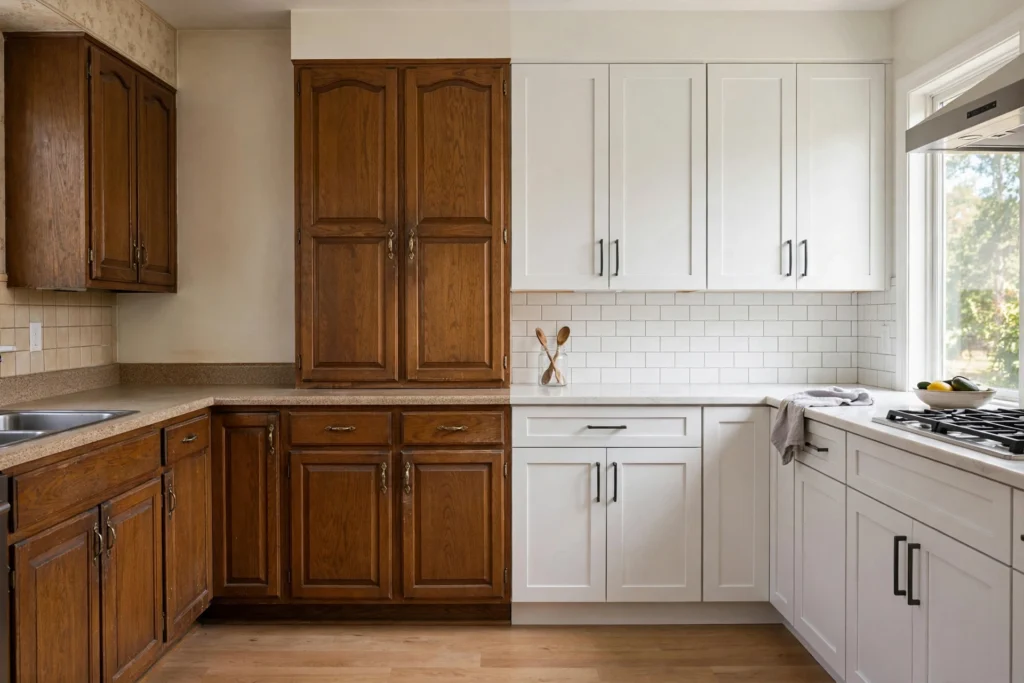
If your cabinet boxes are still solid but the kitchen looks dated, cabinet refacing can change the visible style without tearing out the entire cabinet system. For U.S. homeowners planning a 2026 project, a realistic national planning range is roughly $4,000 to $13,500 for professional cabinet refacing, with many average kitchens landing near $7,000 to $8,000. Larger kitchens, premium wood doors, decorative panels, new hardware, crown molding, and difficult layouts can push the total higher.
That range is for budgeting, not a substitute for a local contractor quote. Kitchen size, door count, material choice, labor rates, cabinet condition, and how much custom trim is required can change the final price substantially. If you are weighing refacing against a broader kitchen update, the Kitchen Remodel Cost Calculator gives planning ranges for minor, midrange and high-end remodels.
Cabinet refacing cost at a glance
| Project | Typical 2026 planning range |
|---|---|
| Small kitchen / limited cabinet run | About $3,000–$6,000 |
| Average kitchen refacing project | About $4,000–$13,500 |
| Large kitchen or premium materials | $10,000–$20,000+ |
| Laminate or thermofoil refacing | Often the lower-cost option |
| Wood veneer / wood doors | Midrange to premium pricing |
| Refinishing instead of refacing | Often about $1,500–$5,000 |
Current 2026 cost data provides a useful cross-check. Angi reports professional cabinet resurfacing at roughly $4,483 to $10,590, with refacing projects extending to around $13,500 depending on the kitchen and materials. HomeAdvisor places the normal refacing range at about $4,234 to $10,226, with an average near $7,230. HomeGuide publishes a broader average of roughly $5,000 to $13,000 for an average kitchen. The spread is exactly why homeowners should treat national numbers as planning benchmarks rather than guaranteed local prices.
What cabinet refacing actually includes
Refacing does not mean replacing every cabinet. The existing cabinet boxes normally stay in place. The visible exterior surfaces are updated, and the doors and drawer fronts are replaced.
A typical professional refacing project may include:
- removing the existing cabinet doors and drawer fronts;
- preparing and cleaning the cabinet boxes;
- covering exposed cabinet faces and end panels with matching veneer, laminate, or another finish;
- installing new doors and drawer fronts;
- installing new hinges and, when selected, new pulls or knobs;
- adjusting doors and drawers for proper alignment;
- adding optional trim, molding, panels, or accessories.
The internal cabinet boxes, layout, and most shelving remain. That distinction matters because refacing is most valuable when the existing structure is worth keeping.
Cost by refacing material
Laminate and thermofoil
Laminate and thermofoil products are typically among the more budget-friendly refacing choices. They offer a wide selection of colors and patterns and can work well when the goal is a clean, consistent finish rather than natural wood grain. Material quality varies, so homeowners should compare door construction, edge treatment, finish warranty, and heat or moisture limitations.
Wood veneer
Wood veneer gives the cabinet boxes a real-wood appearance while allowing the new doors and drawer fronts to match. It generally costs more than basic laminate and requires careful installation around corners, seams, and end panels. Species, grain matching, finish, and door style all affect the price.
Solid-wood doors and drawer fronts
Premium refacing packages may use solid-wood doors with veneer or matching panels applied to the cabinet boxes. This can deliver a high-end result, but the price can approach the lower end of full cabinet replacement in some kitchens. That is the point where homeowners should compare both options rather than assuming refacing is automatically cheaper.
The biggest factors that change the price
1. Number of doors and drawers
Two kitchens with the same floor area can have very different refacing costs. A kitchen with many narrow doors, drawer stacks, appliance panels, or tall pantry doors has more individual pieces to manufacture and install.
2. Kitchen size and linear footage
More cabinet frontage means more veneer, more doors, more hardware, and more labor. HomeGuide cites broad refacing pricing around $150 to $450 per linear foot, although the actual quote depends heavily on materials and project details.
3. Door style
Simple slab or basic shaker-style doors usually cost less than detailed raised-panel, inset-look, glazed, or highly customized designs. Specialty glass doors and decorative end panels can add noticeably to the budget.
4. Cabinet condition
Refacing works best when the boxes are square, secure, dry, and structurally sound. Water damage, swollen particleboard, loose joints, broken face frames, or failing shelves can turn a cosmetic project into a repair project.
5. Hardware and hinges
Replacing knobs and pulls is optional, but many homeowners do it because old hardware can make newly refaced cabinets look unfinished. Soft-close hinges and drawer hardware may also add cost, particularly when existing cabinetry requires modification.
6. Trim and finishing details
Crown molding, light rail, decorative panels, finished appliance ends, toe-kick material, fillers, and custom color matching all increase the scope. Ask the contractor to identify these items separately so quotes can be compared fairly.
7. Local labor rates
Installation pricing varies by metro area, contractor availability, and the complexity of the work. National averages can help you identify an unusually low or high proposal, but the local written quote is the price that matters.
Refacing vs. refinishing: what is the difference?
These terms are often confused.
Refinishing keeps the existing doors and drawer fronts. The old finish is cleaned, prepared, sanded or stripped as appropriate, and then painted, stained, or otherwise refinished.
Refacing usually replaces the doors and drawer fronts and applies new material to the visible cabinet-box surfaces.
Refinishing is usually cheaper. Current 2026 cost data from Angi places many professional cabinet refinishing projects around $2,000 to $4,500, while refacing is typically several thousand dollars more. If you like the door style and the existing material can be successfully refinished, refinishing may offer better value.
Refacing vs. replacing cabinets
Full replacement removes the existing cabinets and installs new boxes, doors, drawers, and hardware. Replacement becomes the stronger option when the layout is poor, the boxes are failing, storage is inadequate, or you want major structural changes.
Refacing makes more sense when:
- the cabinet boxes are sturdy and dry;
- you are satisfied with the current layout;
- you want a different door style or finish;
- you want less demolition than a full replacement;
- you do not need to move plumbing or appliances;
- the refacing quote remains meaningfully below a comparable replacement quote.
Replacement deserves serious consideration when:
- boxes are swollen, cracked, sagging, or water-damaged;
- the kitchen layout does not work;
- you need substantially more storage;
- you are changing appliance locations;
- the refacing proposal is close to the price of new cabinets.
If your project is part of a larger renovation, compare the numbers with our Kitchen Remodel Cost in 2026 guide. If you are also replacing work surfaces, see our Countertop Replacement Cost in 2026 guide.
Example homeowner scenarios
Scenario 1: solid boxes, dated oak doors
The cabinet boxes are sturdy, the layout works, and the homeowner wants a cleaner shaker-style look. Refacing can be a strong fit because most of the expensive structural cabinetry remains useful.
Scenario 2: old cabinets with water damage under the sink
The doors may look like the main problem, but swelling or deterioration in the cabinet box changes the decision. Repair costs should be added to the refacing quote, and replacement may be more rational if damage is widespread.
Scenario 3: refacing quote is close to new stock cabinets
If a refacing proposal approaches the cost of complete replacement, compare the two scopes carefully. New cabinets may provide better drawers, new boxes, improved storage, and a chance to correct layout problems. The lowest demolition option is not always the best long-term value.
Scenario 4: good-quality wood cabinets need only a color change
If the doors are attractive and structurally sound, refinishing or professional painting may accomplish the goal for much less than refacing. Paying for new doors would add cost without solving a real problem.
Can cabinet refacing be a DIY project?
Some experienced homeowners can handle simple door replacement or hardware changes, but full refacing is less forgiving than it looks. Veneer alignment, edge trimming, surface preparation, door sizing, hinge boring, and consistent reveals all affect the finished appearance.
A small measurement error repeated across many doors can become expensive. DIY is more realistic when you are comfortable with precise measurements, cabinetry hardware, surface preparation, and finish work. Professional installation is usually the safer choice for a large kitchen, premium materials, or any project with damaged or irregular boxes.
Lead-paint safety in older homes
If a project in a pre-1978 home will disturb painted surfaces, lead-safe practices may be relevant. The U.S. Environmental Protection Agency warns that renovation activities that disturb lead-based paint can create hazardous dust and recommends using lead-safe work practices and appropriately certified contractors where the federal Renovation, Repair and Painting rules apply. Refacing itself may involve limited disturbance, but sanding, cutting, repair, or repainting of older painted cabinetry or surrounding surfaces can change the risk.
What should be included in a refacing quote?
Ask each contractor to quote the same scope. A useful proposal should identify:
- the number of doors and drawer fronts;
- door material and style;
- box-facing material;
- end panels and exposed sides;
- hinges and whether they are soft-close;
- hardware allowances or exclusions;
- molding, trim, fillers, and toe kicks;
- repairs required before refacing;
- removal and disposal of old doors;
- labor and installation;
- estimated project duration;
- warranty terms.
Be cautious with a low headline price that excludes end panels, hardware, trim, or repairs. Those additions can materially change the final bill.
Hidden costs to plan for
Cabinet refacing can trigger related expenses even when the cabinet boxes stay in place. Possible extras include wall touch-up, backsplash repairs, countertop edge work, plumbing access, under-cabinet lighting, new organizers, drawer-slide upgrades, and repairs discovered after doors are removed.
If you plan to replace countertops at the same time, coordinate the sequence with both contractors. Refacing and countertop work touch many of the same cabinet edges and finish details, so poor scheduling can create avoidable rework.
How to compare contractor quotes
Get detailed proposals rather than comparing only the bottom-line price. Confirm that each company is quoting the same door material, finish, number of doors and drawers, hardware package, exposed panels, molding, and repair assumptions.
Ask to see completed local projects using the same material you are considering. Inspect door alignment, corners, veneer seams, end panels, and transitions around appliances. A refacing job can look excellent when installed carefully and noticeably poor when surface preparation or measurements are rushed. For larger proposals, use our contractor hiring guide to compare licensing, insurance, scope, change orders, payment terms, and warranties before signing.
Cabinet refacing cost by linear foot in 2026
Linear-foot pricing can help with early budgeting, but it should not replace an itemized proposal. Current national data puts many refacing projects around $150 to $450 per linear foot, while material-specific ranges can run from roughly $80 to $125 per linear foot for laminate or thermofoil, about $100 to $250 for wood veneer, and roughly $200 to $500 for solid-wood or premium plywood-based packages. Door count, drawer fronts, tall pantry units, decorative panels, glass doors, and trim can move a real quote well outside a simple linear-foot estimate.
| Refacing material | Typical planning range | Best fit |
|---|---|---|
| Laminate / thermofoil | About $80–$125 per linear ft. | Budget-focused makeover with consistent color |
| Wood veneer | About $100–$250 per linear ft. | Natural wood appearance while keeping existing boxes |
| Solid-wood / premium package | About $200–$500 per linear ft. | Higher-end doors and finish details |
Five-step refacing decision plan
- Inspect the boxes first. Check under the sink, beside the dishwasher, around toe kicks, and at cabinet joints for swelling, water damage, sagging, or loose construction.
- Decide whether the layout is worth keeping. If storage, appliance locations, or workflow are poor, replacement may solve problems that refacing cannot.
- Price all three options. For sound wood cabinetry, compare refinishing. For solid boxes with dated doors, compare refacing. If boxes are failing, price replacement.
- Standardize the quote scope. Require the same door material, hinge package, hardware allowance, end panels, trim, repairs, and disposal on every bid.
- Check the gap to replacement. If refacing approaches the cost of comparable new cabinetry, compare drawer quality, storage, warranty, demolition, countertop risk, and long-term value before signing.
What to prepare before asking for quotes
- Count doors, drawer fronts, tall pantry doors, and exposed cabinet ends.
- Take clear photos of every cabinet run and any damaged areas.
- Decide whether you want to keep or replace existing countertops and backsplash.
- Choose a general finish direction: laminate, thermofoil, wood veneer, painted look, or solid wood.
- List optional upgrades such as soft-close hinges, new pulls, crown molding, organizers, or under-cabinet lighting.
- Tell contractors about any pre-1978 painted surfaces that may be disturbed so lead-safe requirements can be evaluated.
What to verify after refacing is finished
- Doors and drawer fronts align evenly and open without rubbing.
- Veneer or laminate edges are fully adhered with no lifted corners or visible bubbles.
- Exposed ends, fillers, toe kicks, and trim match the agreed finish.
- Soft-close hinges and upgraded drawer hardware operate correctly.
- Appliance doors, dishwasher clearance, and countertop overhangs still work as intended.
- Touch-up items are documented before final payment.
- You receive care instructions and written warranty information.
Frequently asked questions
How much does cabinet refacing cost in 2026?
Current national sources place many professional refacing projects around $4,000 to $13,500. Angi reports a 2026 resurfacing average of about $7,234, while HomeAdvisor reports cabinet refacing averaging about $7,230. A larger kitchen or premium wood package can cost substantially more.
Is refacing always cheaper than replacing cabinets?
No. Refacing is often attractive when the boxes are high quality and the layout works, but premium refacing can overlap the lower end of full replacement. Compare equivalent scopes rather than assuming refacing is automatically the bargain option.
How long does cabinet refacing take?
Project duration depends on kitchen size, repair work, door lead time, and trim complexity. Ask the contractor to separate manufacturing lead time from the number of days workers will actually be in the kitchen.
Can damaged cabinet boxes be refaced?
Minor localized repairs may be possible, but widespread swelling, delamination, sagging, mold-related moisture damage, or failing structure can make full replacement the better long-term choice.
Bottom line
For 2026 planning, a professional kitchen cabinet refacing project commonly falls around $4,000 to $13,500, with many average projects clustering around the mid-$7,000 range. The best candidates are kitchens with sound cabinet boxes and a layout worth keeping.
Refacing is not automatically the cheapest answer. If the current doors only need a new finish, refinishing may save thousands. If the boxes are damaged or the layout needs major improvement, full replacement may provide better long-term value. The practical decision is to compare all three options—refinish, reface, and replace—against the actual condition of your cabinets and equivalent written quotes.
Home Cost Desk compares current U.S. cost or technical references and checks safety, code, efficiency, incentive, or regulatory claims against authoritative sources when available. National figures are planning ranges, not local quotes.
Editorial review: Home Cost Desk Editorial Team · Read our research methodology · Detailed sources appear below.
Sources and methodology
Home Cost Desk uses national cost data as a planning benchmark and cross-checks multiple current consumer-market sources rather than treating one estimate as universal. For this 2026 guide, cost ranges were compared against Angi’s August 2026 cabinet resurfacing data, HomeAdvisor’s June 2026 cabinet refacing data, and HomeGuide’s cabinet refacing and refinishing cost guides. Safety guidance for older painted surfaces was checked against the U.S. Environmental Protection Agency’s Renovation, Repair and Painting program information.