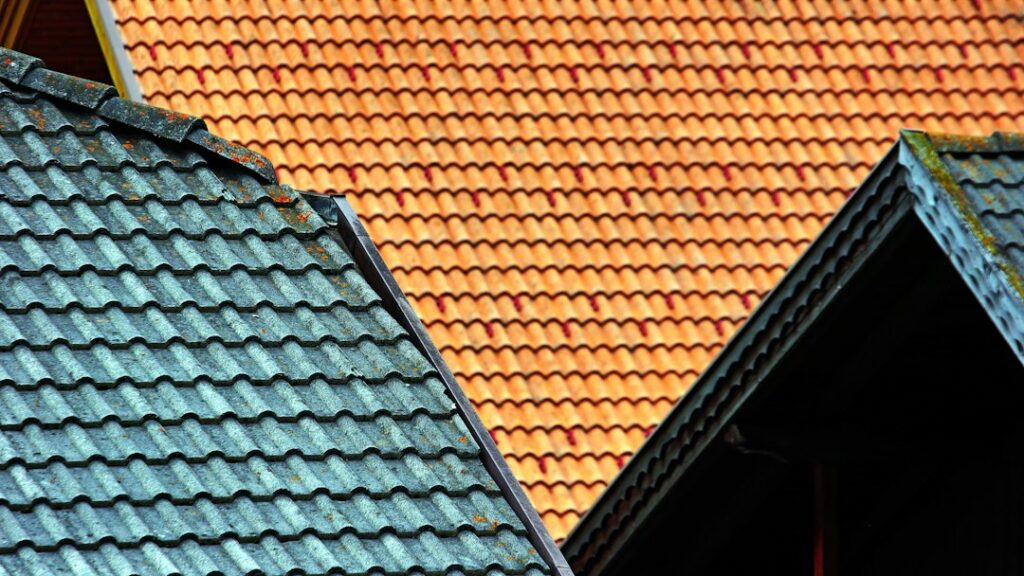
There is no single best roofing material for every U.S. home. The right choice depends on climate, roof structure, budget, fire and wind exposure, expected ownership period, maintenance tolerance, and the quality of the local installation. In 2026, asphalt shingles remain the budget benchmark, metal offers a strong durability-to-maintenance balance, tile performs well in many hot climates but adds weight, and slate sits at the premium end for longevity and appearance.
This guide compares the main residential roofing choices on the factors that matter most to homeowners: installed cost, service life, maintenance, structural weight, climate fit, energy performance, repairability, and contractor availability. The goal is not to crown one universal winner, but to help you narrow the field before requesting quotes.
Roofing materials compared at a glance
| Material | Typical installed cost | Typical service-life range | Best fit |
|---|---|---|---|
| Asphalt shingles | Often $7,500–$24,000 per roof in current 2026 national data | Often about 15–30 years | Budget-focused homeowners, broad contractor availability |
| Metal | About $5–$16 per sq. ft. for many common systems | Often 30–80+ years | Longer ownership, lower maintenance, hot or mixed climates |
| Concrete tile | About $7–$19 per sq. ft. | Often 30–50+ years | Warm climates, homes designed for heavier roofing |
| Clay tile | About $8–$25 per sq. ft. | Often 50–100+ years | Hot, dry or Mediterranean-style markets |
| Synthetic slate | About $9–$12 per sq. ft. | Often 30–50 years | Slate appearance with less weight |
| Natural slate | About $10–$30 per sq. ft. | Often 50–200 years depending on slate quality | Premium homes with adequate structural support |
Costs above are national planning ranges. Roof size, pitch, number of stories, valleys, dormers, tear-off, decking repairs, permits, local labor, and material grade can move a real quote substantially. To see how those factors combine for your roof, use the Roof Replacement Cost Calculator.
1. Asphalt shingles: the practical budget choice
Asphalt shingles remain the default comparison point because they are widely available, familiar to contractors, relatively light, and less expensive to replace than most premium roof systems. Angi’s October 2026 data puts a shingle roof replacement at roughly $7,500 to $24,000, with a national average around $10,500.
Asphalt works particularly well when upfront budget matters more than maximum service life. Repairs are usually straightforward because replacement shingles and experienced installers are easy to find in most markets.
The tradeoff is replacement frequency. A standard asphalt roof may need replacement sooner than metal, tile, or slate, especially in areas with strong sun, hail, repeated freeze-thaw cycles, poor attic ventilation, or severe storms.
Asphalt is a strong fit when:
- you want the lowest common installed cost;
- you may sell the home before a premium roof’s extra life is fully realized;
- the roof structure is not designed for heavy tile or slate;
- local contractor availability and easy repair matter.
2. Metal roofing: higher upfront cost, longer planning horizon
Metal is a broad category that includes exposed-fastener panels, standing seam, metal shingles, steel, aluminum, zinc, and copper. HomeGuide’s current 2026 replacement data places many common residential metal systems around $5 to $16 per square foot installed. Premium metals and architectural systems can cost much more.
Metal is attractive when the owner expects to keep the home for a long time and wants fewer full replacements. It is also one of several roofing materials that can be manufactured with high solar reflectance.
ENERGY STAR notes that a cool roof works by combining high solar reflectance with high thermal emittance, reducing roof-surface temperature and heat transfer into the building. The energy benefit is generally greatest in hot, sunny climates, particularly where roof insulation is limited. Metal can perform well here, but metal itself is not automatically a cool roof; the specific color and coating determine reflectance and emittance.
For a complete cost breakdown, see our 2026 metal roof cost guide.
Metal is a strong fit when:
- you expect long-term ownership;
- you want lower routine maintenance than many traditional materials;
- you are willing to pay more upfront for a longer service horizon;
- you want a reflective roof option in a hot climate;
- your area has experienced metal-roof contractors.
3. Concrete tile: durable, heavy, and climate-sensitive
Concrete tile is usually less expensive than clay while offering a similar profile. HomeGuide lists roughly $7 to $19 per square foot installed, with many complete projects between about $10,500 and $47,500 depending on roof size.
The biggest planning issue is weight. Tile roofs are much heavier than asphalt or many metal systems, so the roof structure must be suitable for the load. On a home that was not originally designed for tile, a structural evaluation may be needed before treating tile as a realistic option.
Concrete tile can work well in warm regions, but installation details, underlayment, flashing, roof slope, and local weather exposure still matter. Tiles can last a long time, yet the underlayment beneath them may need attention before the tiles themselves are worn out.
4. Clay tile: premium appearance for warm-climate homes
Clay tile commonly costs about $8 to $25 per square foot installed. It is especially associated with Mediterranean, Spanish, Southwestern, and coastal architectural styles. HomeGuide notes that clay performs particularly well in warm climates, while repeated freeze-thaw exposure can be harder on some clay products.
Like concrete tile, clay is heavy. The structure, deck, flashing, underlayment, and installation method all need to be designed as a system. Clay also tends to be more expensive to repair because matching broken tiles and accessing the roof without damaging adjacent pieces can require specialized skill.
Clay tile is a strong fit when:
- the home’s architecture suits tile;
- the structure can support it;
- you live in a warm climate;
- you value long service life and appearance more than low upfront cost.
5. Natural slate: exceptional longevity, premium cost
Natural slate is one of the longest-lived residential roofing materials, but it also carries one of the highest installed prices. HomeGuide’s current data puts natural slate around $10 to $30 per square foot installed, with typical complete projects around $22,000 to $70,000.
Slate quality varies. HomeGuide distinguishes softer slate that may last roughly 50 to 125 years from hard slate that can last much longer. The material is heavy, fragile under foot traffic, and requires installers who understand slate-specific fastening and flashing techniques.
For many homeowners, synthetic slate is worth comparing. It provides a similar visual direction at lower weight and typically around $9 to $12 per square foot installed, though it does not offer the same proven lifespan as high-quality natural slate.
Which roofing material is best for hot climates?
In hot, sunny regions, focus on the specific roof product’s solar reflectance and thermal emittance, not just the material name. ENERGY STAR explains that highly reflective roofs can remain much cooler in strong sun than dark, absorptive roofs, which can reduce cooling loads.
Metal with an appropriate reflective coating, reflective asphalt shingles, and certain tile products can all qualify as cool-roof options. Color matters, but modern coatings can improve performance even when the roof is not bright white.
Do not evaluate the roof in isolation. Attic insulation, air sealing, ventilation strategy, duct location, and HVAC efficiency also affect cooling costs. Our attic insulation cost guide covers one of the other major components.
Which material is best for high-wind or storm-prone areas?
Material alone does not determine storm performance. The roof deck, fastener schedule, underlayment, edge metal, flashing, panel or shingle rating, roof shape, and installation quality all matter. A premium product installed incorrectly can perform worse than a less expensive system installed to the applicable local wind requirements.
In hurricane- or high-wind regions, ask the contractor to provide the exact product approval, wind rating, fastening pattern, deck-attachment assumptions, and local-code requirements in writing. Do not buy a roof based only on a marketing claim such as “hurricane rated” without checking what assembly and installation method that rating assumes.
Which material is best if wildfire is a concern?
Fire performance depends on the complete roof assembly, not only the surface material. Metal, clay, concrete, slate, and many asphalt systems can be part of high fire-resistance assemblies, but homeowners should verify the tested roof-covering classification and local wildfire requirements for the exact product being quoted.
Roof edges, vents, gutters, valleys, and accumulated debris also influence wildfire vulnerability. A fire-resistant surface does not eliminate the need for defensible-space and maintenance practices.
Which material is best if you may sell within 5–10 years?
If you expect to move relatively soon, the most expensive long-life roof is not automatically the best financial choice. A quality asphalt roof may make more sense if it solves the immediate problem, fits neighborhood expectations, and avoids paying for decades of remaining roof life that a future owner will receive.
Premium materials make more financial sense when you expect long ownership, the architecture supports the investment, or local buyers consistently value that roof type.
Do not compare quotes by material price alone
Two roofing bids using the same surface material can differ by thousands because one includes a complete roof assembly and the other does not. Ask every roofer to separate:
- tear-off and disposal;
- decking repair or replacement;
- underlayment;
- ice-and-water protection where needed;
- drip edge and flashing;
- ventilation work;
- valleys, skylights, chimneys, and wall intersections;
- permit fees;
- manufacturer warranty and workmanship warranty;
- cleanup and magnetic nail sweep;
- change-order pricing for hidden damage.
Our roof replacement cost guide explains the broader replacement budget, while our roof repair cost guide can help when full replacement may not yet be necessary.
A practical decision framework
Use the following sequence before asking contractors for bids:
- Confirm the roof really needs replacement. Localized leaks or flashing failures may be repairable.
- Set an ownership horizon. A 5-year plan and a 30-year plan can justify different materials.
- Check structural limits. Heavy tile or slate may require engineering review.
- Define climate priorities. Sun, hail, wind, snow, salt air, and wildfire exposure should influence the shortlist.
- Compare complete installed systems. Underlayment, flashing, ventilation, and fasteners matter as much as the visible material.
- Get at least two or three like-for-like quotes. Use the same material grade and scope for each contractor.
Roofing material quote checklist
- Exact manufacturer, product line, material, profile, and color.
- Roofing area, waste factor, and number of existing layers being removed.
- Underlayment, ice-and-water protection, drip edge, flashing, and ventilation scope.
- Decking-repair unit pricing before tear-off begins.
- Wind, fire, impact, or cool-roof ratings relevant to the property.
- Permit responsibility, cleanup, and magnetic nail sweep where applicable.
- Manufacturer warranty and separate workmanship warranty.
- Change-order process for hidden damage.
Five-step material decision
- Confirm replacement is necessary.
- Set the ownership horizon and budget.
- Rule out materials the structure or local climate cannot support.
- Compare complete systems—not only surface-material prices.
- Get like-for-like written bids from experienced installers.
Bottom line
For most U.S. homeowners in 2026, asphalt shingles remain the practical budget choice, metal offers one of the strongest balances of longevity and maintenance for long-term owners, concrete and clay tile are compelling for suitable structures and warm-climate architecture, and slate is a premium longevity choice when budget and structure allow it.
The best roof is the one that fits the house, climate, ownership horizon, and local installation expertise. Choose the complete roofing system rather than the surface material alone, and compare contractor scopes before comparing totals.
Home Cost Desk compares current U.S. cost or technical references and checks safety, code, efficiency, incentive, or regulatory claims against authoritative sources when available. National figures are planning ranges, not local quotes.
Editorial review: Home Cost Desk Editorial Team · Read our research methodology · Detailed sources appear below.
Sources and methodology
Home Cost Desk uses current national cost datasets for planning ranges and authoritative energy-efficiency guidance for performance claims. Actual prices and code requirements vary by location, roof geometry, contractor availability, product grade, and hidden conditions.