2026 cost snapshot
| Item | Planning range / amount | Basis |
|---|---|---|
| Kansas City roof replacement | $5,345-$10,337 typical reported range | Angi 2026 |
| Kansas City reported average | About $7,680 | Angi 2026 |
| Installed roof pricing | About $4-$11 per sq. ft. | Angi Kansas City 2026 |
| Asphalt shingles | Near lower end of material range | Angi 2026 |
| Metal roof local reported average | About $5,843 for reported projects | Angi Kansas City 2026 |
Quick answer
Kansas City roof replacement in 2026 averages about $7,680 in Angi’s local data, with many reported projects between roughly $5,345 and $10,337. Installed pricing commonly runs about $4 to $11 per square foot depending on material, roof complexity, tear-off, decking and labor.
Those reported totals include smaller roofs and limited scopes, so larger homes can easily cost more. The most useful homeowner number is measured roof area combined with the exact roofing system, not the house’s floor area or a citywide average.
Kansas City weather matters
Kansas City roofs experience hot summers, freeze-thaw cycles, thunderstorms, high winds, hail and occasional tornado-related debris. A roofing system therefore needs good edge details, fastening, flashing and water management in addition to attractive shingles.
Storm exposure also makes documentation important. A roof nearing the end of normal service life is not automatically an insurance replacement because hail occurred nearby. Damage needs to be evaluated against the policy and actual condition.
Asphalt shingles
Architectural asphalt shingles remain the common value choice in the metro. Angi places asphalt near the lower end of the local $4 to $11 per-square-foot installed range.
Ask for the exact shingle manufacturer and line, underlayment, starter, ridge cap, edge metal, flashing, ventilation and warranty. “Lifetime architectural shingle” is a marketing description, not a complete roofing specification.
Impact-resistant shingles
Some manufacturers offer shingles tested for improved impact resistance. They cost more and are not hail-proof, but they can be worth comparing in a hail-prone region.
Ask the insurer whether a particular tested product qualifies for a premium adjustment before paying for an upgrade solely because a salesperson promises an insurance discount.
Metal roofing
Metal costs more upfront but can provide long service life and strong wind performance. Standing-seam systems usually cost substantially more than exposed-fastener panels because the material and attachment details are different.
Compare coating, substrate, panel gauge, clips, penetrations and installer experience. A low metal quote may not represent the same system as a premium concealed-fastener proposal.
Tear-off and disposal
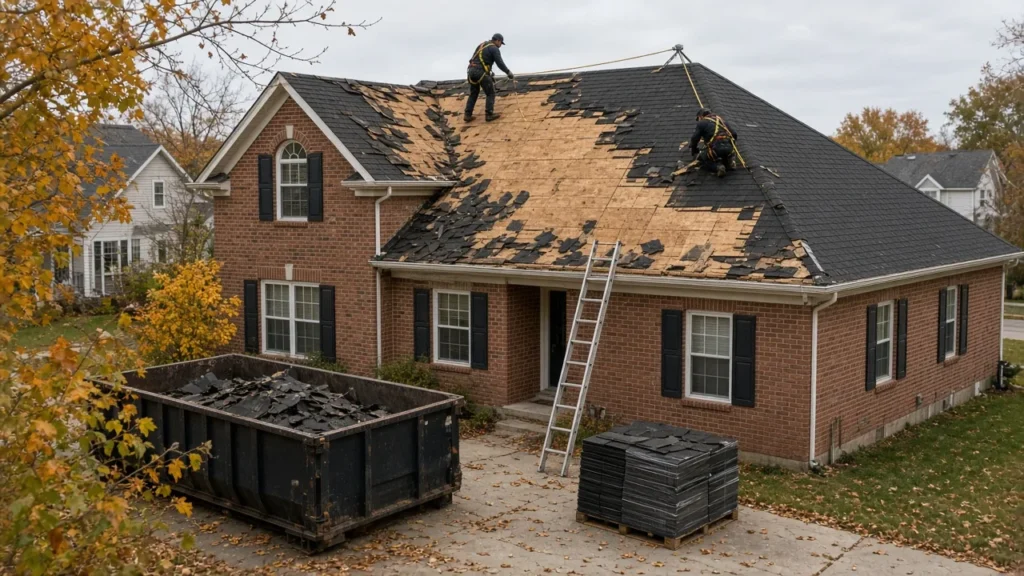
Removing old roofing exposes the deck and allows the contractor to inspect for rot, delamination and previous repair mistakes. Multiple existing layers increase labor, disposal and landfill cost.
Ask how many layers the base bid assumes and whether dumpsters, hauling, site protection and magnetic nail cleanup are included.
Decking repair changes permit status
Kansas City, Missouri provides an unusually useful local threshold: reroofing of one- and two-family homes with a light roof covering can be permit-exempt, but the exemption does not include replacing roof sheathing or decking or making structural changes, except that replacement of no more than 32 square feet of decking may be exempt under the city’s published guidance. Replacing more than 32 square feet of decking, or doing structural rafter work, moves the job into a permitted scope. This rule comes from the City of Kansas City, Missouri; Kansas City, Kansas and suburban cities on either side of the state line set their own permit requirements.
That makes hidden deck damage a cost and administrative issue. Ask for a per-sheet price and a process for documenting damaged sheathing with photographs before replacement.
Kansas City permit rule
The City’s permit-exempt guidance applies to specific reroof conditions rather than every roof project. Structural work, heavier coverings or larger deck replacement can move the job into a permitted scope.
Contractors should know whether the work remains exempt after tear-off. A homeowner should not be told at the end of the job that major deck replacement happened outside the expected permit process.
Hail and insurance claims
Hail can bruise shingles, fracture matting, loosen granules, dent metal and damage flashing. A legitimate claim should be based on documented covered damage, not a neighborhood sales pitch.
Do not sign broad authorization documents before understanding the policy, deductible and scope. Separate covered storm repair from elective upgrades such as premium shingles, added ventilation or decorative gutters.
Flashing is more important than many homeowners realize
Leaks often occur at valleys, chimneys, wall intersections, skylights and plumbing penetrations rather than through the middle of an intact shingle field. A replacement quote should explain which flashing will be replaced and which will be reused.
Ask for photographs of critical flashing and underlayment before they are covered. Reusing poorly integrated flashing can undermine an otherwise new roof.
Ventilation and attic insulation
A reroof is a good time to inspect attic ventilation, but adding exhaust vents without adequate intake or without addressing major ceiling air leakage can create poor results.
Kansas City’s temperature extremes make insulation important as well. Compare the Attic Insulation Cost 2026 guide if comfort or energy problems exist, but keep roofing and insulation scopes distinct.
Three Kansas City project scenarios
Scenario 1 – simple asphalt reroof: one existing layer, sound decking and a basic gable roof keep the project near the lower local range.
Scenario 2 – hail claim with hidden deck damage: tear-off reveals more than 32 square feet of failed sheathing, adding material cost and changing the permit path.
Scenario 3 – standing-seam metal upgrade: the homeowner prioritizes long service life and storm resistance, pushing the budget well above a basic asphalt system.
Repair versus replacement
An isolated flashing leak, a few storm-damaged shingles or a small puncture may be repairable on a younger roof. Widespread hail damage, brittle shingles, repeated leaks or end-of-life wear can make replacement more rational.
Compare with the Roof Repair Cost 2026 guide before replacing a roof that still has meaningful service life. Repair and replacement bids should both explain the expected remaining life.
How to compare Kansas City bids
Require measured roof area, material line, tear-off layers, underlayment, flashing, ventilation, decking allowance, permit responsibility, disposal, cleanup, warranty and payment schedule.
Use the Roof Replacement Cost 2026 guide and the Roof Replacement Cost Calculator as a national benchmark, but let local hail exposure, deck condition and actual roof squares determine the final decision.
Contractor verification
Verify the business and any licensing or registration required for the scope, especially if structural deck or framing work is involved. Also confirm liability and workers’ compensation coverage.
Storm seasons attract temporary roofing operations. A low price loses value if the company disappears before a warranty claim or fails to complete permit closeout.
Weather scheduling
Dry, moderate conditions are easiest for tear-off and shingle installation, but storm repairs can occur throughout the year. Temperature can affect shingle handling and self-sealing strips.
Ask how the roofer protects an open deck if a storm arrives during construction and how weather delays affect the schedule and material storage.
Roof size, pitch and complexity
Roof cost follows actual roof surface area rather than interior living area. Hips, valleys, dormers, porches and steep slopes increase both measured area and labor. A 2,000-square-foot house can therefore have a roof much larger than 2,000 square feet.
Ask for the measured roof area in squares and the waste factor. If two contractors report materially different areas, request the measurement report before comparing price per square.
Ice and water protection
Kansas City experiences freezing weather as well as heavy rain. Underlayment, valley details, penetrations and edge protection need to follow the adopted code and roofing manufacturer requirements for the specific assembly.
Ask which areas receive enhanced membrane protection and why. More membrane is not automatically better if it is used incorrectly, but leaving vulnerable details unprotected can create leaks that are expensive to trace.
Gutters and roof-edge coordination
A reroof can expose damaged fascia, drip edge and gutter attachments. Decide before construction whether gutters stay, are removed and reinstalled or are being replaced.
If the house also needs gutter work, the Gutter Installation Cost 2026 guide can help separate the two budgets so a roofing allowance does not hide a second project.
Final roof documentation
At closeout, request permit documentation when applicable, manufacturer warranty information, contractor workmanship warranty, final invoice and photographs of the deck, underlayment, flashing and completed roof.
Keep the exact shingle product and color. If a future storm damages a small area, that information makes matching material and filing an insurance claim easier.
Homeowner records and final QA
Keep the signed proposal, approved change orders, product specifications, permit or inspection records where applicable, warranty and completion photographs.
Before final payment, compare the completed work with the written scope and document any remaining punch-list items.
Roofing warranties are not all the same
Manufacturer material warranties and contractor workmanship warranties cover different risks. A long shingle warranty does not automatically pay for leaks caused by poor flashing or fastening.
Ask what registration is required, whether upgraded manufacturer coverage requires certified installation and how long the roofer covers workmanship. Keep the documents after final payment.
Fascia, soffit and hidden edge damage
Rot often appears at roof edges where gutters overflow or flashing fails. Replacing shingles does not automatically include fascia, soffit or rafter-tail repair.
Request unit prices for common edge carpentry before tear-off. This is especially useful on older homes where damaged wood may only become visible after gutters and shingles are removed.
Kansas City pre-contract checklist
Confirm measured roof area, number of layers, material line, impact rating if selected, underlayment, deck-repair price, flashing, ventilation, gutters, permit status, insurance and cleanup. Photograph the roof and property before delivery.
Do not make the final payment until the site is cleaned, agreed punch-list items are complete and permit closeout is documented when a permit was required.
Storm-chaser warning signs
High-pressure door-to-door sales after hail do not automatically indicate fraud, but homeowners should slow down before signing. Verify the company’s local presence, insurance, references and contract cancellation terms.
A reputable roofer should be able to explain actual damage and scope without demanding control of the insurance claim or promising that the deductible can simply disappear.
Roof penetrations and accessories
Plumbing vents, bath exhausts, satellite mounts, skylights and chimney details interrupt the roofing system and need deliberate flashing. A reroof is the right time to remove abandoned mounts and correct improvised penetrations rather than shingling around them again.
Ask whether new pipe boots, vents and flashing accessories are included. Small components are inexpensive compared with the interior damage caused by a leak around a neglected penetration.
Material delivery and property protection
Roofing materials and dumpsters can be heavy. Discuss driveway protection, landscaping, siding, windows, air-conditioning units and where shingles will be staged. Delivery trucks should not assume every driveway can accept the same load.
Photograph exterior surfaces before work. This makes it easier to resolve a broken light fixture, damaged plant or pavement issue fairly if something happens during construction.
Attic inspection after roofing
After completion, inspect the attic during daylight for obvious gaps, displaced ductwork, debris or new penetrations. After the first heavy rain, check known vulnerable areas around chimneys, valleys and roof penetrations.
Early leak detection is easier to correct under a fresh workmanship warranty than waiting until stains appear on finished ceilings months later.
Bottom line
Kansas City roof replacement in 2026 commonly falls around $5,345 to $10,337 in Angi’s reported data, with installed pricing around $4 to $11 per square foot. Larger or more complex roofs can cost substantially more.
The local 32-square-foot decking threshold is an important planning detail. Make sure the contract addresses hidden sheathing damage, permit responsibility, storm documentation, flashing and cleanup before choosing a roofer.
Frequently asked questions
How much does roof replacement cost in Kansas City in 2026?
Angi reports a typical range around $5,345 to $10,337 and an average near $7,680, with larger or more complex roofs costing more.
Does Kansas City require a permit for reroofing?
Some qualifying light-covering reroofs can be exempt when decking replacement is limited. More than 32 square feet of deck replacement or structural work requires a permit.
How much does roof replacement cost per square foot?
Angi’s Kansas City data gives roughly $4 to $11 per square foot depending on material and scope.
Is metal roofing worth it in Kansas City?
It can be for homeowners prioritizing long service life and storm resistance, but upfront cost is higher.
Will insurance pay for hail damage?
It depends on the policy, deductible and documented covered damage. Normal wear is different from a storm loss.
Should flashing be replaced?
Critical flashing should be evaluated carefully. Reusing failed or poorly integrated flashing can cause leaks under a new roof.