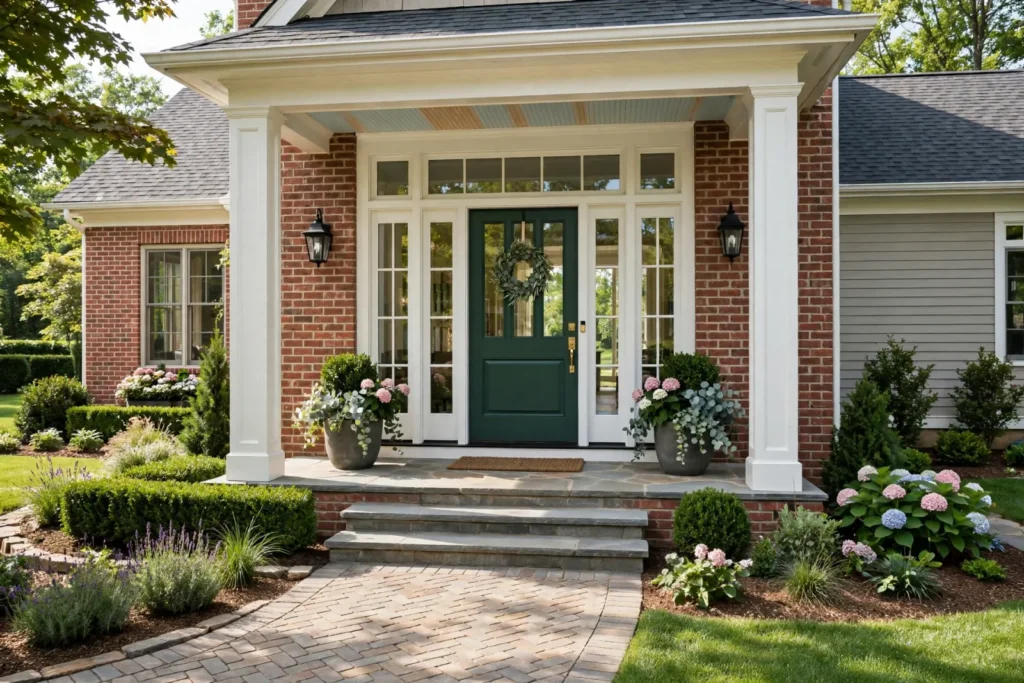
Replacing a front door can be a simple exterior upgrade or a multi-thousand-dollar project. The final price depends on the door material, frame condition, glass, sidelights, hardware, and how much repair the opening needs. For U.S. homeowners planning a 2026 replacement, a practical installed budget for a standard front door is roughly $500 to $2,400. Premium wood, iron, double-door, sidelight, or custom entry systems can cost several thousand dollars more.
Angi’s September 2026 data puts typical door installation at about $498 to $1,961. HomeGuide lists a typical front-door installation around $500 to $1,900, and broader front-door-and-frame projects can reach roughly $800 to $4,000. These are national planning ranges, not quotes for your house.
Front door replacement cost at a glance
The biggest pricing mistake is comparing only the door slab. A complete replacement can include removal, disposal, frame repair, flashing, weatherstripping, trim, hardware, painting, and sometimes structural work.
Steel vs. fiberglass vs. wood: quick comparison
HomeGuide’s current product ranges put basic steel doors around $100 to $1,000, fiberglass around $200 to $2,700, and wood around $400 to $1,800 before elaborate configurations. Sidelights, decorative glass, custom sizes, and specialty finishes raise those amounts substantially. Iron entry systems sit at the premium end.
Steel
Often the budget-conscious choice with good security. Repaint scratches promptly, especially in humid or coastal climates.
Fiberglass
Mimics wood while resisting many wood maintenance problems. Insulated models come in a broad range of styles and prices.
Wood
Premium look and broad customization, but higher cost and upkeep. Overhangs and proper sealing protect the finish.
Choose material for climate, exposure, maintenance tolerance, security, and appearance—not purchase price alone. A wood door facing afternoon sun with no overhang will demand far more upkeep than the same door under a deep porch.
What else drives the price?
Slab vs. prehung door
A slab is the door alone; a prehung unit comes mounted in a frame. A slab can be cheaper when the existing frame is square, sound, and correctly sized, but fitting and hardware boring add labor. HomeGuide estimates a prehung exterior door at about $440 to $1,800 installed and a slab replacement around $400 to $1,700 installed. The ranges overlap because installation difficulty matters more than the label.
Frame condition
Rot, water damage, a warped jamb, threshold damage, or an out-of-square opening can turn a simple swap into a repair job. Angi’s 2026 data suggests a new frame commonly adds $150 to $380 before larger structural repairs. If the old frame shows moisture damage, ask the contractor to identify the source before covering it with new trim.
Sidelights, transoms, and glass
Sidelights may require a wider prehung assembly or structural modification. Decorative, impact-resistant, privacy, or low-emissivity glass costs more than an opaque panel. An entry with sidelights commonly reaches $1,600 to $4,600.
Hardware and security
Basic knobs and deadbolts are inexpensive, but premium handle sets, multipoint locks, smart locks, reinforced strike plates, and designer hardware can add hundreds of dollars. Ask whether the quote covers hardware installation and lock rekeying.
Three realistic budget scenarios
These illustrations combine the ranges above; your local quotes will differ.
1. Basic swap: about $500–$1,200
A standard steel or entry-level fiberglass prehung door replaces a same-size unit in a sound opening. Basic lockset, removal, and disposal are included, and trim needs only caulk and touch-up paint.
2. Mid-range upgrade: about $1,500–$3,000
An insulated fiberglass door with decorative glass, upgraded handle set, and smart deadbolt. The installer finds a soft jamb and replaces the frame, adds new casing, and finishes the trim.
3. Premium entry: about $4,000 and up
A wood or custom fiberglass door with sidelights, or a conversion from a single to a double door. Expect a new header, framing, a permit, and possibly electrical adjustments. Custom systems can climb past $5,000 and, in premium cases, toward $20,000.
Energy efficiency and the expired tax credit
ENERGY STAR evaluates certified residential doors using ratings such as U-factor and, where applicable, solar heat gain coefficient. Requirements vary with the amount of glass and climate zone. A lower U-factor generally means better resistance to heat flow.
Installation matters as much as the rating. A well-rated door can perform poorly if the frame is not sealed, the threshold leaks, or weatherstripping does not make full contact. The U.S. Department of Energy recommends durable weatherstripping and a properly fitted door sweep that reduce air leaks without interfering with operation.
Repair or replace?
A door may be worth repairing when the slab is sound and the problem is limited to hinges, weatherstripping, lock alignment, minor finish damage, or the threshold. Replacement makes more sense when:
- the slab is warped, cracked, badly rusted, or delaminating;
- the frame has significant rot or structural damage;
- the door no longer seals despite adjustments;
- water repeatedly enters around the threshold or jamb;
- you want a different size or style;
- security is compromised;
- repair costs approach a large share of replacement.
If only part of the frame is damaged, ask whether a partial repair is practical. If the whole opening is deteriorated, a full prehung replacement usually gives a cleaner result.
Hidden costs that change the final bill
- Removal and disposal: Angi puts this around $40–$200; HomeGuide estimates removal at $70–$200. Some contractors include it.
- Trim and paint: Casing may need replacement, priming, staining, or painting. Factory finishes reduce but don’t eliminate touch-up.
- Water or insect damage: Rotten sheathing, subfloor damage at the threshold, or termite damage often appears only after removal.
- Structural changes: Enlarging an opening or adding sidelights may require a new header, plans, and permits. HomeGuide estimates a new exterior opening at roughly $1,400–$3,500, before difficult masonry or utility work.
- Electrical relocation: Doorbells, security sensors, or lighting may need adjustment. Compare rates with our 2026 electrician cost guide.
Permits and professional installation
A like-for-like replacement may not need a permit in many jurisdictions, but rules vary. Enlarging an opening or altering a header is more likely to require review. High-wind, hurricane, wildfire, and historic districts can impose product or installation requirements—confirm before ordering a custom unit, because a noncompliant door can mean paying twice.
A prehung exterior door must be level, plumb, square, securely fastened, flashed, and weather-sealed. Professional installation is the safer choice in most cases, and especially when there is rot, a damaged threshold, masonry walls, sidelights, an oversized door, or structural change. The labor charge buys protection against drafts, leaks, lock problems, and premature wear.
Five-step buying process
- Diagnose the opening. Check for rot, soft spots, leaks, and sticking before choosing a product.
- Set priorities. Rank budget, security, efficiency, maintenance, and style for your exposure and climate.
- Confirm local rules. Ask about permits, wind or fire ratings, and historic restrictions.
- Get two or three written quotes for the same specification.
- Verify the work before final payment using the checklist below.
Contractor quote checklist
Ask each contractor to list:
- manufacturer, model, size, material, and slab or prehung configuration;
- glass, sidelight, or transom details;
- door and frame finish, plus hardware and lockset;
- removal and disposal;
- frame and threshold repair allowances;
- flashing, sealant, insulation, and weatherstripping;
- interior and exterior trim, painting, or staining;
- permit responsibility;
- product and labor warranties;
- total installed price.
A lower bid may simply exclude disposal, trim, hardware, paint, or frame repair another contractor included.
Common expensive mistakes
- Comparing slab prices instead of installed scope.
- Ordering a custom size before measuring and checking local requirements.
- Covering moisture damage with new trim without fixing the source.
- Choosing unprotected wood for a sun- or rain-exposed entry.
- Budgeting around the expired 2025 federal door credit.
- Skipping a contingency for hidden frame or subfloor damage.
Post-install verification checklist
- Door opens, closes, and latches smoothly without force.
- Deadbolt throws fully without pushing or lifting the door.
- Even gaps around the slab; weatherstripping contacts all sides.
- No daylight or drafts at the threshold or sweep.
- Exterior caulking and trim are complete and neat.
- Keys, warranty paperwork, and any permit sign-off are handed over.
Frequently asked questions
Is fiberglass worth the extra cost over steel?
Often, if you want a wood-grain look with lower upkeep or face dent-prone conditions. For a budget-focused, painted entry under good cover, steel can be the better value.
How long does installation take?
A straightforward swap is often finished in a day. Frame repair, sidelights, or structural changes extend the timeline, and custom doors can add lead time.
Should I replace the frame too?
Only if it is rotted, warped, or out of square. A sound frame can accept a slab, but a prehung unit often solves sealing problems more reliably.
Related exterior projects
Coordinate door work with painting so new trim isn’t repainted immediately—see our exterior house painting cost guide. Replacing several openings? Our window replacement cost guide offers whole-house planning ranges, and the garage door replacement cost guide covers another major entry project.
Bottom line
For 2026, plan roughly $500 to $2,400 for a standard professionally installed front door. Basic steel or fiberglass in an existing opening stays near the low end, while wood, double doors, sidelights, custom glass, new framing, and structural changes can push the project well above $4,000. Compare complete installed scope, not door price—frame repair, sealing, trim, hardware, disposal, and permits are what make similar quotes differ.
Planning more exterior upgrades?
Home Cost Desk compares current U.S. cost or technical references and checks safety, code, efficiency, incentive, or regulatory claims against authoritative sources when available. National figures are planning ranges, not local quotes.
Editorial review: Home Cost Desk Editorial Team · Read our research methodology · Detailed sources appear below.
Sources and methodology
Home Cost Desk uses current national consumer cost datasets for planning ranges and official U.S. energy guidance for performance considerations. Actual prices vary by region, contractor availability, product, house age, and opening condition.