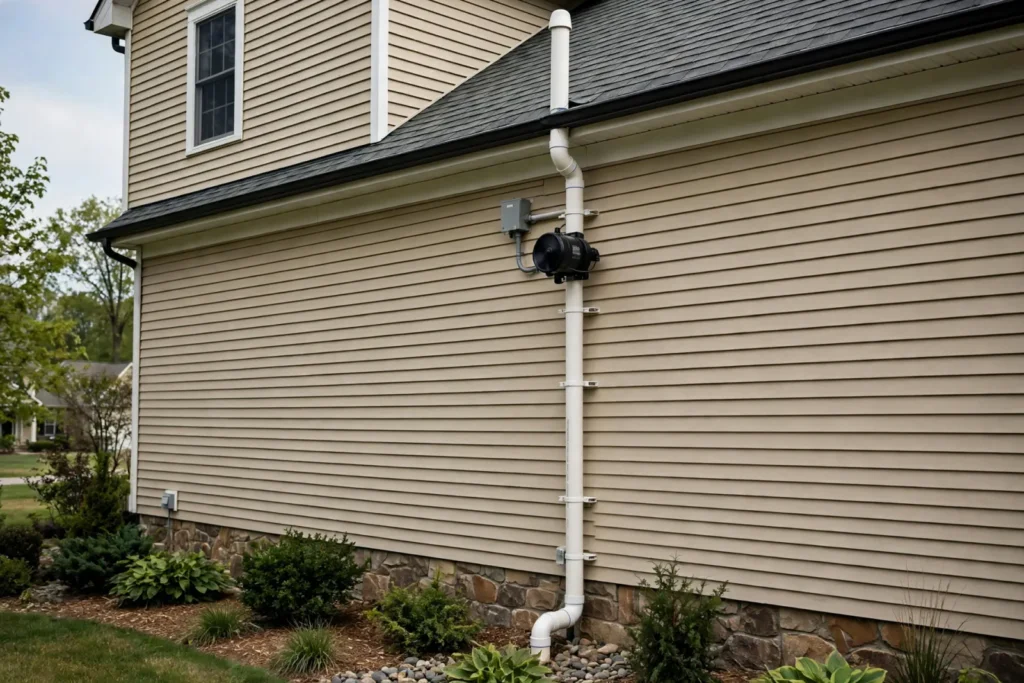
Quick answer: For a typical existing U.S. home, a professional radon mitigation system often falls around $1,200 to $2,000 installed according to HomeGuide’s 2026 cost data. Angi’s September 2026 verified-project data is narrower, at $805 to $1,326 with an average around $1,043 for common mitigation installations. Those figures are not contradictory: they reflect different project samples and scopes. A straightforward active soil depressurization system in an accessible basement can sit near the lower end, while multiple foundations, crawl spaces, difficult vent routing, electrical work and added sealing can push a project higher.
2026 cost snapshot
| Planning item | 2026 planning range | Notes |
|---|---|---|
| Typical installed mitigation system | $1,200-$2,000 | HomeGuide national average range |
| Common Angi verified-project range | $805-$1,326 | Average about $1,043 in Sept. 2026 dataset |
| Professional radon testing | $150-$700 | Angi; test type and scope matter |
| Permit allowance | $25-$150 | Angi broad allowance; local rules control |
| Complex foundation/crawl-space work | Can exceed typical range | More suction points, membranes, routing or electrical work |
What a radon mitigation budget should include
Radon mitigation is not simply “a fan and a pipe.” The installed system has to collect soil gas from beneath or beside the foundation, keep that gas from entering the living space, move it through a dedicated vent path, exhaust it outdoors in an appropriate location, and provide a way to confirm that the system is operating. A realistic budget therefore includes the mitigation hardware, labor, electrical connection, penetrations through the slab or foundation, sealing work where needed, and verification testing after the system is running.
HomeGuide’s February 2026 national guide puts the average installed range at $1,200 to $2,000, with a national average near $1,600. Angi’s September 2026 dataset reports $805 to $1,326 for its most common mitigation work and an average around $1,043. Home Cost Desk treats those numbers as planning references rather than a single “correct” quote. If your home has one accessible slab and a short vent route, a bid near the lower band can be plausible. If the house has a basement plus crawl space, several foundation sections, finished ceilings or difficult exterior routing, the project can require more suction points, more pipe, more sealing and more labor.
Before comparing prices, confirm whether each proposal includes the fan, PVC venting, diagnostic testing, electrical work, a system-performance indicator such as a manometer, sealing around the suction point, required labels, startup, and a post-mitigation radon test. A low proposal that excludes testing or electrical work is not necessarily a lower final project.
Use national numbers as a way to frame bids, not as a substitute for a home-specific design. The most useful comparison is between bids that describe the same foundation areas and the same testing scope.
Why foundation type changes the price
The foundation determines how a contractor can create negative pressure beneath the home. A simple slab-on-grade house may need one well-placed suction point. A basement with a slab can also be straightforward when the sub-slab material allows air to move freely. Homes with additions, multiple slab elevations, foundation walls that divide the sub-slab area, or thick footings may need more diagnostic work and more than one suction point.
Crawl spaces can change the scope even more. A common approach may involve sealing exposed soil with a durable membrane and drawing soil gas from below that membrane. If you are already evaluating moisture problems, compare the radon proposal with your Crawl Space Encapsulation Cost 2026 plan so you do not pay twice for incompatible or overlapping membrane work. Radon control and moisture control are related, but they are not the same job and should not be casually treated as interchangeable.
Basement water problems also deserve a separate diagnosis. A radon contractor may seal around a suction penetration or certain foundation openings, but that is not the same as correcting hydrostatic pressure, exterior drainage or chronic leakage. If water is the primary problem, read Basement Waterproofing Cost 2026 before assuming a radon system will solve moisture.
Testing comes before and after the system
Radon cannot be seen or smelled, so the project begins with measurement. EPA recommends fixing a home when the measured radon level is 4 picocuries per liter (pCi/L) or higher, and EPA also says homeowners should consider reducing levels between 2 and 4 pCi/L. CDC similarly advises contacting a qualified professional at or above 4 pCi/L and notes that lower exposure is better because there is no known safe radon level.
Angi’s 2026 cost data lists professional radon testing at roughly $150 to $700, depending on test type and scope. Many homeowners start with a lower-cost short-term test or state program, but a real-estate transaction, unusual result or complex home may justify professional measurement. What matters is that the test is performed under the instructions for that device and that the result is not treated casually.
After installation, the home should be tested again to verify that the system actually reduced the radon level. Ask whether post-mitigation testing is included in the quote, performed by the installer, or expected to be arranged independently. The cheapest system is not a bargain if nobody verifies the outcome.
What usually moves a radon quote up or down
The number of suction points is one major cost driver. One point and a short pipe run is simpler than several points connected across different foundation sections. Finished basements can add labor because the contractor may need to route pipe around finished walls, ceilings and living areas without creating an awkward installation.
Fan selection and vent routing matter as well. The contractor is not choosing a fan only by house square footage; the sub-slab material and diagnostic pressure readings affect how much airflow and suction are needed. A system routed through a garage or attic can look different from one run along an exterior wall. Ask where the fan will be located, where the vent terminates, what sound you should expect, and what happens if the fan eventually fails.
Electrical work can be a separate line item when no suitable receptacle or circuit is available. Permits also vary by jurisdiction. Angi’s 2026 data gives a rough permit allowance of $25 to $150, but local rules are what matter. Do not add a generic national permit fee to every job; instead, ask the installer whether a permit is required and whether it is in the proposal.
Sealing can be necessary around sump lids, penetrations, cracks or crawl-space membranes, but “seal every crack and radon disappears” is not a professional mitigation strategy. EPA’s radon-resistant construction guidance describes sealing as one component used together with a venting pathway. The pressure-control system does the heavy lifting in most existing-home mitigation projects.
Do not confuse radon mitigation with general indoor-air upgrades
Air cleaners, furnace filters and portable purifiers are not radon mitigation systems. Radon is a soil gas problem, so a contractor needs to address how the gas enters and how to intercept it. Extra ventilation can affect indoor concentrations, but simply buying a better HVAC filter does not solve elevated radon.
This distinction matters because homeowners sometimes bundle several indoor-air concerns into one purchase. If you are also planning HVAC work, use the HVAC Replacement Cost Calculator 2026 for equipment budgeting, but keep the radon system as its own scope. A heating and cooling contractor can be excellent at HVAC without being a qualified radon mitigator.
Radon Action Plan by Test Result
- If a properly performed test is at or above 4 pCi/L, follow EPA and applicable state guidance and contact a qualified radon professional about mitigation.
- If the result is between 2 and 4 pCi/L, review EPA’s recommendation to consider reducing radon and decide whether mitigation fits your risk tolerance and project plans.
- Before hiring, make sure competing proposals address the same foundation areas and include a clear plan for electrical work, system monitoring and post-install testing.
- After mitigation, retest under the recommended conditions and keep the result with the system invoice, fan information and warranty.
How to compare radon mitigation quotes
Compare bids against the same written scope rather than ranking the totals alone. A basement-only proposal cannot be compared fairly with one that also addresses an attached slab or crawl space. Use this sequence before choosing a mitigator:
- Map the areas being treated. Have each bidder identify the basement, slab additions and crawl spaces covered by the design, and explain whether diagnostic pressure testing is needed to establish suction-point locations.
- Check the collection and exhaust path. Ask how many suction points are proposed, where the pipe will run, where the fan will sit and where the exhaust will terminate. Have the contractor explain any access or finish repairs the route requires.
- Separate included work from exclusions. Mark who supplies the electrical connection, seals sump lids and penetrations, installs any crawl-space membrane, obtains required permits, repairs disturbed finishes and handles cleanup. Do not assume a lower quote includes these items.
- Require operating and verification details. Confirm the fan specification, a visible pressure or operation indicator, system labeling, written operating instructions, warranty terms and who pays for the post-installation radon measurement. A manometer shows system pressure; only a radon test verifies indoor concentration.
- Agree on the response to an unsuccessful retest. Ask what diagnostic work or adjustments the contractor will provide if the measured radon level remains elevated, and whether that follow-up is included or billed separately.
For a larger home project, the quote-comparison habits in How to Hire a Home Contractor 2026 still apply: compare written scopes, verify credentials, avoid large unexplained deposits, and document change-order rules before work begins.
What to Do Next
- Confirm the home’s current radon level with a properly performed test before requesting mitigation bids.
- Get two or three written proposals that cover the same foundation areas, suction points, vent route, electrical work and post-mitigation testing.
- Retest after installation and keep the result, system details and warranty with the home records so future performance can be checked.
Safety and professional boundaries
Radon is a radioactive gas and a known lung-cancer risk. This guide is for budgeting and hiring, not for instructing homeowners to drill slabs, design suction fields or wire fans. CDC specifically advises using a qualified professional for mitigation because the work requires technical knowledge and a poor system can fail to reduce exposure.
EPA points homeowners to state radon offices and national proficiency programs when looking for qualified measurement and mitigation providers. Ask the installer what credential they hold, whether your state has licensing or certification rules, and how the completed system will be verified. Keep the post-mitigation test result with your home records and include system checks in your broader Home Maintenance Checklist 2026.
Before You Hire a Radon Mitigation Contractor
- Verify the contractor’s radon-mitigation credential and any state licensing requirement.
- Ask for the proposed suction points, pipe route, fan location and exhaust termination in writing.
- Confirm whether electrical work, sealing, crawl-space membrane work, permits and cleanup are included.
- Require a visible system-operation indicator and written warranty terms.
- Agree in advance on who performs the post-mitigation radon test and what happens if the result remains elevated.
Frequently asked questions
How much should I budget for radon mitigation in 2026?
For a common existing-home system, a planning budget around $1,200 to $2,000 is a useful national starting point. Angi’s verified-project dataset is lower and narrower, so uncomplicated jobs can come in below that range. Complex foundations, crawl spaces, difficult routing and electrical work can push the project higher.
Does sealing basement cracks fix radon?
Not reliably by itself. Sealing can be part of a system, but EPA guidance treats it as one component alongside a venting pathway and, when needed, an active fan.
How do I know the system worked?
Test the home after mitigation. The contractor should also provide a visible indicator that the fan is creating system pressure, but that indicator does not replace a radon measurement.
When should I retest after radon mitigation?
EPA’s Consumer’s Guide to Radon Reduction recommends a post-mitigation test within 30 days of installation, but not before the system has operated for at least 24 hours with its fan on, if equipped. It recommends a two- to seven-day measurement and an independent follow-up measurement to avoid potential conflicts of interest. Follow the test device instructions and applicable state rules; ask the mitigator to explain what will happen if the result is still elevated.
Do I need to replace the radon fan regularly?
Fans are mechanical equipment and eventually fail. Ask the installer about expected service life, warranty and replacement procedure, and check the system indicator periodically.
Is radon only a basement problem?
No. Radon can enter any home from the soil, including homes without basements. Foundation type changes the mitigation design, not whether testing matters.
Budget scenarios: what a real proposal can look like
A straightforward basement example might involve a single accessible slab, one suction point, an exterior pipe route, a standard fan, nearby electrical power and a post-install test. That is the kind of job most likely to sit near the ordinary national range. Even here, compare whether testing and electrical work are included. A $1,050 quote plus separate testing and electrical work can finish higher than a $1,450 all-in proposal.
A mixed-foundation example can be more involved. Imagine a house with an original basement, a slab-on-grade addition and a small crawl space. The contractor may need diagnostic testing to learn whether one suction field can influence all areas. If not, more suction points or separate branches can be required. The crawl space may also need membrane work. In that situation, a quote above the national “typical” band is not automatically overpriced; the question is whether the design and added scope are documented.
A finished-basement example can add routing and finish constraints even when the radon problem itself is ordinary. The contractor may need to find a pipe path through a utility room, garage or exterior wall without crossing living space awkwardly. Drywall repair, painting or carpentry may be excluded. Homeowners should budget those finish costs separately rather than asking the radon contractor to hide them inside a vague contingency.
After installation, keep a simple record package: the pre-mitigation test, contractor invoice, system drawing or description, fan model and warranty, post-mitigation test, and any permit or inspection record. That documentation helps a future owner understand what was installed and gives you a baseline if a later test changes. If the fan noise changes, the manometer reading moves unexpectedly or the system indicator suggests a problem, contact the installer instead of assuming the system still performs as it did on day one.
Common budgeting mistakes to avoid
Do not compare a mitigation-only quote with an all-in quote that also includes testing, electrical work and crawl-space membrane work. Do not assume a low post-install manometer reading means the home has low radon; the gauge shows system pressure, not indoor radon concentration. And do not skip the follow-up test because the fan is running. The project is complete only when the home has been measured again and the result is acceptable for the homeowner’s risk decision.
Bottom line
A good radon budget starts with a verified test, treats $1,200 to $2,000 as a national planning reference rather than a promise, and compares contractors on system design—not just price. The right proposal explains what foundation areas are treated, where the vent runs, who handles electrical work, how the system is monitored, and how the final radon level will be confirmed.
Sources used for this article
- HomeGuide — How Much Does a Radon Mitigation System Cost? (2026): https://homeguide.com/costs/radon-mitigation-cost
- Angi — How Much Does a Radon Mitigation System Cost? [2026 Data], updated September 28, 2026: https://www.angi.com/articles/how-much-does-it-cost-remove-radon-gas.htm
- U.S. EPA — Radon Risks and Solutions: https://www.epa.gov/radon/radon-risks-and-solutions
- U.S. EPA — Radon-Resistant Construction Basics and Techniques: https://www.epa.gov/radon/radon-resistant-construction-basics-and-techniques
- CDC — Reducing Radon Levels in Your Home, June 18, 2026: https://www.cdc.gov/radon/prevention/index.html