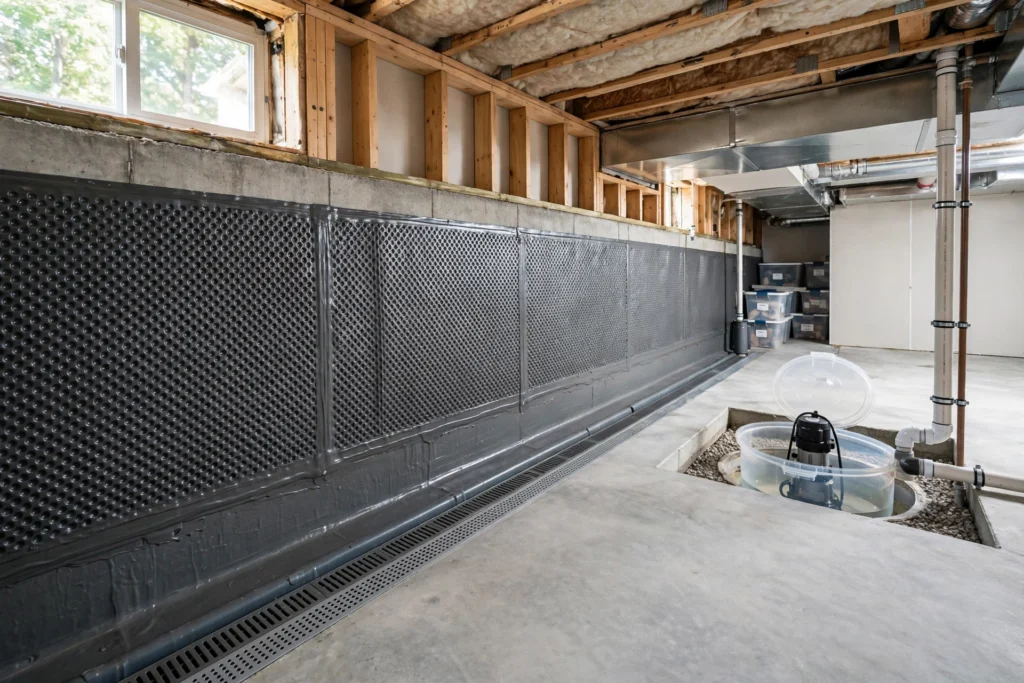
Basement waterproofing is not one standardized project. A homeowner sealing a few minor cracks is buying something very different from a homeowner excavating around a foundation, installing drainage, adding a sump system, and repairing water damage. For U.S. homeowners budgeting in 2026, Angi reports a typical professional project range of about $2,461 to $8,202, with an average near $5,241. HomeGuide uses a broader scope and reports roughly $6,000 to $18,000 for comprehensive basement waterproofing.
That difference is useful rather than confusing: national cost publishers are measuring different mixes of project size and method. Treat published figures as planning ranges, not contractor quotes. The correct system depends on where the water is coming from.
Open the Project Budget Calculator →
Basement waterproofing cost at a glance
| Project or method | 2026 planning range |
|---|---|
| Typical professional project (Angi) | $2,461–$8,202 |
| Angi national average | About $5,241 |
| Broader comprehensive range (HomeGuide) | $6,000–$18,000 |
| Interior waterproofing average (Angi) | About $3,000 |
| Exterior waterproofing average (Angi) | About $7,000 |
| General waterproofing by area | About $3–$10 per sq. ft. |
| Interior French drain (HomeGuide) | About $4,000–$17,000 |
| Sump pump system | Often $600–$2,500+ |
These numbers should not simply be added together. Contractors often package multiple components into one system, and the same drainage feature can appear inside a larger quote.
Start with the source of the water, not the product
The U.S. Environmental Protection Agency recommends fixing leaks and seepage at their source. Basement water can result from poor grading, missing or ineffective gutters, downspouts discharging too close to the foundation, plumbing leaks, foundation cracks, groundwater, or hydrostatic pressure.
That diagnosis matters financially. Spending thousands on an interior coating will not correct a yard that directs stormwater toward the foundation. Likewise, extending downspouts will not solve every groundwater or structural problem.
Interior waterproofing costs
Interior systems manage moisture or water after it reaches the foundation. Angi reports an average around $3,000 for interior waterproofing, while HomeGuide’s broader comprehensive interior range is about $6,000 to $12,000. The scope explains much of the difference.
Interior work can include crack injection, wall sealers, vapor barriers, perimeter drain channels, interior French drains, sump basins, sump pumps, and dehumidification. A small crack repair may cost hundreds; a perimeter drainage system that requires cutting the slab can cost many thousands.
Interior French drains and drain tile
Interior perimeter drainage intercepts water and routes it to a sump basin or other approved discharge point. HomeGuide reports roughly $4,000 to $17,000 for an interior French drain, depending on basement size and layout. Angi’s method-specific figures can be higher per foot for some subfloor systems, illustrating why the exact construction method needs to be written into the quote.
Sump pumps
A sump pump is often one component of a larger drainage system. Current consumer cost data places many installations around $600 to $2,500 or more. Home Cost Desk also has a dedicated 2026 sump pump replacement cost guide for homeowners comparing pump types, backup options, and replacement costs.
Exterior waterproofing costs
Exterior waterproofing is more disruptive because it can require excavation to expose foundation walls. Angi reports an average around $7,000 for extensive exterior services, while HomeGuide places many exterior waterproofing projects around $10,000 to $18,000.
Exterior work may include excavation, foundation-wall preparation, waterproof membranes, drainage board, footing drains, backfill, grading, and restoration of landscaping or hardscape. Access can dominate the price. A foundation beside an open yard is very different from one bordered by a driveway, deck, porch, utilities, or mature landscaping.
What drives the final price?
Basement size: Angi’s 2026 data places many waterproofing projects around $3 to $10 per square foot, but method matters more than area alone.
Water source: Surface runoff, a plumbing leak, wall seepage, floor seepage, and groundwater pressure require different solutions.
Interior versus exterior access: Excavation, demolition, concrete cutting, and restoration increase labor.
Foundation type and condition: Poured concrete, block, stone, existing cracks, movement, and deterioration affect repair choices.
Drainage and grading: Correcting exterior water management can involve gutters, downspouts, underground piping, swales, or regrading.
Finished basement: Drywall, flooring, cabinetry, insulation, and trim may need removal and replacement before the waterproofing system is even accessible.
If your project also involves cutting a new exterior basement entrance, excavation and drainage scope can overlap. See our walkout basement entrance cost guide for the separate door, stairwell, structural and water-management costs.
Hidden costs to budget for
Waterproofing quotes sometimes exclude the damage caused by the water. Angi’s 2026 data lists water-damage repair around $1,360 to $6,290 and mold remediation around $500 to $3,500 as possible additional costs. Structural foundation repairs can be much more expensive and should be diagnosed separately.
Other extras can include permits, electrical work for a sump pump, battery backup, concrete restoration, landscaping, driveway or patio restoration, drywall, insulation, flooring, debris removal, and temporary storage.
Mold and moisture: do not waterproof over the symptom
EPA states that moisture control is the key to mold control. Wet or damp materials should generally be dried within 24 to 48 hours after a leak or spill to reduce the likelihood of mold growth. EPA also recommends keeping indoor relative humidity below 60% when possible, ideally around 30% to 50%.
If mold is already present, fixing the water source is essential. Painting or coating over a continuing moisture problem does not eliminate the cause. Large or complicated contamination may require professional remediation, particularly when contaminated water, HVAC systems, or vulnerable occupants are involved.
DIY fixes versus professional waterproofing
Some moisture-control tasks are reasonable DIY work: cleaning gutters, extending downspouts, correcting minor surface drainage where practical, running a dehumidifier, and sealing certain small nonstructural cracks with an appropriate product.
Professional diagnosis is more appropriate for recurring standing water, bowing or displaced walls, significant foundation cracks, chronic floor seepage, extensive mold, excavation, drain-tile installation, or a system that requires cutting concrete. A contractor should explain why the proposed method addresses the identified water path.
Waterproofing is not the same as floodproofing
A basement waterproofing system designed for seepage or groundwater is not a guarantee against a major flood. FEMA’s Homeowner’s Guide to Retrofitting (FEMA P-312) explains that flood protection involves different methods and that floodwater and saturated soils can exert dangerous pressure on basement walls and floors. In flood-prone areas, evaluate mapped flood risk, local requirements, utilities, and the placement of valuable equipment and possessions separately from ordinary seepage repairs; do not assume waterproof coatings will make a basement safe during flooding.
FEMA’s Protect Your Home From Flooding guide includes sealing foundation cracks and applying waterproofing compounds to basement walls as potential measures against seepage. These measures do not by themselves establish that a basement can withstand floodwater pressure. If significant flood exposure or structural risk is involved, consult local floodplain officials and a qualified design professional before relying on a proposed system.
Do you need a permit?
Requirements vary by jurisdiction and scope. Simple coatings or minor crack sealing may be treated differently from excavation, structural repair, new electrical circuits, drainage discharge changes, or substantial alterations to a foundation. Angi’s 2026 data lists roughly $150 to $500 as a possible permit allowance for waterproofing projects, but local requirements control.
Ask the contractor to identify required permits in writing and state who will obtain them. If structural movement is suspected, a waterproofing sales estimate should not substitute for an appropriate structural evaluation.
How to compare contractor quotes
Get at least three detailed proposals for a substantial project. Each should identify the diagnosed water source, exact system, linear footage or area, drainage route, membrane or drainage products, sump equipment, excavation, demolition, restoration, electrical work, permits, exclusions, warranty, and maintenance requirements.
A lifetime warranty headline is not enough. Ask what the warranty actually covers, whether it transfers to a future owner, what maintenance is required, whether pumps are covered, and what happens if water appears from a source not included in the original scope.
Three homeowner scenarios
Rainwater concentrated at one wall: Water appears only after heavy rain near overflowing gutters and short downspouts. Correcting roof drainage and grading may be the first step before buying an expensive interior system. See our gutter installation cost guide when roof drainage is part of the problem.
Recurring floor-edge seepage: Water repeatedly enters where the wall meets the floor despite good exterior runoff control. A contractor may recommend an interior perimeter drain and sump system after evaluating groundwater conditions.
Cracks plus signs of movement: Waterproofing should not be used to disguise a possible structural issue. Our foundation repair cost guide explains common repair categories, but significant movement deserves appropriate professional evaluation.
How to avoid paying for the wrong solution
Document when and where water appears. Check gutters, downspouts, grading, plumbing, window wells, and visible cracks. Obtain diagnoses from contractors who can explain the water path rather than simply selling one proprietary system.
Do not finish a basement until the moisture problem is controlled. EPA specifically recommends correcting leaks and moisture issues before converting basement space into living space because damp conditions can support mold growth.
Five-step basement waterproofing decision plan
- Document the water pattern. Note whether moisture appears after rain, at the wall-floor joint, through a crack, around a window well, or from plumbing.
- Correct simple exterior causes first. Check gutters, downspouts, grading and obvious surface drainage before paying for a large interior system.
- Get diagnosis-based proposals. Ask each contractor to explain the water path and why the proposed drainage, membrane, sump or crack repair addresses it.
- Separate waterproofing from restoration. Price mold cleanup, drywall, flooring, landscaping, concrete and structural repairs independently so quotes remain comparable.
- Verify discharge and maintenance. Before final payment, confirm where collected water goes, test pumps and alarms, review warranty terms and understand ongoing maintenance.
Questions to ask every waterproofing contractor
- What evidence identifies the source of the water?
- Is the proposed system interior, exterior or both?
- What linear footage or wall area is included?
- Where will drains and sump discharge terminate?
- Are excavation, concrete repair and restoration included?
- What mold, structural or plumbing work is excluded?
- What permits or inspections are required?
- What exactly does the warranty cover, and is it transferable?
Frequently asked questions
How much does basement waterproofing cost in 2026?
Angi’s July 2026 data places many professional projects around $2,461 to $8,202, with an average near $5,241. Comprehensive systems can cost far more; HomeGuide reports roughly $6,000 to $18,000 for many larger interior or exterior projects.
Is exterior waterproofing better than interior waterproofing?
Exterior systems can stop water before it reaches the foundation wall, but they are more disruptive and expensive. Interior systems can be effective for managing groundwater or seepage where exterior excavation is impractical. The correct choice depends on the water source and site conditions.
Will waterproof paint solve a leaking basement?
Not when the underlying issue is hydrostatic pressure, failed drainage, significant cracks or exterior runoff. Coatings may help in limited situations, but they should not replace diagnosis of the actual moisture path.
Should I finish the basement before waterproofing?
No. Resolve the moisture problem first, verify the space stays dry, and only then invest in finished walls, flooring or cabinetry.
Final verification checklist
- Drainage and sump components operate during a test.
- Discharge water exits to an approved location away from the foundation.
- Cracks and penetrations included in the scope are treated as promised.
- Concrete, landscaping or finishes included in the contract are restored.
- Moisture readings or visual conditions are documented where appropriate.
- You receive warranty documents, pump information and maintenance instructions.
Explore the water and foundation cost cluster
- Chicago Basement Waterproofing Cost 2026
- French Drain Installation Cost 2026
- Sump Pump Replacement Cost 2026
- Crawl Space Encapsulation Cost 2026
- Foundation Repair Cost 2026
Bottom line
Basement waterproofing in 2026 can range from a relatively small repair to a five-figure drainage and excavation project. Angi reports a typical professional range of roughly $2,461 to $8,202 and an average near $5,241, while HomeGuide’s broader comprehensive range is about $6,000 to $18,000.
The useful question is not “What does waterproofing cost?” but “Where is the water coming from, and what system actually interrupts that path?” Diagnose first, compare itemized scopes, and treat national prices as budgeting benchmarks until local contractors inspect the property.
Home Cost Desk compares current U.S. cost or technical references and checks safety, code, efficiency, incentive, or regulatory claims against authoritative sources when available. National figures are planning ranges, not local quotes.
Editorial review: Home Cost Desk Editorial Team · Read our research methodology · Detailed sources appear below.
Sources and methodology
Cost ranges were cross-checked against current 2026 consumer project data from Angi and HomeGuide. Moisture and mold guidance was checked against U.S. EPA homeowner guidance, and flood-resilience distinctions were checked against FEMA homeowner materials. Home Cost Desk presents national figures as planning ranges; actual prices vary with region, foundation, access, drainage, permits, damage, and contractor scope.