2026 cost snapshot
| Item | Planning range / amount | Basis |
|---|---|---|
| National average | About $437 | Angi 2026 |
| Typical professional audit | $212-$698 | Angi 2026 |
| Basic visual audit | $100-$200 | Angi 2026 |
| Standard diagnostic audit | $200-$700 | Angi 2026 |
| Advanced diagnostic audit | $400-$1,000 | Angi 2026 |
| Typical pricing by size | $0.10-$0.40 per sq. ft. | Angi 2026 |
Quick answer
A professional home energy audit costs about $437 on average in 2026, with most homeowners paying roughly $212 to $698 according to Angi’s current project data. Basic visual assessments can start around $100 to $200, while a standard audit with tools such as a blower door and infrared camera often falls between $200 and $700. Advanced diagnostics, larger homes, duct testing, combustion-safety testing, or detailed modeling can push the total toward $400 to $1,000 or more.
The most important 2026 update is financial: the federal Energy Efficient Home Improvement Credit under Section 25C ended for property placed in service after December 31, 2025. That means a home energy audit performed in 2026 is not eligible for the former federal audit credit, even though older articles may still mention a 30% credit capped at $150. Utility, state, and local programs can still offer free or subsidized assessments, so homeowners should check those before paying full retail price.
What an energy audit actually does
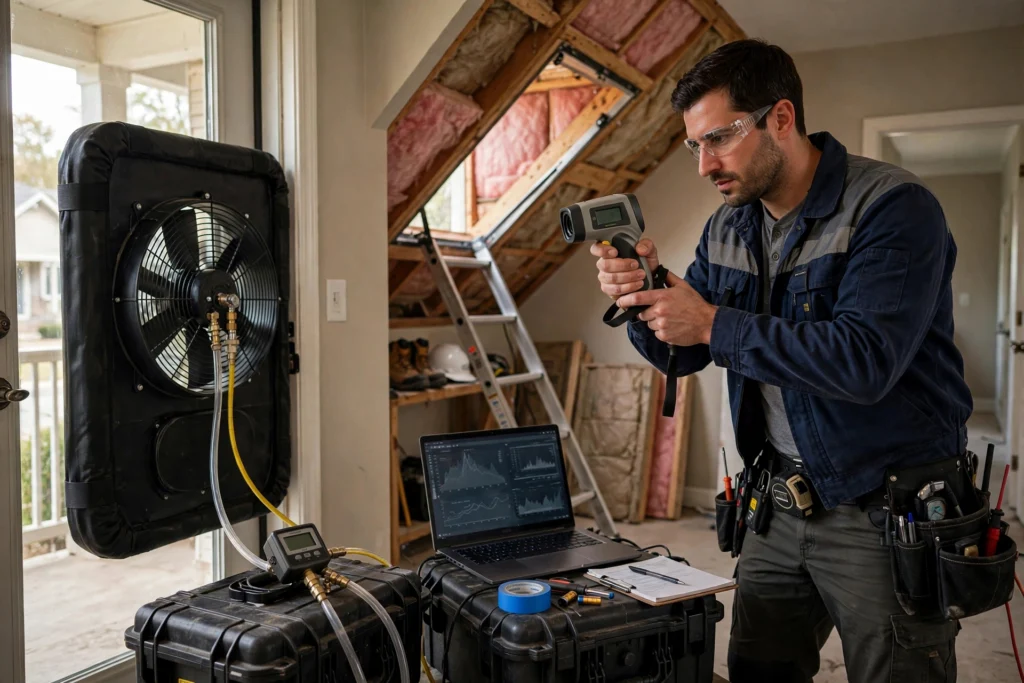
A home energy audit is a whole-house evaluation of how the building uses and loses energy. The U.S. Department of Energy describes an energy evaluation as a useful first step for identifying measures that improve efficiency and comfort. A professional audit can combine a visual inspection with diagnostic tools such as a blower door, infrared camera, duct testing, combustion-safety measurements, and utility-bill analysis.
The value is not simply finding ‘drafts.’ A good auditor connects envelope leakage, insulation, HVAC operation, ventilation, moisture, combustion safety, and occupant complaints. The final report should prioritize improvements by impact and practicality rather than giving the homeowner a shopping list of unrelated products.
Audit levels and price differences
A basic visual audit is the least expensive. The auditor reviews insulation levels, visible air leaks, windows, doors, mechanical equipment, water heating, and utility use, then provides broad recommendations. This can be enough for a newer home with one clear complaint, but it may miss hidden leakage paths.
A standard diagnostic audit usually adds a blower-door test and infrared imaging. Angi’s 2026 guide places this type around $200 to $700. The blower door depressurizes the home so the auditor can quantify leakage and locate major air paths. Infrared imaging can reveal temperature differences associated with missing insulation, air leakage, or thermal bridging when conditions are suitable.
An advanced audit can add duct leakage testing, room-by-room analysis, combustion-safety testing, detailed energy modeling, or more extensive reporting. These services are most useful when the house has persistent comfort problems, high bills, planned electrification, moisture issues, or a large renovation budget that needs prioritization.
Blower door testing: what the number means
A blower door does more than make leaks easier to feel. It measures how much air moves through the building envelope at a standardized test pressure. The result helps an auditor compare the home’s leakage to expected performance and identify whether air sealing should be a high priority.
The number should not be interpreted in isolation. A very tight house can have indoor-air-quality or ventilation needs, while a very leaky house may require combustion-safety attention before aggressive sealing. The useful question is: where are the largest leakage paths, how much can be sealed safely, and what ventilation strategy will remain after the work?
Infrared scans: useful but condition-dependent
Thermal cameras show surface temperature patterns, not x-ray images. Missing attic insulation, poorly insulated wall sections, leaky attic hatches, rim-joist leakage, and some moisture patterns can become visible when there is enough temperature difference between indoors and outdoors.
Do not pay extra for colorful images without interpretation. Ask the auditor to explain what each image means, what could create a false reading, and which findings should be verified physically. Solar heating, duct airflow, wet materials, and reflective surfaces can all complicate thermal images.
Combustion safety before air sealing
Homes with atmospheric gas or oil appliances need special care when air sealing is planned. Building Performance Institute energy-auditor standards include carbon-monoxide and combustion-safety procedures because depressurization and tighter construction can affect draft and spillage.
If the house has an older furnace, boiler, water heater, fireplace, or other combustion appliance, ask whether the audit includes combustion-zone testing and what standards the auditor follows. An efficiency project should never create a carbon-monoxide hazard.
What the written report should contain
A useful report identifies the biggest problems, estimates savings where practical, separates health-and-safety items from efficiency opportunities, and ranks recommended projects. It should make clear whether insulation, air sealing, duct repair, HVAC replacement, window work, or behavior changes are actually supported by the findings.
Ask for photos, measured values, assumptions, and a prioritized action list. A recommendation such as ‘replace all windows’ should be supported by evidence that windows are the dominant problem rather than by a sales relationship. In many homes, attic air sealing and insulation produce better value than replacing serviceable windows. If an independent audit does justify replacement, compare the complete installed scope using our window replacement cost guide before collecting local contractor quotes.
2026 federal tax-credit reality
The federal tax treatment changed before 2026. IRS guidance now states that the Energy Efficient Home Improvement Credit cannot be claimed for property placed in service after December 31, 2025. The former rules allowed a home-energy-audit credit of 30% up to $150 when performed by a qualified auditor, but that benefit does not apply to audits performed in 2026 under current law.
This is important because many contractor and government pages still contain historical Section 25C information. Homeowners planning a 2026 audit should base the purchase on diagnostic value, utility subsidies, state or local incentives, and the quality of the report – not on an expired federal credit.
Free and subsidized audits
Before paying for a private audit, check your electric utility, gas utility, state energy office, city sustainability program, and weatherization program. Some utilities provide basic assessments at no cost, while others subsidize diagnostic audits or offer instant discounts on air sealing and insulation after the assessment.
A free assessment can be excellent, but ask what tests are included. Some programs provide a visual walk-through plus direct-install products, while others provide a full blower-door test and detailed report. Compare the deliverable, not the advertised price.
Energy audit before insulation or HVAC replacement
An audit is especially useful before spending heavily on insulation, windows, or HVAC. If the house is leaky, a smaller heating or cooling system may be appropriate after air sealing and insulation. If the ducts are outside the conditioned space and badly leaking, duct repair may outperform a small equipment-efficiency upgrade.
Use the Home Cost Desk Home Insulation Types 2026 guide and Attic Insulation Cost 2026 guide after the audit identifies insulation gaps. For equipment decisions, compare the findings with the HVAC Replacement Cost 2026 guide and Heat Pump Cost 2026 guide.
Three realistic audit scenarios
Scenario 1 – high bills, no obvious comfort issue: a standard audit with utility analysis, blower door, attic inspection, and infrared scan can identify whether the problem is air leakage, insulation, equipment, or usage. The homeowner may discover that a few hundred dollars of air sealing is a better first step than replacing windows.
Scenario 2 – large renovation and electrification: the homeowner plans heat pumps, an EV charger, attic insulation, and window work. A more detailed audit and load analysis can prioritize envelope upgrades before HVAC sizing and help avoid overspending on equipment.
Scenario 3 – drafty older house with combustion appliances: the audit should include combustion-safety procedures, leakage testing, and a clear sequence for air sealing so the home becomes more efficient without creating backdrafting risk.
How to hire an energy auditor
Look for recognized training or certification rather than assuming every home inspector is an energy specialist. DOE continues to publish recognized energy-assessment certification programs, including Building Performance Institute, RESNET, ASHRAE, and others. The former tax-credit qualification is no longer the financial driver for a 2026 audit, but the certification lists are still useful signals of relevant training.
Ask whether the auditor sells the recommended work. A contractor-auditor can be competent, but an independent auditor may reduce sales conflict on a large project. Either way, insist on measured findings and a written report.
- Ask exactly which tests are included before booking.
- Gather 12 months of utility bills when possible.
- List uncomfortable rooms, condensation, drafts, and moisture problems.
- Do not run fireplaces or exhaust appliances unless the auditor asks.
- Request blower-door and infrared results in the final report.
- Prioritize safety and envelope work before cosmetic efficiency upgrades.
What to prepare before the auditor arrives
Collect at least 12 months of electricity, gas, oil, or propane usage when possible. Mark rooms that feel drafty, overheated, humid, or difficult to heat. Note condensation, ice dams, musty odors, and any recent changes such as a new furnace or replacement windows.
Clear safe access to the attic hatch, mechanical equipment, electrical panel, crawl space, and major duct areas. The auditor should not have to guess about accessible conditions because stored boxes block the inspection.
How to turn the report into a project sequence
The best audit creates an order of operations. Health and safety comes first, then bulk-water and moisture problems, then air sealing and insulation, then mechanical-system sizing and efficiency. Windows, appliances, and cosmetic improvements follow according to measured need and budget.
Sequencing prevents rework. For example, replacing a furnace before reducing a very large air leak can result in oversized equipment. Installing attic insulation before sealing ceiling penetrations can bury the air leaks and make later sealing harder.
Independent audit versus contractor audit
An independent auditor is paid for diagnosis and can be useful when the homeowner expects a large renovation or wants unbiased priorities. A contractor who also performs weatherization can provide a convenient one-stop process and may participate in utility incentives.
Either model can work. The key is transparency: the report should distinguish measured findings from sales recommendations, explain assumptions, and allow the homeowner to obtain competitive bids for major work.
Homeowner decision checklist
Before signing, compare at least two or three written proposals that describe the same scope. Normalize the bids by separating required work, condition-dependent work, optional upgrades, permit or inspection costs, and finish restoration. A low total is not a bargain when major items are simply excluded.
Photograph the existing conditions and keep model numbers, measurements, prior repair invoices, and any permit or utility records. Ask each contractor to explain the assumptions behind the proposal and what would trigger a change order. The goal is to make the price auditable before demolition or disconnection begins.
Check contractor licensing and insurance through the relevant local authority, read both equipment and labor warranties, and avoid large decisions based only on a same-day discount. A well-defined project makes it easier to compare value and reduces conflict if site conditions differ from expectations.
Bottom line
A home energy audit in 2026 commonly costs $212 to $698, averaging about $437, with advanced diagnostics reaching $1,000 or more. The best audit is not the one with the most gadgets; it is the one that measures the house as a system and gives the homeowner a prioritized plan.
Do not count on the former federal $150 audit credit in 2026. Instead, check utilities and local programs for subsidies, then choose an auditor based on diagnostic scope, certification, independence, and the quality of the final recommendations.
Frequently asked questions
How much does a home energy audit cost in 2026?
Angi reports a national average around $437 and a typical range of about $212 to $698. Basic audits can be lower, while advanced diagnostic audits can reach $1,000 or more.
Is there a federal tax credit for a 2026 home energy audit?
No under current federal law. The Section 25C Energy Efficient Home Improvement Credit ended for property placed in service after December 31, 2025, so the former audit credit does not apply to 2026 audits.
What is a blower door test?
It uses a calibrated fan to depressurize the home and measure envelope leakage, helping identify major air leaks and guide air-sealing priorities.
Do I need infrared imaging?
It is useful when temperature conditions are appropriate, especially for finding insulation gaps and air leakage. It should be interpreted with other measurements rather than used alone.
Should I audit before replacing HVAC?
Often yes. Envelope and duct improvements can change the heating and cooling load and may affect equipment sizing.
Can I get a free energy audit?
Possibly. Many utilities, states, cities, and weatherization programs offer free or subsidized assessments, so check local programs before paying retail.