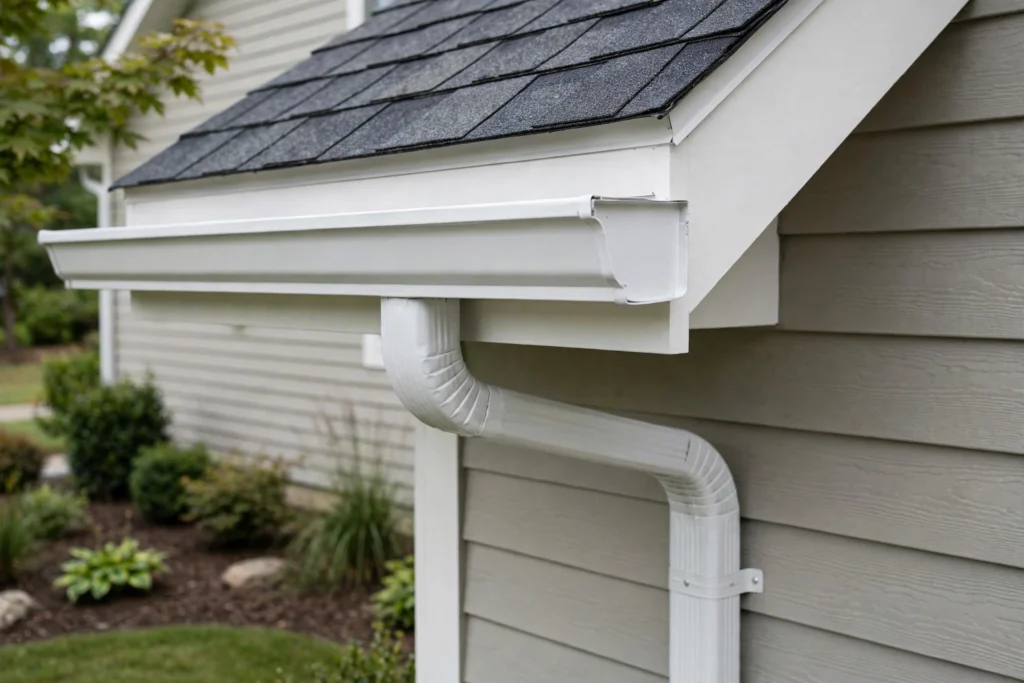
New gutters are a relatively small exterior project, but quotes can vary dramatically because contractors may be pricing different materials, different amounts of downspout work, and very different rooflines. For U.S. homeowners planning a 2026 project, a sensible starting point is to budget by linear foot, then add allowances for removal, fascia repairs, downspouts, height, and accessories.
Current national consumer cost guides illustrate the spread. Angi reports an average project around $1,182, with a typical project range of roughly $629 to $1,736 and a broad material-dependent range of about $4 to $40 per linear foot. HomeGuide reports a higher planning range of about $12 to $25 per linear foot, or roughly $2,200 to $5,000 for an average installation. Those figures are not contradictory so much as a reminder that “gutter installation” can describe very different scopes. A local written quote is the number that ultimately matters.
Gutter installation cost at a glance
| Project | 2026 planning range |
|---|---|
| Broad installed gutter range | $4–$40 per linear foot |
| Typical project range reported by Angi | $629–$1,736 |
| Average reported by Angi | About $1,182 |
| Average-home range reported by HomeGuide | About $2,200–$5,000 |
| Aluminum | About $3–$15 per linear foot |
| Vinyl | About $3–$7 per linear foot |
| Galvanized steel | About $5–$20 per linear foot |
| Copper | About $15–$40 per linear foot |
Use these numbers as budgeting benchmarks, not promises. Home height, labor rates, roof geometry, material gauge, gutter size, tear-off, and the number and length of downspouts can move a real bid substantially.
What does a typical home cost?
A homeowner with 150 linear feet of straightforward gutter run can use the per-foot ranges to build a first-pass budget. At $8 per foot, the base is $1,200; at $15 per foot, it is $2,250. A 200-foot project at those same rates is $1,600 to $3,000. Premium metals, difficult access, extensive downspouts, or rotten fascia can push the final total well beyond those examples.
Do not estimate gutter length from interior square footage alone. Measure the roof edges that actually require drainage. A compact two-story home can have less gutter length than a sprawling one-story house of similar living area, while dormers and multiple roof sections add corners and labor.
Cost by gutter material
Aluminum
Aluminum is the mainstream choice because it balances price, corrosion resistance, availability, and color selection. Angi’s 2026 guide places aluminum at roughly $3 to $15 per linear foot across its published range. Seamless aluminum is formed on site to the required run length, reducing joints along straight sections.
Vinyl
Vinyl is inexpensive and commonly sold in sectional systems. Angi lists roughly $3 to $7 per linear foot. It can make sense for a small, accessible project, but climate, expansion and contraction, and the quality of joints matter. Homeowners considering DIY installation should price every connector, hanger, outlet, corner, end cap, sealant, and downspout component rather than comparing only the shelf price of straight gutter sections.
Steel
Galvanized steel is stronger than many lightweight alternatives but costs more and is heavier to handle. Angi’s published material range is about $5 to $20 per linear foot. Installation details and coating quality matter because exposed or damaged metal can corrode over time.
Copper and other premium metals
Copper is primarily a premium architectural choice. Angi lists roughly $15 to $40 per linear foot, while individual contractor bids can be higher depending on fabrication and detailing. Zinc and specialty systems can also carry premium pricing. For these materials, compare fabrication method, fasteners, soldering or joining details, and installer experience—not just the per-foot number.
Seamless versus sectional gutters
Sectional gutters are assembled from pre-cut pieces and are practical for many DIY projects. Seamless systems are formed on site and have fewer joints along long runs. Fewer seams can mean fewer potential leak points, but corners, outlets and end details still need proper workmanship.
When comparing quotes, ask whether the quoted system is seamless or sectional, the metal thickness or product specification, the gutter profile and size, hanger spacing, and whether downspouts and removal are included. Two bids with the same headline price per foot may not describe the same system.
The biggest factors that change the price
Linear footage: More roof edge means more material and labor. Home height: Two- and three-story work usually takes longer and may require additional access and safety equipment. Roof complexity: Corners, dormers, intersecting roofs and unusual fascia details increase fabrication and installation time. Material: Vinyl and basic aluminum generally cost much less than copper or zinc. Gutter size: Larger-capacity systems use more material and may require larger outlets and downspouts.
Old gutter removal: Confirm whether tear-off, hauling and disposal are included. Fascia condition: Once old gutters come off, damaged wood may become visible. Downspouts: The quantity, material, height and discharge routing matter. Guards: Screens and premium gutter-protection systems can become a substantial separate line item. Local labor: National averages cannot capture every metro area.
Downspouts are part of the drainage system
A gutter is useful only if collected water can leave it. Angi’s 2026 guide lists downspout ranges of roughly $5 to $8 per linear foot for vinyl and aluminum, $9 to $12 for steel, and $17 to $20 for copper. Ask the installer how many downspouts are included, their dimensions, and where each will discharge.
The cheapest layout is not automatically the best layout. Roof area, rainfall intensity, gutter size, outlet size and the available discharge path all affect drainage performance. For an unusual roof or a property with recurring water problems, ask the contractor to explain the sizing rather than relying on a generic rule of thumb.
Hidden costs to put in the budget
Gutter replacement can uncover work that was invisible during the initial estimate. Common additions include rotten fascia, damaged soffit, drip-edge corrections, difficult removal, extra outlets, longer downspout extensions, underground drain connections, and repairs around roof edges. Landscaping or hardscape that complicates ladder access can also affect labor.
A useful contingency for an older home is not a fixed percentage so much as a clear written process: ask what happens if deteriorated fascia is discovered, what the unit price for repair will be, and whether work stops for your approval before extras are added.
DIY or professional installation?
Sectional vinyl or aluminum can be a realistic DIY project on a low, simple roofline for a homeowner who is comfortable measuring, establishing slope, fastening into sound fascia, sealing joints and working safely from ladders. The financial appeal is labor savings.
Professional installation becomes more compelling for two-story homes, steep or difficult terrain, long seamless runs, heavy materials, complicated rooflines, deteriorated fascia, or any situation where ladder work is unsafe. Seamless gutters also typically require roll-forming equipment brought to the property.
Do not treat fall risk as a minor inconvenience. If safe access is questionable, the labor saving is not worth improvising a dangerous setup.
Do you need a permit?
Permit requirements are local. Straight gutter replacement often receives lighter regulatory treatment than structural roof work, but requirements can differ by municipality, historic district, drainage rules, and the scope of fascia or roof-edge repairs. Ask the local building department or contractor before work begins rather than assuming no permit is required.
How to compare gutter quotes
Get several written estimates and make each contractor specify the same items: total linear footage, gutter material and gauge or product specification, profile and size, seamless or sectional construction, number and size of downspouts, hanger method and spacing, removal and disposal, fascia repair pricing, warranty, start-to-finish scope, and exclusions.
A low bid that excludes downspouts, disposal or fascia work may become more expensive after change orders. Conversely, a higher bid may include work the cheaper proposal leaves undefined. Compare scope before price.
Example homeowner budgets
Simple one-story aluminum project: A straightforward home with moderate linear footage and sound fascia may land near the lower or middle portion of published aluminum ranges. Two-story replacement: More access time, longer downspouts and a complicated roofline can move the same material noticeably higher. Premium architectural project: Copper, half-round profiles and custom details can multiply the material and fabrication budget.
These scenarios are planning examples only. The wide spread among national cost publishers is precisely why homeowners should obtain local quotes with a defined scope.
When replacement makes more sense than repair
A small loose hanger, isolated leaking joint, or damaged short section may be repairable. Full replacement becomes easier to justify when gutters have widespread corrosion, repeated seam failures, persistent sagging, many failing hangers, extensive storm damage, or a layout that repeatedly overflows despite cleaning. If water is getting behind the gutter, inspect the fascia and roof-edge details as part of the decision.
How to keep the project from getting more expensive
Address drainage problems before prolonged overflow damages fascia or adjacent finishes. Keep the scope comparable when collecting bids. Decide on gutter material and size before asking for final pricing. Ask contractors to separate optional guards from the core gutter-and-downspout price. Finally, confirm where water will discharge; moving water from the roof only to dump it beside a vulnerable foundation does not solve the entire drainage problem.
Five-step gutter replacement plan
- Map the roof drainage first. Measure the roof edges that need gutters and note valleys, dormers, large roof sections, and existing overflow points.
- Inspect fascia and roof-edge conditions. Ask the contractor to identify rotten fascia, damaged soffit, loose drip edge, or attachment problems before the new system goes up.
- Define gutter size and downspout capacity. Compare the proposed profile, size, outlets, number of downspouts, and where each downspout will discharge.
- Standardize the bids. Require the same material, gauge or product specification, total footage, removal, downspouts, hangers, fascia repair pricing, guards, and warranty on every quote.
- Test the drainage path. After installation, verify that water flows toward outlets and is discharged away from vulnerable foundation areas rather than simply moved from the roof to the wall below.
What to prepare before contractors quote the job
- Estimate total gutter footage and count current downspouts.
- Photograph sagging, leaking, overflowing, or rusted sections.
- Point out basement, crawl-space, or foundation areas that get wet during storms.
- Decide whether gutter guards are part of the core project or a separate option.
- Ask whether old-gutter removal, disposal, splash blocks, extensions, and underground drain connections are included.
- Tell bidders about difficult access, steep grades, landscaping, decks, pools, or other obstacles that affect safe ladder setup.
What to verify after gutter installation
- Long runs have a consistent slope toward outlets with no obvious low spots.
- Hangers are secure and spaced according to the installed system’s requirements.
- End caps, corners, and outlet joints are sealed cleanly.
- Downspouts are firmly attached and discharge where agreed.
- Fascia damage discovered during removal was repaired as authorized.
- Roof edges, drip edge, siding, and landscaping were not damaged during the work.
- You receive the material and labor warranty promised in the contract.
Frequently asked questions
How much does gutter installation cost in 2026?
Angi’s 2026 data (page updated October 16, 2026) puts many professional projects around $629 to $1,736, with an average near $1,182. Per-foot pricing varies widely by material, home height, roof complexity, downspouts, and whether fascia repair is needed.
Are seamless gutters worth the extra cost?
They can be. Seamless systems reduce joints along straight runs, which can reduce potential leak points. But corners, outlets, end details, sizing, and installation quality still matter.
How many downspouts does a house need?
There is no single national number that fits every house. Roof area, rainfall intensity, gutter size, outlet size, roof geometry, and discharge path all affect capacity. Ask the installer to explain the layout rather than relying on a generic count.
Should gutters be replaced when the roof is replaced?
Not automatically. If existing gutters are sound and compatible with the roof-edge work, they may remain. But a roof replacement is a good time to inspect fascia, drip edge, gutter attachment, and drainage because access is already available.
Bottom line
For 2026 budgeting, expect gutter installation to be priced primarily by linear foot, with published national figures spanning roughly $4 to $40 per foot depending heavily on material and scope. Angi reports a typical total around $629 to $1,736, while HomeGuide reports roughly $2,200 to $5,000 for an average home under its broader pricing assumptions. Use those figures to establish a planning envelope, then replace them with two or three itemized local quotes.
For most homeowners, aluminum remains a practical middle ground. The most important purchasing decision, however, is not simply material: it is buying a complete drainage system with appropriate gutter capacity, enough downspouts, sound attachment, and a clear discharge path.
Related Home Cost Desk guides
- Gutter Repair vs. Replacement: Costs and Warning Signs — decide whether a repair is enough before purchasing a full replacement.
- Gutter Guard Installation Cost 2026 — compare guard types, extra installation costs and maintenance needs.
- Roof Repair Cost 2026
- Basement Waterproofing Cost 2026
- Annual Home Maintenance Cost 2026
Home Cost Desk compares current U.S. cost or technical references and checks safety, code, efficiency, incentive, or regulatory claims against authoritative sources when available. National figures are planning ranges, not local quotes.
Editorial review: Home Cost Desk Editorial Team · Read our research methodology · Detailed sources appear below.
Sources and methodology
This guide uses current 2026 national consumer cost data from Angi, cross-checked against HomeGuide. Published ranges differ because project scope, material mix, home size and reporting methods differ. Home Cost Desk therefore presents them as national planning ranges rather than as contractor quotes. Local labor, taxes, permit requirements and site conditions can change actual pricing.