Quick answer
Professional mold remediation is often a four-figure project, but the range depends heavily on how much material is affected and whether the moisture source is easy to reach. HomeGuide’s 2026 cost guide places many projects around $1,500 to $6,000, or roughly $15 to $30 per square foot of affected area. Angi’s 2026 verified-project data is somewhat tighter, reporting most jobs between $1,223 and $3,757. Those figures are not contradictory: one source is a broad planning range while the other reflects reported projects in its network.
For a homeowner, the most important budgeting rule is this: the mold removal line item is only part of the job. A complete project may also require leak repair, drying, containment, demolition of porous materials, cleaning, air filtration, disposal, reconstruction, and sometimes testing. If a basement, attic, crawl space, or bathroom keeps getting wet, paying for cleanup without fixing the moisture source is likely to produce another bill later.
The U.S. Environmental Protection Agency makes the same point in its homeowner guidance: moisture control is the key to mold control. If mold is cleaned but the water problem remains, the growth is likely to return.
Mold remediation cost at a glance
| Scope | Planning range | What usually changes the price |
|---|---|---|
| Small localized professional cleanup | About $500–$1,500 | Accessible surface, limited demolition, simple moisture source |
| Typical professional remediation | About $1,500–$6,000 | Containment, removal, cleaning, drying, disposal |
| Large attic, basement, crawl-space, or multi-room project | $6,000–$15,000+ | Difficult access, large affected area, extensive porous material removal |
| Testing or assessment | Often a few hundred dollars | Number of samples, lab work, independent consultant involvement |
These are planning figures, not quotes. HomeGuide reports a broader national planning range than Angi, and large projects can exceed both typical bands when reconstruction becomes the dominant cost.
What professional mold remediation actually includes
The word “remediation” is more useful than “spraying” or “killing mold” because a proper job is about controlling the source, removing contaminated material when necessary, cleaning what can be cleaned, and preventing spores and debris from spreading into clean areas.
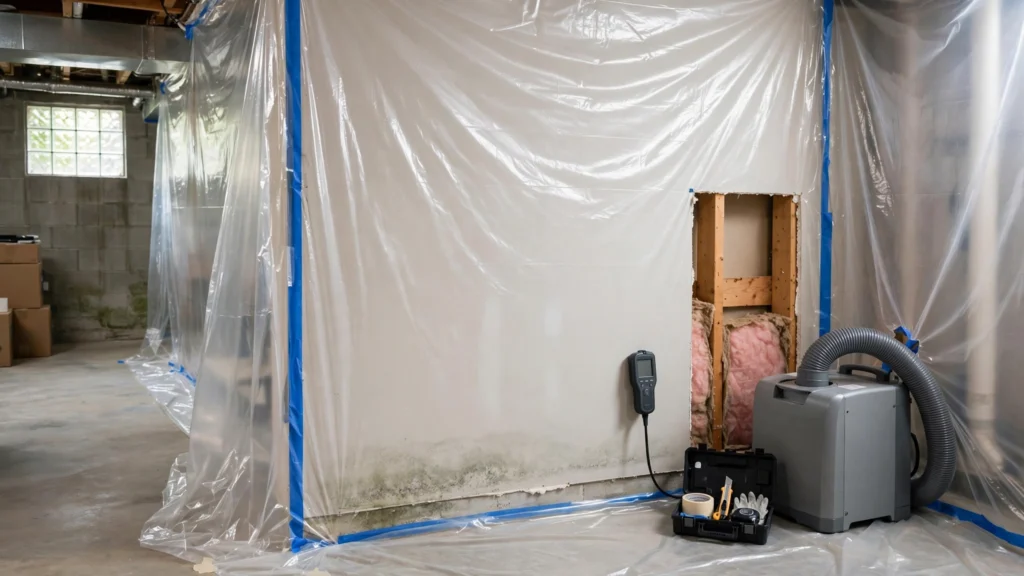
A professional scope may include a site assessment, moisture readings, containment sheeting, negative-air equipment, HEPA filtration, removal of damaged drywall or insulation, cleaning of structural wood, bagging and disposal, drying, and a final visual or moisture check. Some firms also provide post-remediation verification, while others leave verification to an independent consultant.
That distinction matters when comparing bids. A $1,500 quote that includes only surface cleaning is not directly comparable with a $3,500 quote that includes containment, demolition, air filtration, drying, disposal, and rebuild preparation.
The affected area is only one cost driver
Square footage helps, but mold remediation pricing is not a simple area-times-rate calculation. Ten square feet behind a bathroom vanity can be easier than ten square feet inside a wall cavity with a plumbing leak, and a moderate attic problem can become expensive if insulation must be removed across a large section of roof framing.
Location changes labor. Basements often require work around finished walls, stored belongings, and foundation moisture. Crawl spaces add restricted access. Attics add heat, tight working conditions, and insulation handling. HVAC-related contamination can involve specialized cleaning questions that go beyond normal surface remediation.
If your concern starts in a damp basement, compare the remediation quote with the likely moisture fix. Our basement waterproofing cost guide explains the difference between interior water management and exterior waterproofing, while the crawl space encapsulation cost guide covers vapor barriers, drainage, dehumidification, and related crawl-space work.
Why the water source can cost more than the mold cleanup
Mold is often the visible result of another defect. A leaking supply line, failed shower waterproofing, roof leak, foundation seepage, condensation, or persistently high indoor humidity can keep feeding the problem.
This means the homeowner should budget in two columns: remediation and cause correction. If the cause is a plumbing failure, a plumber may need to make the repair before the remediation team closes the area. If the cause is bathroom humidity, improving exhaust and run time may be part of the solution; our bathroom ventilation guide explains fan sizing, ducting, and moisture control. If the issue is in an attic, air leakage and insulation conditions may need attention after roof leaks are ruled out.
A useful contractor question is, “What condition must be corrected before you consider the remediation complete?” A strong proposal should identify whether the contractor is fixing that condition, coordinating another trade, or excluding it.
Testing: when it helps and when it may not
Homeowners often assume every visible patch needs laboratory testing. EPA guidance is more nuanced. When visible mold is present, testing is not always necessary to decide that moisture control and cleanup are needed. Testing may be useful when the source is unclear, when there is a dispute, when an independent consultant is documenting conditions, or when a specific post-remediation verification protocol has been established.
If you hire testing and remediation separately, independence can reduce conflicts of interest. Ask the assessor what question the test is intended to answer and how the result will change the work plan. Paying for samples without a decision framework can add cost without improving the project.
DIY cleanup versus professional remediation
EPA says that, in many cases, a moldy area smaller than about 10 square feet can be handled by a homeowner following appropriate guidance. That is not a blanket rule. Extensive water damage, sewage contamination, hidden growth, HVAC involvement, health concerns, or a large affected area can justify professional help.
The safest DIY boundary is to avoid disturbing large contaminated areas or opening assemblies when you do not know what is behind them. Porous materials such as ceiling tile, carpet, some insulation, and damaged drywall may need removal because growth can extend into the material. EPA also advises fixing leaks promptly, drying materials completely, and avoiding painting or caulking over moldy surfaces. If the HVAC system itself may be contaminated, do not run it while arranging an appropriate assessment; EPA warns that operation can spread mold through the building. Sewage-related contamination calls for a professional experienced with contaminated-water cleanup, regardless of whether the visible patch looks small.
Do not turn remediation into a chemical experiment. EPA does not recommend routine use of biocides such as bleach as a substitute for actual removal and moisture correction. Dead mold can still cause reactions, and mixing household chemicals can create dangerous fumes.
Cost by room and location
Bathroom
Bathroom projects are often relatively contained, but hidden damage behind tile, a vanity, or drywall can quickly expand the scope. A recurring ceiling patch may point to poor ventilation, while soft drywall near a shower may indicate a plumbing or waterproofing problem.
Basement
Basements can combine mold with seepage, condensation, poor drainage, or high humidity. Finished basements cost more to remediate because flooring, drywall, baseboards, or insulation may need removal and replacement. Before rebuilding, confirm that the water-control strategy is appropriate.
Crawl space
Crawl-space remediation can be labor-intensive because of access and low clearances. If the long-term plan includes a sealed crawl space, cleanup should be coordinated with drainage, ground vapor control, air sealing, and humidity management rather than treated as an isolated cleaning job.
Attic
Attic growth is commonly associated with roof leaks, bathroom exhaust discharged into the attic, or warm humid air leaking from the house and condensing on cold roof sheathing. Cleanup without addressing the moisture path can be temporary. Our attic insulation cost guide is useful when insulation removal or replacement becomes part of the work.
Reconstruction is a separate budget
A remediation contractor may stop after contaminated material is removed and the area is cleaned and dried. Drywall, insulation, trim, paint, flooring, cabinetry, or tile replacement may be a separate contract.
Ask every bidder to state the handoff condition. Will the room be ready for paint? Ready for drywall? Open framing only? If a bathroom wall is demolished, does the quote include reinstalling cement board and tile, or is it cleanup only? Clarifying the handoff prevents a “cheap” remediation quote from becoming a surprise reconstruction bill.
Insurance: document first, assume nothing
Whether homeowners insurance applies depends on the cause of the moisture, the policy language, exclusions, and how long the condition developed. Sudden covered water damage may be treated differently from long-term seepage or maintenance-related moisture.
Before demolition, photograph the area and the suspected source. Keep invoices, moisture reports, and contractor scopes. If you may file a claim, contact your insurer promptly and ask what documentation they require. Do not delay urgent water control just to preserve evidence; the priority is preventing additional damage.
How to compare mold remediation quotes
A good comparison sheet should separate these items:
- assessment and moisture mapping;
- containment setup;
- demolition and material removal;
- HEPA air filtration or negative air;
- cleaning method and surfaces included;
- drying and equipment days;
- disposal;
- cause correction, if included;
- reconstruction, if included;
- post-remediation verification;
- warranty or return policy.
Avoid comparing only the grand total. A detailed scope lets you see whether one company has omitted disposal, air filtration, rebuild, or moisture-source work.
Red flags in a remediation proposal
Be cautious when a contractor promises to “sterilize” the home, guarantees that all spores will be eliminated, proposes painting directly over growth, or cannot explain the moisture source. Mold spores naturally exist in indoor and outdoor environments; the realistic goal is to correct abnormal indoor growth and moisture, not create a sterile building.
Also be skeptical of fear-based sales tactics that turn every discoloration into a catastrophic hazard without evidence. The problem should be taken seriously, but the scope should match the actual condition.
A realistic budgeting example
Imagine a finished basement with a slow supply-line leak behind drywall. The visible area is limited, but the wall cavity is wet. The plumber repairs the leak. The remediation company installs containment, removes two sheets of drywall and wet insulation, cleans framing, runs drying equipment, and disposes of debris. A separate drywall contractor later patches and paints the wall.
The mold contractor’s invoice may fit within a typical four-figure remediation range, but the complete homeowner cost is the sum of plumbing repair, remediation, drying, drywall, paint, and possibly flooring or trim. That is why a project budget should follow the whole repair sequence, not just the word “mold.”
How to reduce the chance of paying twice
Before a contractor closes a remediated wall or ceiling, request a clear handoff: the moisture source has been corrected, affected porous materials have been removed where necessary, remaining surfaces have been cleaned, and the area is dry enough for the planned reconstruction. Ask what moisture readings or other observations support that decision, which trade will reinstall insulation or drywall, and whether an independent clearance check was included in the contract. A clean-looking wall is not proof that a hidden leak has stopped.
After the repair, monitor the specific failure point: look under the previously leaking sink after use, check the repaired roof area after rain, or track basement humidity and seepage during wet weather. Keep bathroom exhaust and dryer vents working, and address recurring condensation rather than simply repainting the stain.
EPA’s guidance emphasizes drying water-damaged materials quickly and notes that keeping relative humidity below 60 percent, ideally around 30 to 50 percent when practical, helps discourage growth. A small humidity meter is inexpensive compared with a repeat remediation project.
Questions to ask before hiring
- What do you believe is the moisture source?
- Is your quote cleanup only, or does it include repairing the source?
- What materials will be removed rather than cleaned?
- What containment and filtration will you use?
- Where will debris travel through the house?
- Does the price include drying equipment and monitoring?
- Who decides the project is complete?
- Is post-remediation verification included or independent?
- What reconstruction is excluded?
- What happens if moisture is discovered outside the quoted area?
For a broader contractor-selection framework, use our how to hire a home contractor guide.
FAQ
How much does mold remediation cost in 2026?
A practical national planning range is about $1,500 to $6,000 for many professional projects, though Angi’s verified-project data reports a narrower $1,223 to $3,757 range. Small accessible jobs can cost less, while large attic, basement, crawl-space, or multi-room remediation can cost much more.
Does mold remediation include fixing the leak?
Not automatically. Many remediation contracts focus on containment, removal, cleaning, and drying. Plumbing, roofing, foundation drainage, or waterproofing may be separate trades. Confirm exclusions in writing.
Can I clean mold myself?
EPA says homeowners can often handle small areas under about 10 square feet when there is not extensive water damage and other complicating factors. Larger or hidden problems may justify a professional.
Is mold testing always necessary?
No. Visible mold and a known moisture problem may already establish the need for cleanup. Testing is more useful when it answers a specific question or is part of an independent verification plan.
Will mold come back after remediation?
It can if the moisture source remains. Long-term success depends on correcting water intrusion, leaks, condensation, or high humidity as well as cleaning the affected area.
How can I tell whether mold remediation is complete before rebuilding?
Ask for confirmation that the moisture problem was fixed, affected material was removed or cleaned as specified, and the area is dry before new drywall or insulation conceals it. EPA says visible mold and moldy odors should no longer be present, while also noting that some staining can remain after cleanup. Agree in advance whether an independent inspection or sampling is needed for this particular project; there is no universal federal indoor mold-spore clearance limit.
Local examples: Our Tampa mold remediation cost guide covers Florida humidity and state mold-licensing rules, and our Portland mold remediation cost guide covers Oregon’s wet-season moisture conditions.
Bottom line
Mold remediation is best budgeted as a moisture-and-repair project, not a cleaning service. Use national cost data for an initial range, then insist on a written scope that separates containment, removal, drying, source correction, verification, and reconstruction. The cheapest quote is not necessarily the cheapest complete project if it leaves the leak, wet material, or rebuild for someone else.